
Natixis raises gold price target to $5,000 as U.S. debt and bond market fears mount
Source: kitco.com
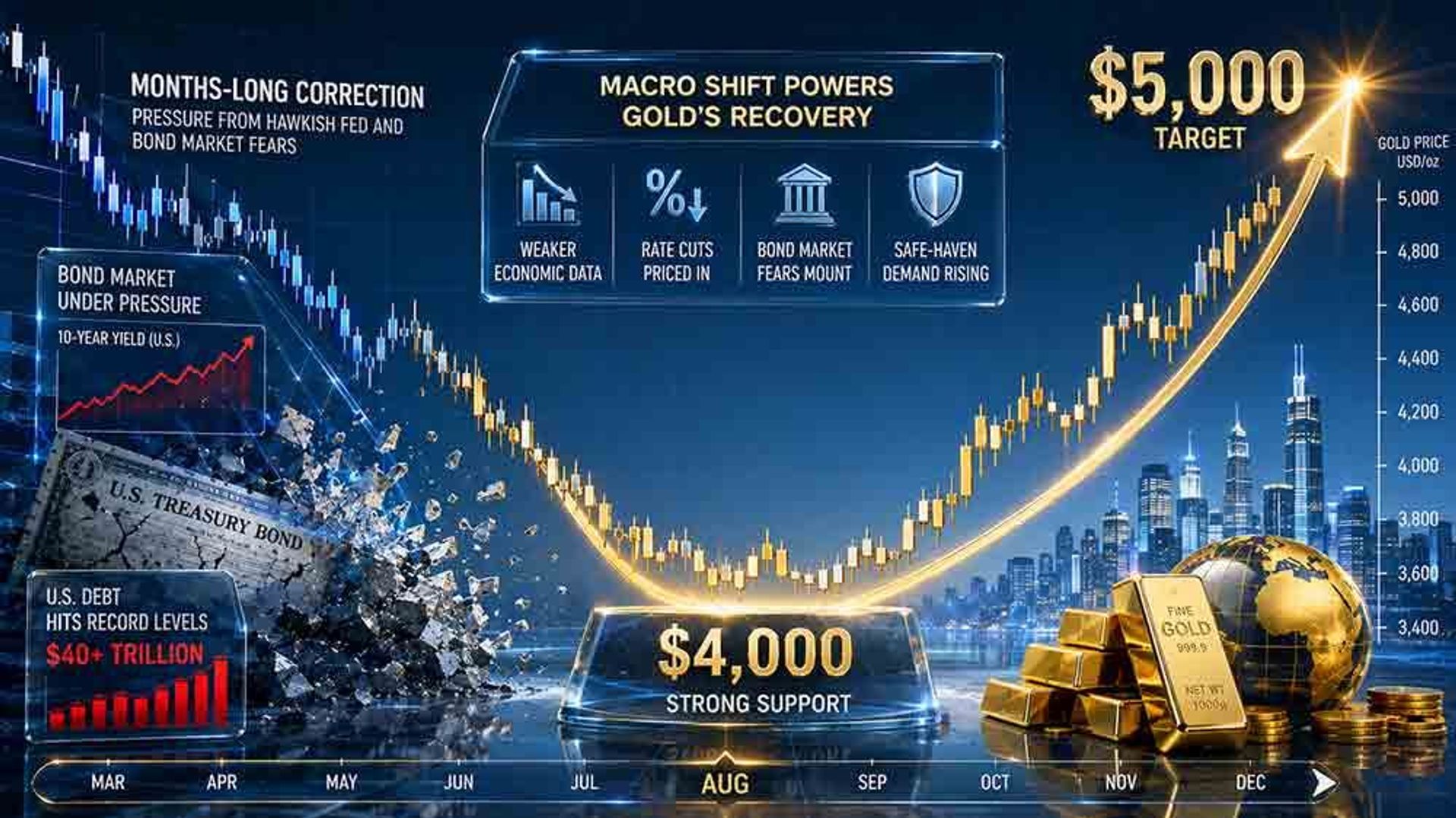
Natixis analyst Bernard Dahdah raised his year-end gold forecast to $5,000/oz from $4,600, citing gold holding support above $4,000/oz and nearly 15% month-to-date gains. The bullish setup is linked to repricing of rate expectations (now ~one December cut vs at least two hikes earlier) and a $4B expansion of U.S. 10- and 30-year Treasury buybacks. Dahdah also points to rising sovereign debt concerns amid a 30-year yield at a two-decade high of 5.3% and expects gold to average $5,000 through 2027.
Analysis
This is less a pure inflation trade than a duration-crisis trade: when the long end refuses to behave, investors reach for assets that sit outside the fiat-liquidity stack. That favors bullion, selective miners, and silver on a lag, while punishing the most rate-sensitive equity sleeves — REITs, homebuilders, and any cash-flow stream priced off distant terminal value. The key second-order effect is that a persistent long-end backup raises the cost of capital for the entire AI infrastructure complex, making AMZN, META, and MSFT’s capex commitments look more like balance-sheet duration than growth optionality.
The near-term catalyst path is technical plus policy-driven. A clean hold above the prior breakout zone should keep CTA and systematic flows additive over days to weeks, while Treasury buyback cadence and the next inflation/growth prints will decide whether the move becomes self-reinforcing over 1-3 months. If long-bond yields reaccelerate, the market will likely reprice housing and private credit stress faster than it reprices earnings, which is why the best relative short is not bullion itself but the sectors most exposed to mortgage and refinancing sensitivity.
Contrarian view: consensus is treating this as a metal rally, but the real story is policy credibility and fiscal dominance. That makes the move more durable than a normal real-rate hedge, yet also more fragile if policymakers successfully calm the long end or if the dollar catches a reflexive bid. The thesis is falsified if gold loses the $4,000 handle on a weekly close or if real yields and the 30-year selloff reverse materially after the next Treasury action.
AllMind Terminal
AI-powered research, real-time alerts, and portfolio analytics for institutional investors.
Request TrialMarket Sentiment
Overall Sentiment
strongly positive
Sentiment Score
0.55
Key Decisions for Investors
- Go long GLD or front-month gold futures on pullbacks, with a 1-3 month horizon; use a weekly close below the $4,000 gold area as the hard stop because that would invalidate the momentum/fiscal-dominance setup.
- Pair trade: long GDX vs short ITB or XLRE for the next 4-8 weeks. If long-end yields stay elevated, miners should retain bullion leverage while housing/REIT multiples compress; target relative outperformance rather than outright beta.
- Buy SLV or SIL call spreads as a higher-beta catch-up expression if you want convexity to a broad precious-metals squeeze; this works best only if risk appetite remains intact, so abandon on worsening industrial data.
- Do not add aggressively to AMZN, META, or MSFT here; if already overweight, hedge with a short QQQ or XLK overlay into Treasury refunding/Fed data because higher real rates and AI capex financing costs can compress long-duration multiples.
More News
- OpenAI projected to bring in $20bn less in revenue than expected
- New data shows Starbucks turnaround is working, but Chipotle takeover report slams shares
- Worries About OpenAI's Revenue Rattle the AI Trade
- The Stock Market Is Facing a "Capex Pickle"
- Synopsys (SNPS): The Next Big AI Stock Breakout?
- It's Time To Overweight Amazon