
Trump Backs Warsh After Fed Defies His Call for Rate Cuts
Source: youtube.com
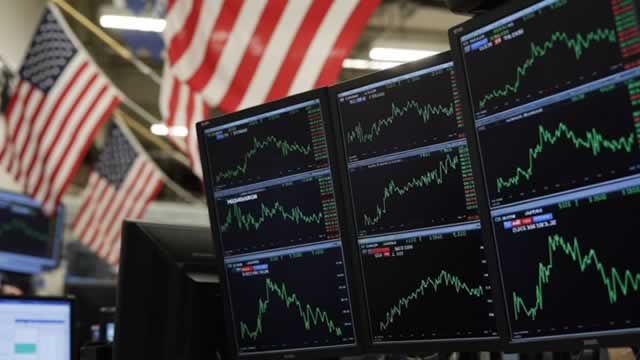
The Federal Reserve unanimously raised interest rates and reaffirmed its commitment to curb inflation, defying President Trump's calls for lower borrowing costs. Trump maintained confidence in Chair Kevin Warsh but criticized the Fed board as “hostile.” Global bond yields retreated after the decision, indicating some easing in acute market pressure despite the hawkish policy stance.
Analysis
The investable signal is not simply higher policy rates; it is a potential compression in the inflation-risk and term-premium components of long yields if markets view the Committee as insulated from political pressure. That favors duration at the long end despite restrictive policy, particularly TLT/EDV versus cyclicals whose earnings assumptions still embed an easier financial-conditions path. The near-term beneficiary is high-quality growth with durable cash flows (MSFT, GOOGL) rather than unprofitable long-duration equities, which remain vulnerable to elevated real rates.
A flatter curve is the key second-order risk. KRE and regional-bank lenders face both slower loan growth and weaker asset-liability economics if funding costs stay sticky while longer yields fall; commercial-real-estate credit quality would compound that pressure over the next 1-3 quarters. Large money-center banks are relatively better positioned, but JPM/BAC would still face downward revisions if net interest income guidance has assumed multiple cuts.
Consensus may over-extrapolate the bond rally: political criticism creates a future institutional-risk premium even if immediate policy credibility improves. A renewed rise in inflation expectations, a labor-market reacceleration, or any evidence that Fed independence is being compromised would reverse the duration bid quickly; watch 5-year breakevens above 2.5% and a sustained move in 10-year yields above 4.5% as thesis-falsification levels. Over 6-18 months, a policy-induced slowdown would favor defensives and expose highly levered small caps, but the trade is contingent on credit spreads remaining contained.
AllMind Terminal
AI-powered research, real-time alerts, and portfolio analytics for institutional investors.
Request TrialMarket Sentiment
Overall Sentiment
mildly negative
Sentiment Score
-0.15
Key Decisions for Investors
- Initiate a 1-3 month long TLT / short KRE pair, sized beta-neutral: it captures term-premium compression while hedging the curve-flattening and bank-funding channel. Reassess if the 10-year Treasury yield closes above 4.5% or KRE materially outperforms TLT following bank NII guidance.
- Buy 3-6 month TLT call spreads rather than outright duration after any 25-40bp backup in the 10-year yield; target a further 30-50bp yield decline, with premium at risk capped if inflation data reaccelerate.
- Underweight IWM versus SPLV over the next quarter: small-cap refinancing and floating-rate debt sensitivity are likely underpriced relative to large-cap defensive balance sheets. Cover if high-yield spreads remain below 350bp while small-cap EPS revisions turn positive.
- For financial exposure, prefer JPM over KRE for the next 1-3 months; avoid adding broad bank beta until deposit-cost trends and commercial-real-estate provisions demonstrate that a flatter curve is not impairing forward returns.
More News
- Bank of Japan raises interest rates to 31-year high, flags concerns over inflation
- Yen Drops Against Dollar After BOJ Raises Rates as Expected
- Australia’s central bank chief warns inflation risks materialising
- California AG Says Paramount-WBD Merger Would Hurt the State
- Japan’s interest rate hiked to 31-year high at 1.25% as inflation rises
- Bank of Japan hikes rates to 31-yr high amid growing inflationary risks