
Uber Q3 2026: Betting On Uber One And Advertising Scaling
Source: seekingalpha.com
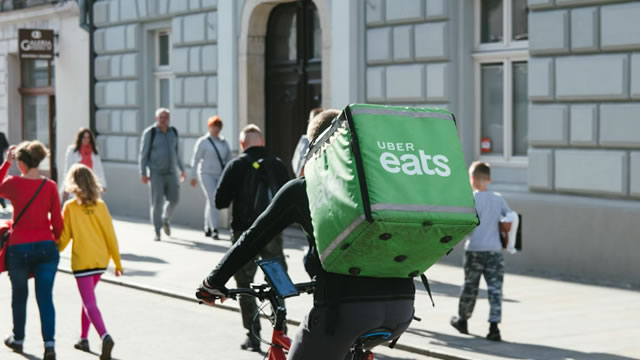
The article rates Uber a compelling buy with a $100 target price and more than 43% upside, citing robust free cash flow and expanding monetization through grocery and retail, advertising, and Uber One. It describes Uber Eats as evolving into a “mini-Amazon,” while noting supply headwinds in Mobility and slower robotaxi scaling than peers; Uber’s demand aggregation and network utilization are presented as strengths.
Analysis
The upside case depends less on adding grocery orders than on converting existing app traffic into higher-margin advertising and membership revenue without raising incentives. If those levers improve repeat use and order economics, Uber could earn a better-quality multiple; if grocery growth is mainly lower-value volume or requires sustained discounts, gross bookings may rise while contribution economics disappoint. DoorDash is the clearest competitive check: aggressive promotions or merchant wins there could limit Uber’s pricing power. Amazon is a broader competitor for retail occasions, though the overlap should be tested by category and geography rather than assumed.
Mobility supply tightness is a near-term two-sided risk: pricing may support revenue, but weaker driver availability can hurt reliability and demand. Robotaxi claims should be treated as optionality, not a near-term earnings driver; broad deployment could eventually reduce driver costs, but it could also shift bargaining power to AV fleet owners and technology providers. The article provides no segment-level evidence sufficient to validate the stated target or the scale and profitability of advertising and grocery expansion.
Near term, sentiment may support the shares, but the 1–3 month test is operating evidence: delivery contribution, advertising growth, membership retention, and mobility service levels. Over 6–18 months, sustained improvement in those metrics could support multiple expansion. The thesis weakens if growth depends on higher incentives, free cash flow conversion deteriorates, or driver availability materially constrains trips.
AllMind Terminal
AI-powered research, real-time alerts, and portfolio analytics for institutional investors.
Request TrialMarket Sentiment
Overall Sentiment
moderately positive
Sentiment Score
0.45
Ticker Sentiment
Key Decisions for Investors
- Do not underwrite the cited price target as a catalyst. Consider a measured long in UBER only on weakness or after results confirm that Delivery monetization is improving contribution economics, not just order volume.
- For the next earnings cycle, track Delivery segment contribution, advertising growth, Uber One retention, incentive intensity, and Mobility service levels. Treat missing or non-comparable disclosures as a reason to wait rather than infer margin improvement.
- Falsify the long thesis if delivery growth requires escalating promotions, free cash flow conversion weakens despite reported growth, or mobility supply constraints worsen. Reassess if DoorDash materially intensifies competition or UBER revises operating guidance down.
More News
- Rosenblatt cuts Lyft stock price target on 2027 margin outlook
- Election Fallout and Earnings Shake Up Wall Street
- Elon Musk once said the Cybertruck would be Tesla’s ‘best product ever.’ Now he’s winding down production
- Fox completes its $22B acquisition of Roku
- Elanco Shares Jump After Q3 Beat and Outlook Raise
- Russia to UAE, Iran steps up diplomacy amid Trump threats: What we know