
Nvidia, AMD, Intel stocks despite record AI demand: has the easy money gone?
Source: invezz.com
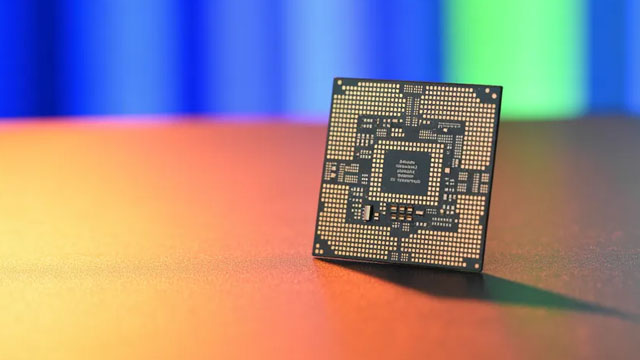
TSMC reported third-quarter revenue of NT$1.49 trillion ($46.71 billion), up 50% year on year and above analysts’ NT$1.46 trillion estimate. Nvidia, AMD and Intel shares were lower in Thursday premarket trading, as record sales underscored strong AI demand but also tougher valuation conditions.
Analysis
The divergence is more informative about expectations than demand: upstream activity can remain strong while equity investors question how much of the AI buildout’s economics accrue to chip designers versus manufacturing, and whether growth already embedded in their prices can keep expanding multiples. TSM’s sales support the demand side of the thesis, but revenue alone does not establish AI mix, gross-margin conversion, or returns on its capacity investment.
Over days, positioning and valuation can dominate the operating signal; a strong supplier print need not lift NVDA or AMD if investors are resetting the growth premium. Over 1–3 months, watch TSM’s mix, margins and capex commentary alongside customer guidance for evidence that demand translates into profitable orders rather than merely higher volumes. Over 6–18 months, the key risk is a mismatch between accelerated capacity investment and durable end-customer monetization; geopolitics remains a separate tail risk to TSM exposure.
Contrarian read: the premarket weakness may overstate a near-term demand problem, but it does not make the chip designers automatically cheap. Intel’s move is not independently validated by this TSM result; avoid treating it as evidence of either an AI demand inflection or a direct read-through to Intel’s execution. Given missing valuation, positioning and margin data, favor relative-value discipline over a broad sector call.
AllMind Terminal
AI-powered research, real-time alerts, and portfolio analytics for institutional investors.
Request TrialMarket Sentiment
Overall Sentiment
mixed
Sentiment Score
0.05
Ticker Sentiment
Key Decisions for Investors
- Consider a small, staged TSM-over-NVDA relative-value position only if the post-open move stabilizes and subsequent TSM disclosures confirm margin conversion; size for foundry/geopolitical risk. Reassess if TSM margins or forward commentary weaken, or if NVDA’s relative performance improves alongside stronger customer monetization evidence.
- Do not chase a broad semiconductor long solely on the sales signal. Track TSM’s next monthly revenue update and quarterly margin/capex commentary, plus NVDA and AMD guidance; demand that orders and profitability corroborate the revenue trend before adding exposure.
- Treat AMD and NVDA premarket weakness as a valuation/positioning warning, not proof of falling AI demand. Avoid initiating outright shorts without valuation and positioning evidence; a sustained estimate-cut cycle or weaker customer spending would strengthen the downside case.
- Keep INTC exposure thesis-specific: this data point does not establish a change in Intel’s competitive position. Revisit only with company-specific execution or guidance evidence; broader semiconductor weakness alone is not a differentiated signal.
More News
- Stocks Drop, Oil Rises on Iran Report; TSMC, Samsung Disappoints Investors
- Samsung, TSMC Fail to Excite Investors Used to Torrid AI Growth
- Premarket movers: Palantir gains on bullish call, NXP tumbles on downgrade
- Uber and China’s Pony.ai plan to launch robotaxis in London
- TSMC September sales hit another record as AI boom rolls on
- Microsoft’s new Surface Laptop Ultra finally has a starting price (you should sit down)