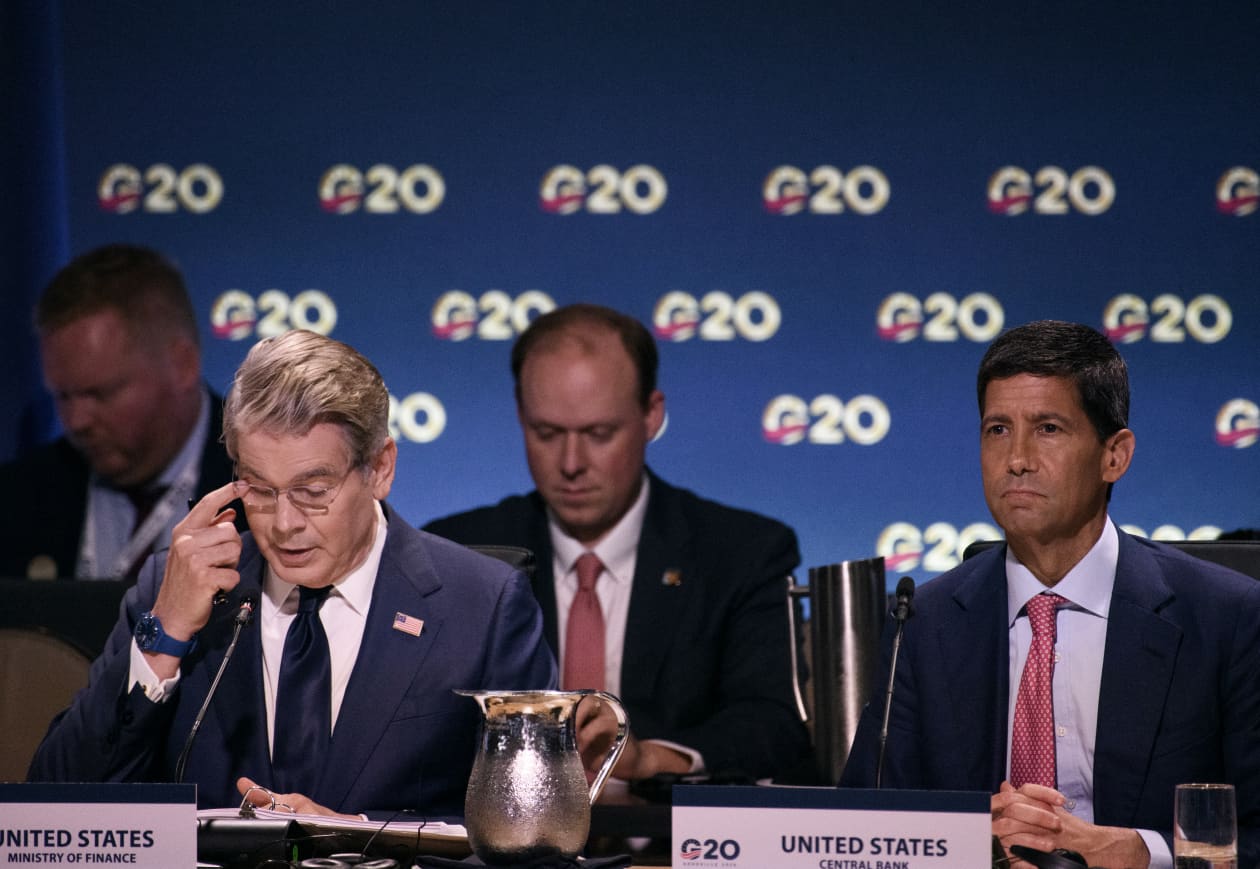
Wall Street is focused on Fed Chair Kevin Warsh to prevent a disorderly move in rates as a large wave of corporate bond supply approaches. The pressure is already visible in the $31.5 trillion Treasury market, where benchmark yields have hit fresh highs during President Trump’s second term, highlighting rising financing costs for the AI build-out. Overall, expectations center on the need for “stability and trust,” implying a cautious risk backdrop for credit and rates.
The real market mechanism is not the headline personality debate; it is whether a credible Fed reset can compress term premium and restore the bid for long-duration balance sheets before the corporate calendar turns into a supply shock. If that works, the biggest relative winners are the hyperscalers and incumbent AI platforms that can self-fund capex, while the marginal losers are the smaller AI infrastructure names that need repeated debt issuance and cannot absorb a higher all-in cost of capital.
The second-order effect is a widening dispersion inside credit: IG issuers with scale should refinance through the window, but lower-quality tech, speculative data-center funding vehicles, and anything dependent on spread product will face rationing if yields stay elevated. That argues for caution on HYG/JNK versus LQD/VCIT over the next 1-3 months, because the market can tolerate one more issuance wave only if the primary market clears with tight concessions. If it does not, price discovery will move from rates into equities via margin compression and delayed capex.
Contrarian view: consensus may be overpricing the ability of any single chair to offset a structural Treasury supply problem. If deficits and AI capex keep forcing duration supply into the market, a friendlier Fed only slows the adjustment; it does not eliminate the higher-WACC regime. The main falsifier is a sustained retreat in the 10Y and clean absorption of upcoming corporate supply; absent that, this is a duration/credit stress story, not a personality trade.
AI-powered research, real-time alerts, and portfolio analytics for institutional investors.
Overall Sentiment
mildly negative
Sentiment Score
-0.35
Ticker Sentiment
