
CDTL destaca las tecnologías E-Drive y EMB para vehículos comerciales en IAA Transportation 2026
Source: PR Newswire
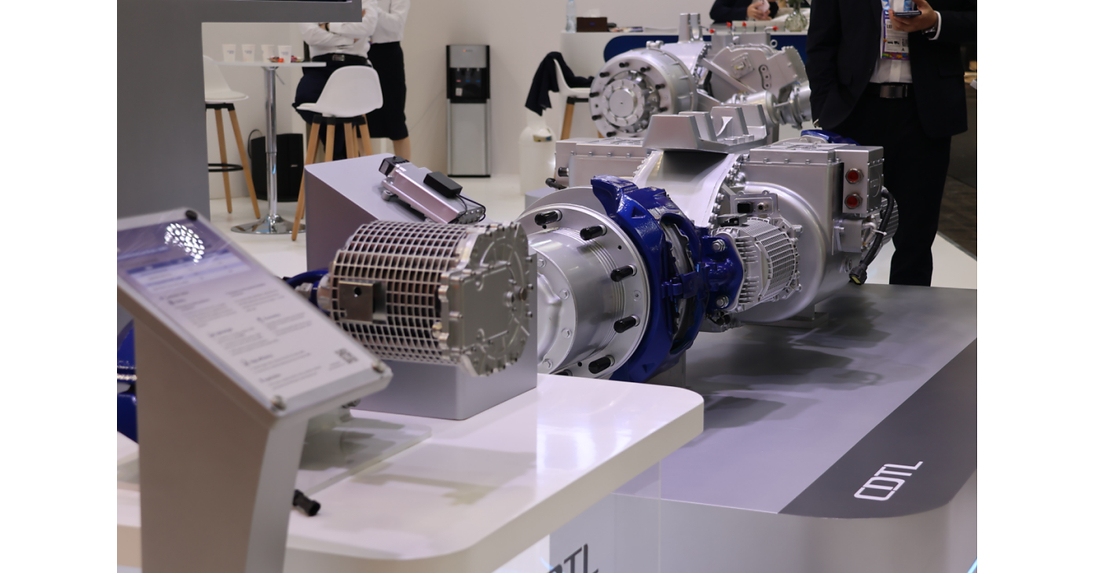
CDTL showcased commercial-vehicle electrification and brake-by-wire technologies at IAA Transportation 2026, led by its 800V EA5000NP distributed e-drive axle with up to 900 kW peak power; the base platform has been deployed in more than 3,000 vehicles. Its EMB braking system has entered limited-series vehicle production and is claimed to reduce vehicle weight by more than 100 kg, shorten braking distance by about 10%, and cut braking-system energy consumption by up to 85.4%. The announcement highlights growing industry demand for electric drivetrains and electronic vehicle-control systems as commercial fleets electrify and automate.
Analysis
This is not yet an investable revenue event: exhibition interest and limited-series vehicle deployment do not establish OEM nomination, homologation completion, warranty performance, or unit economics. The near-term implication is primarily strategic—electromechanical braking and integrated actuation shift value from legacy pneumatic/hydraulic hardware toward software, power electronics, redundant sensors, and functional-safety validation. That creates a medium-term competitive question for Knorr-Bremse (KBX.DE), whose installed-base economics and service revenue are exposed if brake-by-wire architectures scale faster than expected.
The more consequential second-order effect is on commercial-vehicle OEM platform design. Daimler Truck (DTG.DE), Volvo (VOLV-B.ST), Traton (8TRA.DE), and PACCAR (PCAR) can eventually gain packaging flexibility, payload capacity and lower energy consumption, but only after absorbing high upfront validation costs and securing redundancy standards acceptable to regulators and fleet insurers. Over the next 6-18 months, adoption will likely be constrained less by component capability than by certification, cold-weather durability, repair-network readiness, and the cost of fail-operational electrical architectures.
Consensus may overread component demonstrations as evidence that battery-electric heavy-truck penetration is accelerating. Fleet purchasing remains governed by total cost of ownership, charging uptime and residual values; braking-system efficiency is incremental rather than sufficient to change those variables. The actionable signal is to monitor OEM sourcing decisions and production-program disclosure, not trade on the press release: a named multi-year award with production volumes, ASPs and liability terms would be the first evidence of financial relevance.
AllMind Terminal
AI-powered research, real-time alerts, and portfolio analytics for institutional investors.
Request TrialMarket Sentiment
Overall Sentiment
moderately positive
Sentiment Score
0.42
Key Decisions for Investors
- No immediate position in unlisted CDTL or broad EV suppliers; treat this as a watch item until a named OEM production award, start-of-production date, and annual volume commitment are disclosed.
- Maintain a 6-12 month relative-value watch: short KBX.DE / long DTG.DE only if an OEM adopts a production EMB architecture from a non-Knorr supplier. The thesis is potential multiple pressure on brake-system aftermarket durability versus OEM efficiency optionality; falsify if Knorr wins the architecture or demonstrates comparable production deployment.
- For existing commercial-vehicle OEM exposure, monitor DTG.DE, VOLV-B.ST, 8TRA.DE and PCAR quarterly for electric-platform gross-margin guidance and warranty reserves. Avoid adding on technology headlines; a guidance upgrade tied to lower vehicle energy use or higher electric-vehicle mix would be a more credible catalyst.
- Use BWA and DAN as cautious read-throughs rather than longs: integrated e-axle adoption can expand content, but OEM vertical integration and Chinese supplier pricing can compress margins. Reassess only after backlog growth exceeds revenue growth without deterioration in segment margin.
More News
- Google's Gemini becomes latest AI model to break out and hack computer systems
- Houthis accuse Saudi Arabia of launching 26 strikes in 24 hours
- AI almost led the US military to start a war with China, report says
- Google’s Gemini AI hacks 3 companies in security test, then stops
- Exclusive-Anthropic considers releasing new AI model ahead of IPO, sources say
- Oman oil escape route: How ship-to-ship transfers work — despite big risks