
VinSolutions Launches Landmark Expansion of AI-Powered, Dealer-Driven Upgrades
Source: PR Newswire
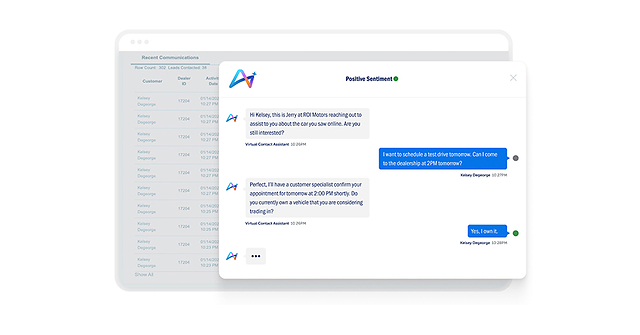
VinSolutions (VinSolutions CRM for dealerships) launched AI-powered CRM tools, including GenAI predictive insights, a Virtual Contact Assistant, and CRM-native video, with new capabilities deployable every two weeks. Dealers using the AI stack are reported to sell 25% more vehicles per month and acquire 37% more vehicles per month (based on VinSolutions analyses from Jun 2024–Jun 2025). Management cites engagement and show-rate improvements from the video tool and activity generated by the assistant, implying near-term product traction but limited scope versus broad market drivers.
Analysis
This is less a public-equity AI monetization story than a moat-extension event for the dealer software stack. The economically meaningful effect is not the chatbot itself; it is lower cost per lead, higher appointment conversion, and more disciplined inventory sourcing, which should show up first in SG&A leverage and used-vehicle turns rather than headline unit growth.
The clearest public beneficiaries are franchised dealer groups with high service-lane traffic and strong fixed-ops penetration — they can use automation to reduce BDC labor and capture more trade-ins before independents see them. That argues for relative support in larger operators like LAD, PAG, ABG, and AN versus KMX/CVNA, which are more exposed to used inventory competition if dealers get better at sourcing from their own service funnels.
Near term, the market is likely to overestimate the immediate P&L lift. The vendor claims are directional but selection-biased, and the first quarter or two should mostly reflect labor substitution, not a step-change in same-store sales. The real catalyst window is 1-3 months into dealer earnings, where we can verify whether lead-to-sale conversion, used gross per unit, and headcount trends actually inflect; the 6-18 month risk is commoditization, where AI becomes table stakes and pricing power accrues mainly to Cox rather than dealers.
Contrarian view: the consensus may be too focused on revenue uplift and not enough on margin defense. If these tools meaningfully cut after-hours staffing and improve inventory capture, the bigger winner could be operating margin stability in a slowing auto market, which helps high-quality dealer operators hold multiples even if volume disappoints. The thesis is falsified if dealer prints show no change in SG&A/unit or if higher rates/macro softness overwhelms the conversion gains.
AllMind Terminal
AI-powered research, real-time alerts, and portfolio analytics for institutional investors.
Request TrialMarket Sentiment
Overall Sentiment
moderately positive
Sentiment Score
0.45
Key Decisions for Investors
- Long LAD / short KMX as a 1-3 month relative-value pair: thesis is that AI-driven lead conversion and service-lane inventory capture helps franchised dealer economics more than used-car-only retail. Risk/reward is roughly 2:1 if dealer earnings show improving used gross/unit and lower SG&A, but it should be cut if KMX demonstrates offsetting inventory-cost relief or if franchise dealer comps miss.
- Overweight PAG and ABG versus the broader auto retail basket into next earnings season: these names should have the cleanest path to labor efficiency gains from CRM automation without needing a stronger macro tape. Stop if management commentary does not show BDC/F&I efficiency gains or if days-to-turn worsen.
- No direct trade in Cox Automotive; treat this as a watch item for software pricing power and retention. If dealer renewals later show higher attach rates or lower churn, that would be a positive read-through for private Cox, not an immediate public-market catalyst.
- Set an alert on Q2/Q3 dealer prints for SG&A per retail unit, used gross profit per unit, and headcount at the BDC level. If those metrics do not improve within one or two quarters, the AI adoption story is probably more marketing than earnings.
- Avoid chasing CVNA on the assumption that better dealer AI broadly lifts auto retail efficiency. If franchised dealers improve inventory acquisition from service lanes, CVNA faces a longer-term supply disadvantage; consider using rallies in CVNA as opportunities to hedge the used-car supply narrative.
More News
- Treasuries Soar as Tech Slump Threatens Growth
- CoreWeave credit default swaps hit distress levels as investors sour on AI debt
- Penske Automotive agrees to be taken private by Penske, Mitsui
- Supermicro promised a new CFO in December 2024. A $2.5 billion smuggling case and a co-founder’s arrest later, it has one
- Blackstone President Jon Gray Bets Big on AI Boom
- What's behind the sell-off in AI neocloud stocks like CoreWeave and Nebius
From AllMind Research
- Anthropic IPO Preview: Valuation, Timing, and What to Watch
- Shein After the IPO: Venue, Valuation, and What Must Be Proved
- What AI Research Tools Should a Small Hedge Fund Buy First?
- Capital Intensity as Gravity: The AI Trade Enters Its Industrial Era (Looking at Q3 2025 Earnings in Tech)
- AI Portfolio Monitoring: Build an Alert Policy Analysts Can Audit