
Buffett's Succession Plan Shows What Makes Berkshire Hathaway Unique
Source: seekingalpha.com
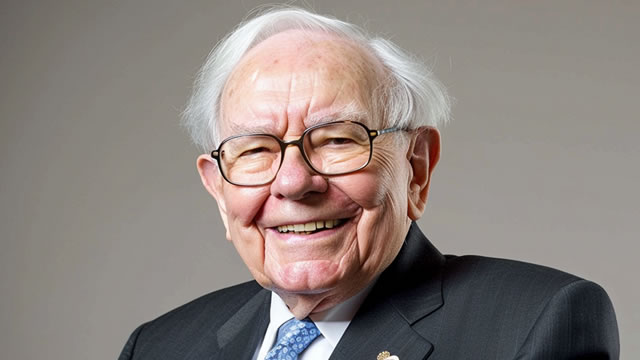
Warren Buffett's immediate retirement as Berkshire Hathaway CEO is characterized as the final step of a succession plan underway since 2018, rather than being driven by health-related limitations. Greg Abel has been progressively positioned to assume operational, investment and overall leadership responsibilities, while Howard Buffett is set to chair the board to safeguard Berkshire's culture and values.
Analysis
The relevant market question is not continuity of operating subsidiaries but whether Berkshire’s capital-allocation premium survives its first major acquisition, buyback decision, or insurance-cycle stress test without Buffett as final arbiter. A modest multiple de-rating is plausible over the next 1-3 months as index-like and retail holders reassess key-person risk, but the underlying earnings stream should be less sensitive than the share price because regulated utilities, rail, insurance float, and wholly owned operating businesses are decentralized. The more material valuation risk is that cash earns lower incremental returns if acquisition discipline or repurchase timing deteriorates.
The first 6-18 month catalyst path is therefore unusually observable: deployment of excess liquidity, cadence and pricing of repurchases, underwriting profitability at GEICO, and whether new management preserves Berkshire’s low-overhead structure. Consensus may overstate the importance of symbolic governance continuity while understating the risk that a less founder-centric organization faces pressure to become more transparent, dividend-oriented, or acquisitive at lower expected returns. Conversely, an initial selloff could be overdone if capital allocation remains demonstrably disciplined and the company avoids a large, low-return transaction.
This is not automatically a directional trade. The cleanest expression is to treat any transition-driven discount as an opportunity only after comparing BRK.B’s price-to-look-through earnings and price-to-book versus its own 5-10 year ranges, adjusted for unrealized investment gains and insurance reserve development. A thesis is falsified by a material deterioration in underwriting results, sustained repurchases above conservative intrinsic-value estimates, or a large acquisition that reduces expected return on deployed cash.
AllMind Terminal
AI-powered research, real-time alerts, and portfolio analytics for institutional investors.
Request TrialMarket Sentiment
Overall Sentiment
neutral
Sentiment Score
0.10
Ticker Sentiment
Key Decisions for Investors
- Maintain core BRK.B exposure rather than chase an immediate headline reaction; reassess over the next two quarterly reports based on buyback activity, GEICO combined ratio, and cash deployment rather than management commentary.
- Set an accumulation alert for BRK.B if a transition-driven selloff creates a 10%+ discount to a conservative estimate of per-share intrinsic value or pushes valuation below its trailing 5-year median; target a 12-18 month normalization, with downside defined by a further 10-15% de-rating if capital allocation credibility weakens.
- Avoid buying short-dated BRK.B calls: the near-term catalyst is governance-related and volatility is unlikely to compensate for time decay. If hedging a sizable position, use 3-6 month put spreads only after an outsized rally, with the hedge removed if the first post-transition capital-allocation decisions are disciplined.
- Watch MKL as a relative-value comparator rather than a direct substitute: long BRK.B / short MKL is only actionable if Berkshire’s transition discount widens materially while Markel’s valuation remains elevated; invalidate the pair if Berkshire announces a large acquisition or Markel’s insurance underwriting materially improves.
More News
- Peter Thiel says Germany has a ‘fear of success’ problem—and it explains why entrepreneurs don’t scale like Elon Musk or Mark Zuckerberg
- The Stock Market Is Triggering a Warning Seen Only Once Before, and Warren Buffett Has a Stark Warning for Investors
- Berkshire Hathaway Just Bought $212 Million of This Beaten Down Stock in 3 Days, and Its Stake Has Increased 81% This Quarter
- Prediction: A Stock Market Crash Is Coming. Here's What Investors Should Do Based on Warren Buffett's Time-Tested Advice.
- The Tiny Magnet Maker That Attracted $1.6 Billion From Lutnick
- Tesla workers balk at training Optimus humanoid robots as replacements