
Direct Federal Credit Union Launches Direct Impact Checking: Turning Everyday Spending into Community Impact
Source: PR Newswire
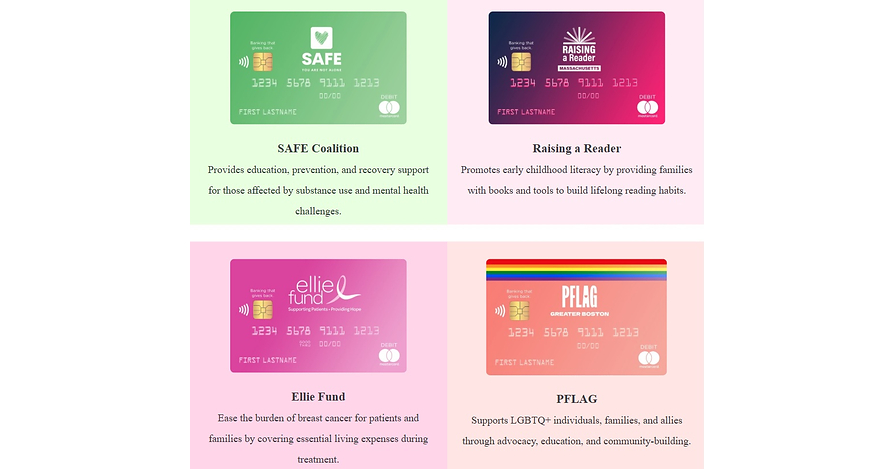
Direct Federal Credit Union launched Direct Impact Checking, a no-cost account that links members' debit-card spending to donations for one of four Massachusetts nonprofits. The program targets growing interest in values-driven consumer spending, citing data that up to 70% of Gen Z adults have participated in philanthropy. Direct Federal plans to disclose funds generated, account growth and nonprofit selections as adoption develops.
Analysis
This is not investable in its current form: a local credit-union product launch has no disclosed economics, adoption target, interchange-sharing structure, or balance-sheet relevance. The donation expense is likely funded from interchange or marketing budget, so the near-term economic question is whether incremental primary-account relationships and debit-card spend exceed the subsidy; absent retention and spend data, that cannot be underwritten.
The broader signal is modestly constructive for purpose-linked payment products, but it is not a new competitive threat to scaled banks or card networks. Visa (V) and Mastercard (MA) retain transaction-volume exposure regardless of the charitable wrapper, while payments processors and issuer-platform providers could benefit only if similar programs scale across institutions. The more relevant second-order risk is that community banks and credit unions increasingly use values-based rewards to compete for younger depositors, raising customer-acquisition and rewards costs for regional banks already facing deposit beta pressure.
Over the next 1-3 months, watch for disclosed account growth, monthly active debit-card usage, donation rate as a percentage of spend, and evidence that deposits migrate rather than merely re-label existing accounts. Over 6-18 months, a scalable version of this model could favor embedded-finance vendors such as Fiserv (FI) and Jack Henry (JKHY), but only if they package nonprofit-selection, reporting, and compliance tools into repeatable bank offerings. The press release's participation statistics do not establish willingness to change primary banking relationships, which is the key economic hurdle.
AllMind Terminal
AI-powered research, real-time alerts, and portfolio analytics for institutional investors.
Request TrialMarket Sentiment
Overall Sentiment
mildly positive
Sentiment Score
0.28
Key Decisions for Investors
- No direct trade: treat as a watch item rather than a catalyst for V, MA, FI, or JKHY; the issuer, economics, and adoption scale are not disclosed.
- Monitor FI and JKHY product announcements and bank-client deployments over the next 6-12 months. Consider a tactical long only if a multi-institution rollout identifies recurring software or processing revenue and measurable account-acquisition uplift.
- For regional-bank exposure, track deposit costs and noninterest-expense guidance at consumer-facing New England lenders over the next two earnings cycles; rising rewards/promotional expense without low-cost deposit growth would reinforce an underweight bias.
- Falsification trigger for the competitive-cost thesis: evidence that purpose-linked accounts generate materially higher direct-deposit attachment and debit spend while donation expense remains below incremental interchange and lifetime-value gains.
More News
- 'Science fiction': Transport companies — the backbone of economy — are sounding alarm on fuel prices
- What to know about US Federal Reserve’s first interest rate hike in 3 years
- Fed Rate Hike Looms as Retail Sales Surge
- Consumers hit by one-two punch of oil and rates from Iran war. The estimated bill is $1,700 per household
- US retail sales rebound sharply in August
- Now that the Fed raised rates, where to score the best yields on your cash