
Dutch Bros' 31% Shop Margin: Can Cost Pressures Stay Contained?
Source: zacks.com
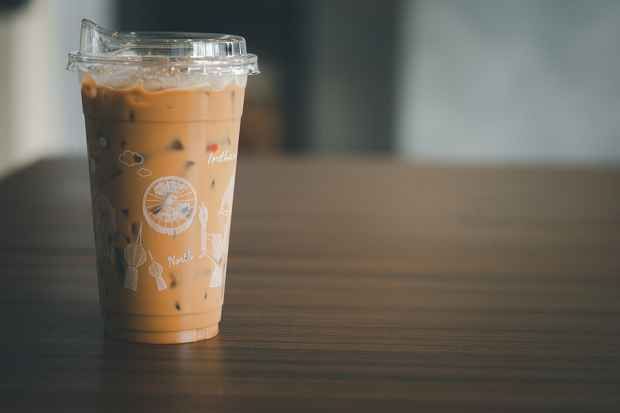
Dutch Bros' Q2 2026 company-operated revenue rose 34% year over year to $510 million and shop contribution increased 32% to nearly $156 million, while its 30.6% shop margin contracted 50bps. Same-shop sales grew 8.3%, including 3.4% transaction growth, and labor costs fell 120bps as sales leverage partly offset an 80bp increase in beverage, food and packaging costs. Management retained adjusted EBITDA guidance of $385-$390 million, whose midpoint implies about 20bps of margin compression in 2026 from coffee inflation and build-to-suit occupancy costs.
Analysis
BROS is approaching the point where unit-growth economics, rather than headline same-store sales, determine the equity outcome. Build-to-suit expansion raises the fixed-cost base and reduces downside flexibility in a demand slowdown; therefore, modest traffic deceleration can produce disproportionate restaurant-margin deleverage. The key underwriting variable for the next 1-3 quarters is whether transaction growth—not ticket inflation—remains sufficient to absorb lease and commodity pressure as new units mature.
Coffee inflation is not uniformly negative across the group. SBUX has greater purchasing scale, a more developed loyalty/pricing engine, and a multi-year cost program, so a sustained green-coffee spike should widen its relative margin advantage versus BROS rather than impair the category equally. MCD is comparatively insulated because beverages are less central to its profit pool; its greater exposure is value-menu elasticity and franchisee profitability, making it a weaker direct read-through.
Consensus may be too focused on BROS' current restaurant margin and too little on the earnings-quality distinction between sales leverage and durable pricing power. Food attachment can lift average check and throughput, but also adds procurement complexity, waste risk and labor steps; evidence of stable transaction growth alongside food mix expansion would be materially more constructive than sales growth alone. Conversely, a 100-150 bp restaurant-margin shortfall or a reduction in 2026 EBITDA guidance would likely trigger multiple compression given the stock's growth-dependent valuation.
Near term, this is not a broad restaurant-sector signal; it is a relative-execution test. Watch coffee futures, traffic data, new-shop sales ramps and lease-related occupancy expense through the next earnings report. A normalization in coffee costs could create upside to BROS estimates, but that outcome needs independent commodity confirmation rather than management commentary.
AllMind Terminal
AI-powered research, real-time alerts, and portfolio analytics for institutional investors.
Request TrialMarket Sentiment
Overall Sentiment
mildly positive
Sentiment Score
0.22
Ticker Sentiment
Key Decisions for Investors
- Maintain a 1-3 month relative long SBUX / short BROS pair rather than an outright restaurant bet: SBUX has clearer structural cost offsets while BROS has higher fixed-cost and execution sensitivity. Target 8-12% relative return; exit if BROS reports transaction acceleration above 5% with restaurant-margin expansion or SBUX's North America margin momentum reverses.
- Do not initiate a standalone BROS long before the next earnings release. Upgrade to a tactical long only if BROS reaffirms or raises EBITDA guidance while demonstrating that transaction growth offsets occupancy pressure; use a 10-12% stop below entry because a margin-guidance cut can re-rate the shares quickly.
- For existing BROS exposure, buy 2-4 month downside protection around the next report if implied volatility is below its post-earnings realized range. The hedge is justified by asymmetric downside from fixed occupancy costs; remove it if coffee inputs soften materially and management confirms stable unit-level margins.
- Monitor Arabica coffee futures and quarterly BROS occupancy expense as explicit thesis alerts: a sustained commodity increase combined with occupancy deleverage is the clearest short catalyst, while a meaningful coffee retreat before year-end would invalidate the near-term relative short.
More News
- Chipotle Mexican Grill is about to report earnings. Here's what to expect
- Bearista cups are returning at Starbucks. Can the viral sensation boost holiday sales again?
- 9 facts about Wendy's that might surprise you
- What investors need to know about Alphabet's stock-busting earnings report
- Our next steps for Alphabet stock after earnings disappoint at nearly every turn
- Fortinet’s stock is taking a dive after earnings. Here’s why.