
Singapore to End Most Haze Mitigation Measures on Saturday
Source: Bloomberg
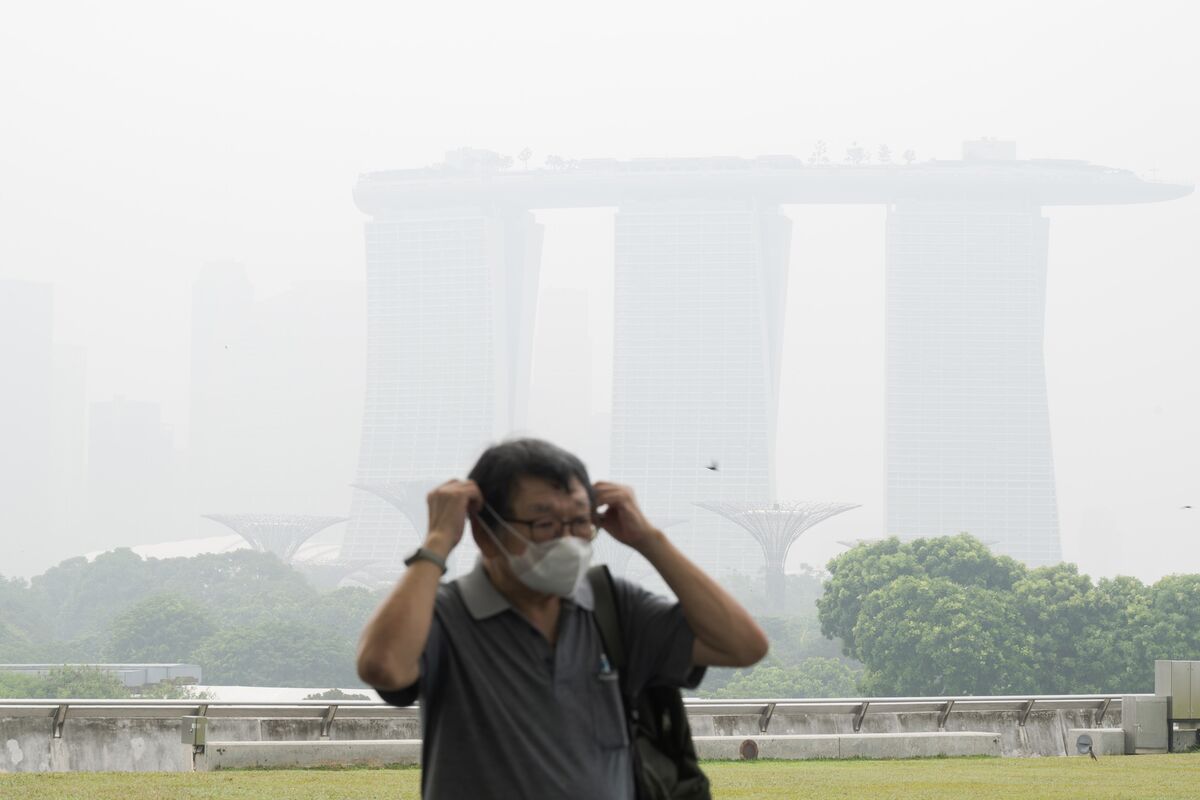
Singapore will end most haze mitigation measures at 6 p.m. on Nov. 7 as air quality improves after weeks of dense smog. Distribution of N95 and equivalent masks, designated air-conditioned shelters, and haze-related protections for outdoor workers will cease.
Analysis
This is a small normalization signal, not evidence that regional haze risk has structurally declined. In the near term, fewer public-health restrictions may reduce friction for outdoor activity and travel, but the economic benefit is likely diffuse and too modest to support a standalone position in Singapore-linked travel or consumer names. The more relevant second-order effect is on risk pricing: if investors had added a temporary haze-disruption premium to travel or outdoor-exposure businesses, that premium can unwind; a single improvement period does not justify removing longer-term exposure to recurring haze episodes.
The key uncertainty is durability. The article does not establish what drove the air-quality improvement or whether conditions are likely to deteriorate again. Over the next 1–3 months, a renewed deterioration could quickly reverse the operational normalization; over 6–18 months, the episode reinforces that recurring environmental disruption remains a contingent operating risk, rather than a predictable earnings catalyst. A contrarian read is that the measure’s end may invite overconfidence: policy withdrawal reflects current conditions, not proof of lasting mitigation. No company-specific financial impact or sufficiently strong signal is established here.
AllMind Terminal
AI-powered research, real-time alerts, and portfolio analytics for institutional investors.
Request TrialMarket Sentiment
Overall Sentiment
mildly positive
Sentiment Score
0.20
Key Decisions for Investors
- No standalone trade: the signal is too localized and low-impact to justify a directional position in Singapore travel, hospitality, or consumer exposure.
- Treat any short-term relief rally in Singapore Airlines, SATS, or regional tourism exposure as a sentiment move unless passenger volumes, flight operations, or company guidance show a measurable improvement.
- Monitor Singapore air-quality readings and any reinstatement of public-health measures; renewed deterioration would falsify the normalization thesis and could revive disruption concerns.
- Before sizing a haze-related trade, verify the improvement’s duration and cause, plus any disclosed effects on flight schedules, bookings, worker productivity, or operating costs.
More News
- Solar stocks rallied on Democratic victories, but policy risks still threaten the group
- OpenAI pledges to pay for data center power after election highlights AI concerns
- Google’s first Wyoming data centre will run on gas with carbon capture
- Maersk slumps 11% as Q3 profit miss estimates; 2026 guidance upgraded
- Voters rejected AI data centers over resource concerns. Here's why measuring water usage is hard
- A new bill could change how the US builds energy infrastructure