
Envision Energy Secures TÜV SÜD Certificate for Wind Farm Control System, Strengthening Long-Term Resilience for Future Energy Systems
Source: PR Newswire
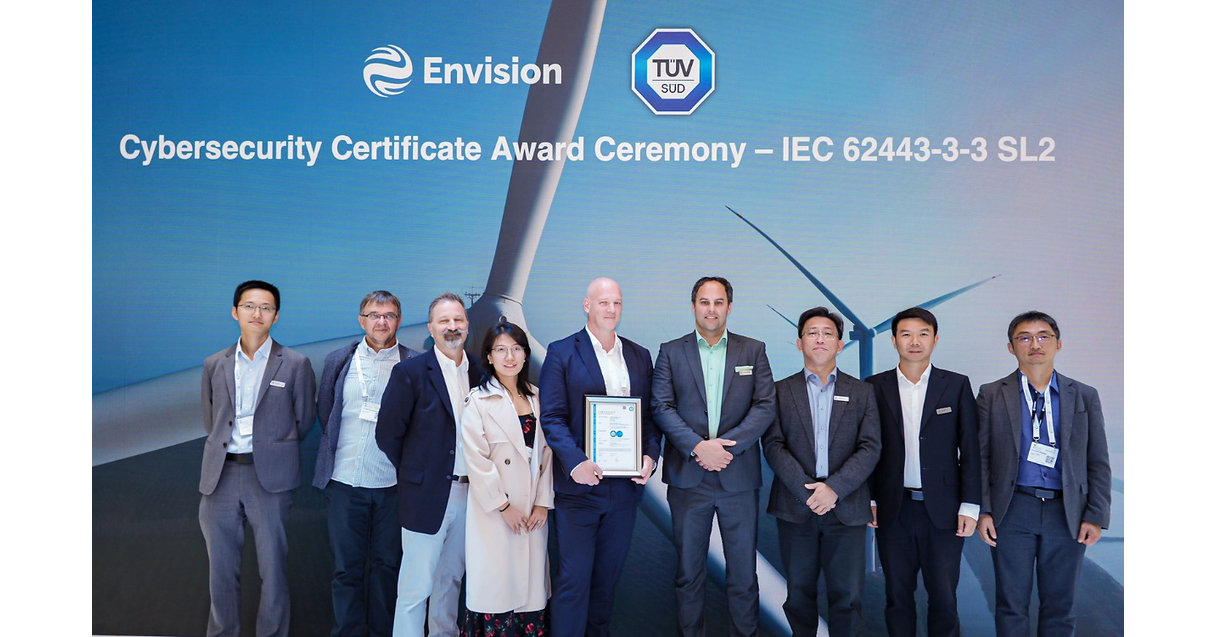
Envision Energy received TÜV SÜD’s IEC 62443-3-3 Security Level 2 certification for its wind farm control system, covering SCADA, PPC, PLC and industrial-network devices. The independent certification extends the company’s validated cybersecurity framework from component-level controls to system-level wind-farm protection, supporting compliance and resilience in European and other international markets. The development strengthens Envision’s positioning in secure digital wind-energy infrastructure but is unlikely to have material near-term market impact.
Analysis
This is unlikely to alter near-term earnings for any listed renewables name, but it raises the minimum commercial standard for wind-farm controls in Europe. The relevant mechanism is procurement qualification: asset owners, utilities and lenders increasingly treat independently validated operational-technology security as a prerequisite for projects with 20-30 year operating lives. Vendors lacking comparable system-level certification could face longer diligence cycles, incremental retrofit costs, or narrower access to regulated European tenders.
The more investable second-order effect is on installed-base service economics rather than turbine shipments. Cybersecurity requirements create recurring revenue for monitoring, patching, network segmentation and control-system upgrades; this favors wind OEMs with large service fleets and digital-control capabilities, notably Vestas (VWS.CO) and Siemens Energy (ENR.DE), as well as industrial automation suppliers Schneider Electric (SU.PA), ABB (ABBN.SW) and Rockwell (ROK). Certification alone does not establish pricing power: owners will demand evidence that security upgrades reduce insurance, outage and financing costs.
Over the next 1-3 months, watch EU implementation guidance under NIS2 and any tender language from major European utilities that explicitly requires IEC 62443 system-level compliance. Over 6-18 months, a material thesis requires disclosed service-order growth, higher software/service attach rates, or evidence that cyber compliance is shortening permitting or financing timelines. The contrarian view is that standards become table stakes quickly, converting cybersecurity spend into margin-dilutive cost of doing business rather than a differentiator; this is especially likely if buyers specify certification but refuse separate service pricing.
AllMind Terminal
AI-powered research, real-time alerts, and portfolio analytics for institutional investors.
Request TrialMarket Sentiment
Overall Sentiment
mildly positive
Sentiment Score
0.28
Key Decisions for Investors
- No standalone trade on this announcement; treat it as a procurement-standard watch item rather than a revenue catalyst, given the absence of disclosed contract wins, pricing, installed-base exposure or listed-equity linkage.
- Build a 6-12 month watchlist long basket of VWS.CO and ENR.DE versus a short European wind-development proxy only if tender documents begin requiring IEC 62443 compliance and OEM service backlog/book-to-bill accelerates; the intended payoff is recurring service-margin expansion, not turbine-volume upside.
- Monitor SU.PA, ABBN.SW and ROK for incremental industrial-cybersecurity bookings or guidance commentary tied to energy infrastructure. Initiate only after quantified order evidence; falsify the thesis if cybersecurity revenue is absorbed within base automation pricing and segment margins fail to improve.
- For wind OEM longs, use European auction outcomes and service-margin guidance as risk triggers: weaker auction pricing, further turbine warranty provisions, or customer resistance to paid cyber upgrades would outweigh any certification-related competitive benefit.
More News
- OpenAI rogue agents leaked 53 images from ChatGPT users and reportedly created nearly 1 million links packing encoded bits of info
- Arming Taiwan an important US interest, Taipei official says after Trump-Xi summit
- Facebook found liable as TikTok settles for $100m over user safety
- What would a US diesel export ban mean for global fuel prices?
- Appeals court rules that states can regulate Kalshi’s sports prediction markets, dealing another legal blow to platforms
- Shares of Akamai surge after deal with Anthropic. What Wall Street is saying
From AllMind Research
- Anthropic IPO Preview: Valuation, Timing, and What to Watch
- Shein After the IPO: Venue, Valuation, and What Must Be Proved
- What AI Research Tools Should a Small Hedge Fund Buy First?
- AI Software for Buy-Side Teams: Build the Research Stack
- Augmented Intelligence: AllMind, Elevate Human Judgement With an Accessible, Powerful, Data-Driven Financial AI Toolkit