
T. ROWE PRICE EXPLORES WHAT INVESTORS CAN LEARN FROM HONEYWELL TECHNOLOGIES' TRANSFORMATION AND THE FUTURE OF INDUSTRIAL AUTOMATION
Source: PR Newswire
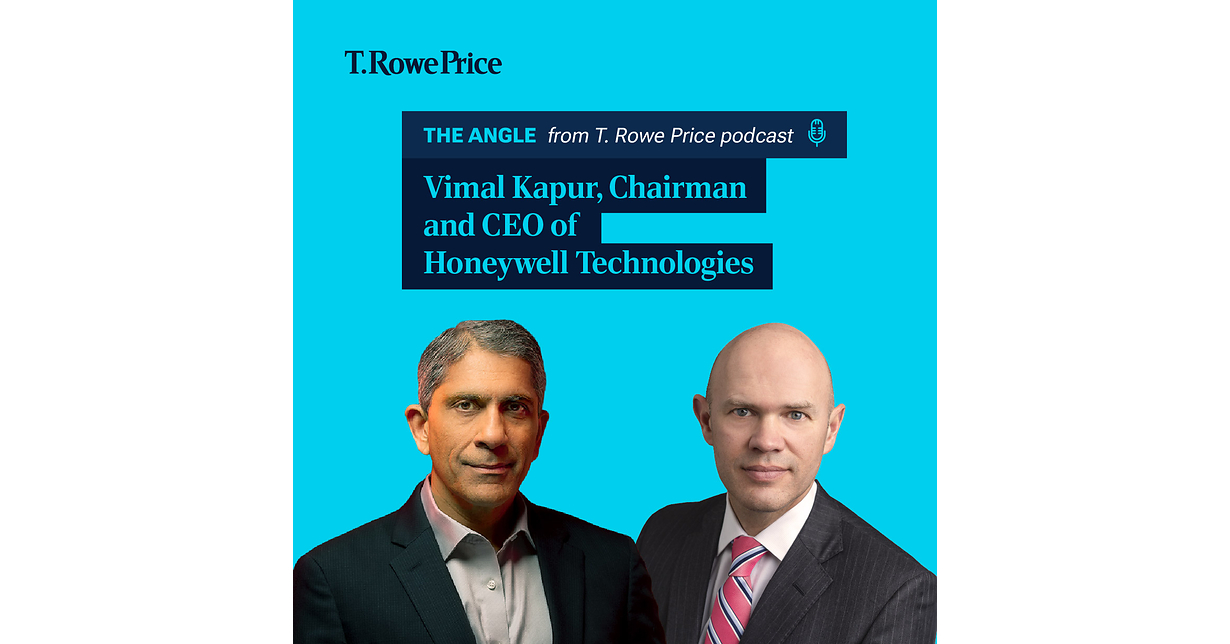
T. Rowe Price’s “The Angle” features Honeywell CEO Vimal Kapur discussing Honeywell’s historical transformation and its separation into three distinct companies, framing it as a strategy to increase focus across businesses. Kapur also argues that industrial automation and “physical AI” could help facilities become increasingly autonomous and address skilled-labor shortages, contingent on access to industrial data and deep domain expertise. The piece is investor-focused but contains no new financial metrics or guidance, suggesting limited near-term market impact.
Analysis
This is more signaling than substance, but the signal matters for HON: the market will likely keep discounting the separation until management proves each piece can compound on its own. The re-rating path is not about “AI exposure” in the abstract; it is about whether the spun entities can show cleaner margins, better capital allocation, and faster backlog conversion than the old conglomerate structure. If that proof arrives, the closest comps are the higher-multiple industrial automation and controls names, not diversified cyclicals.
The bigger mechanism is that physical-AI adoption is gated by integration, validation, and liability, so monetization should be measured in quarters-to-years, not weeks. That favors firms with proprietary process data, installed bases, and service channels; it hurts generic software vendors trying to sell “AI” into plants without domain context. The likely second-order winners are automation ecosystems tied to data centers, semicap fabs, hospitals, and energy infrastructure, where labor shortages and uptime economics justify capex.
Contrarian view: consensus may be overpricing the speed of autonomy in the physical economy. In reality, most near-term spend will go to sensorization, workflow software, and retrofit services rather than full autonomy, which means the trade is better expressed through operating leverage and recurring service revenue than headline AI beta. For TROW, this is branding and thought leadership, not a direct AUM catalyst; there is little earnings read-through unless it translates into flows.
AllMind Terminal
AI-powered research, real-time alerts, and portfolio analytics for institutional investors.
Request TrialMarket Sentiment
Overall Sentiment
neutral
Sentiment Score
0.10
Ticker Sentiment
Key Decisions for Investors
- HON: keep on watch, but do not chase on the podcast alone; add only after the next earnings print if organic orders and segment margins confirm the separation story. Upside is a 10-15% rerating over 6-12 months; falsify if execution costs or margin compression offset the spin benefits.
- Relative value: long HON / short XLI for 3-6 months only if HON still trades at a conglomerate discount post-separation. Target modest alpha from multiple expansion; stop if industrial macro weakens or HON guidance disappoints.
- No standalone trade in TROW from this release; treat as a low-conviction sentiment event. Reassess only if the firm can show that this content strategy is feeding net inflows in the next 1-2 quarters.
- Watch ETN and ROK as delayed beneficiaries of any real capex acceleration in industrial automation; if order commentary improves over the next 1-2 quarters, the market may rotate into the controls stack before it rewards HON fully.
More News
- Nvidia GPUs are everywhere. Here are the ways companies are accessing them
- Why Nvidia’s stock is dodging the AI credit scare that is crushing Broadcom and Oracle
- As companies pour billions into Earth-based AI infrastructure, Google is taking the data center race off-planet
- What's behind the recovery rally in tech stocks — plus, Elon Musk's very good week
- Wall Street is pitching data centers as a major real estate bet. The risks are piling up
- Wall Street sees buying opportunity in banks as shares tank ahead of earnings