
LG ELECTRONICS ESTABLISHES FIRST U.S. FACTORY TO PRODUCE CHILLERS FOR AI DATA CENTER COOLING
Source: PR Newswire
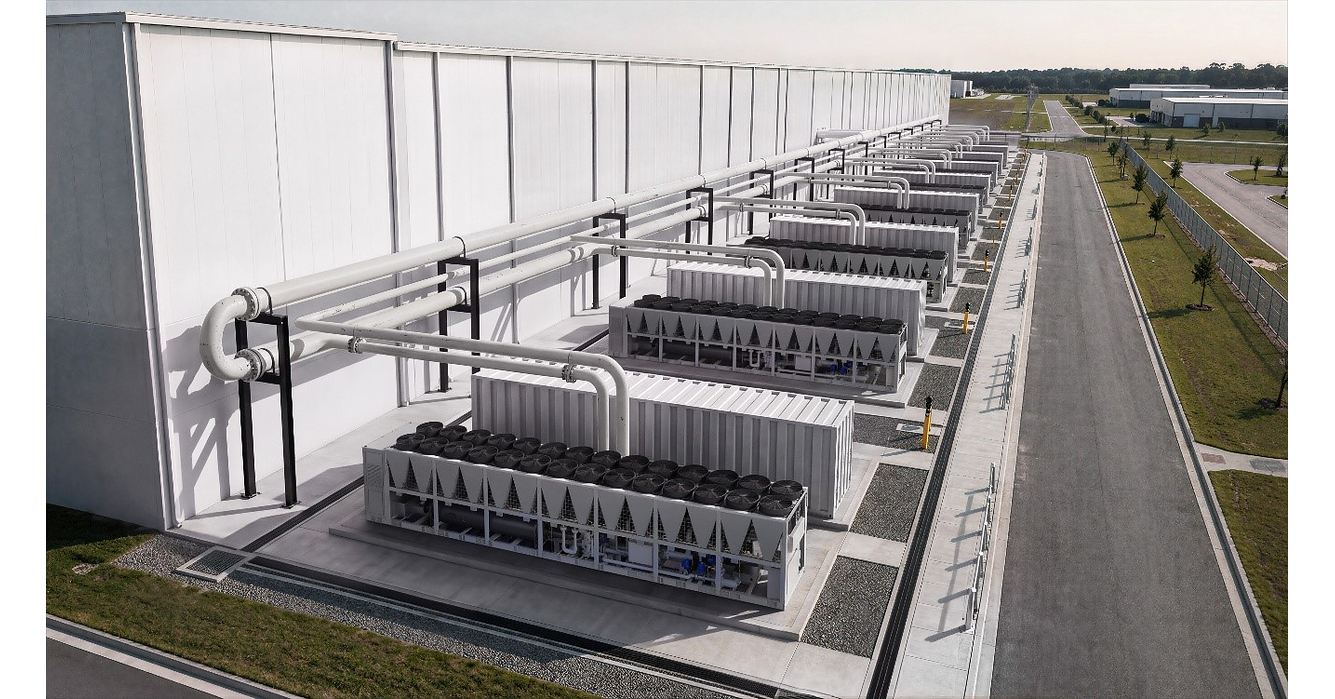
LG Electronics will invest KRW 150 billion across a new 350,000-square-foot Virginia chiller plant and expanded production lines in Pyeongtaek and Changwon, South Korea, targeting accelerating AI data-center cooling demand. The Virginia facility, scheduled to begin production in H1 2027, will manufacture air-cooled chillers and create more than 150 jobs. LG is broadening its Chip-to-Chiller portfolio to include chillers, coolant distribution units and direct-to-chip liquid cooling as global data-center capacity is projected to rise from 226 GW in 2026 to 420 GW by 2030.
Analysis
This is more important as a validation of the AI-data-center thermal bottleneck than as an earnings event for LG Electronics. Localized chiller assembly reduces lead-time, freight and tariff exposure for North American deployments, raising competitive pressure on incumbent applied-HVAC suppliers such as Trane Technologies (TT), Carrier (CARR), Johnson Controls (JCI) and Daikin. The near-term benefit accrues most to customers facing commissioning delays: incremental cooling supply can pull forward data-center revenue recognition for operators and electrical/mechanical contractors rather than create new demand.
The key second-order issue is mix. Air-cooled chillers address speed-to-deployment and water-constrained sites, but sustained GPU rack-density growth shifts value toward liquid loops, CDUs, cold plates, controls and power distribution. Vertiv (VRT), Schneider Electric (SU.PA), Eaton (ETN), nVent (NVT) and Modine (MOD) have more direct exposure to that higher-value stack; LG's integrated offering may pressure standalone thermal vendors at the low-to-mid density end, while also validating liquid-cooling adoption. A factory not producing until 1H27 means no material 2026 supply relief, so existing order backlogs and pricing power should persist through the next 2-4 quarters.
Consensus may overread every capacity announcement as immediately dilutive to cooling-equipment margins. A new domestic site must first qualify components, build field-service coverage and win hyperscaler specifications; qualification cycles can run 6-18 months and buyers generally dual-source critical cooling systems. The bearish interpretation becomes credible only if incumbents report shorter backlog duration, lower book-to-bill, or material price concessions before the facility ramps; absent that evidence, this is principally a 2027 competitive-share risk, not a reason to fade the current cooling complex.
AllMind Terminal
AI-powered research, real-time alerts, and portfolio analytics for institutional investors.
Request TrialMarket Sentiment
Overall Sentiment
moderately positive
Sentiment Score
0.58
Key Decisions for Investors
- Maintain existing long VRT/ETN exposure through the next 1-3 quarters; prefer these names to broad HVAC exposure because liquid-cooling, electrical distribution and service content retain higher switching costs. Reassess if either reports book-to-bill below 1.0x or data-center backlog conversion delays.
- Use any 5-10% sector-driven weakness to initiate a 6-12 month long MOD position versus short CARR as a relative-value expression of higher-density liquid-thermal exposure versus more conventional HVAC exposure. Target 15-20% relative upside; exit if MOD data-center revenue growth decelerates materially for two consecutive quarters.
- Do not short TT, CARR or JCI solely on this announcement. Establish an alert around 1H27 production ramp and monitor North American chiller lead times, hyperscaler vendor awards and gross-margin commentary; confirmed pricing pressure would support a 12-18 month short basket against VRT.
- For data-center infrastructure longs, favor suppliers over developers/operators until cooling availability demonstrably accelerates project commissioning. The upside catalyst is continued backlog conversion through 2027; the principal risk is an AI capex pause that leaves newly added thermal capacity underutilized.
More News
- US to send third aircraft carrier towards Iran: US official to Al Jazeera
- Trump launches midterms campaign blitz amid record low approval ratings
- Nvidia Faces Questions Over China AI Chip Smuggling Cases
- ‘They’ll be hit very hard’: Trump sends roughly 9,000 troops and a third aircraft carrier to the Middle East after warning strikes on Iran
- Russia’s Putin rules out ceasefire with Ukraine during speech in Moscow
- ‘Playing a dangerous game’: Putin threatens using ‘all its arsenal’ if there is a ‘direct attack on the Russian Federation’