
De "Taiwan Weeks 2026" gaan van start, terwijl Taiwan de connectiviteit van de wereldwijde kapitaalmarkt versterkt.
Source: PR Newswire
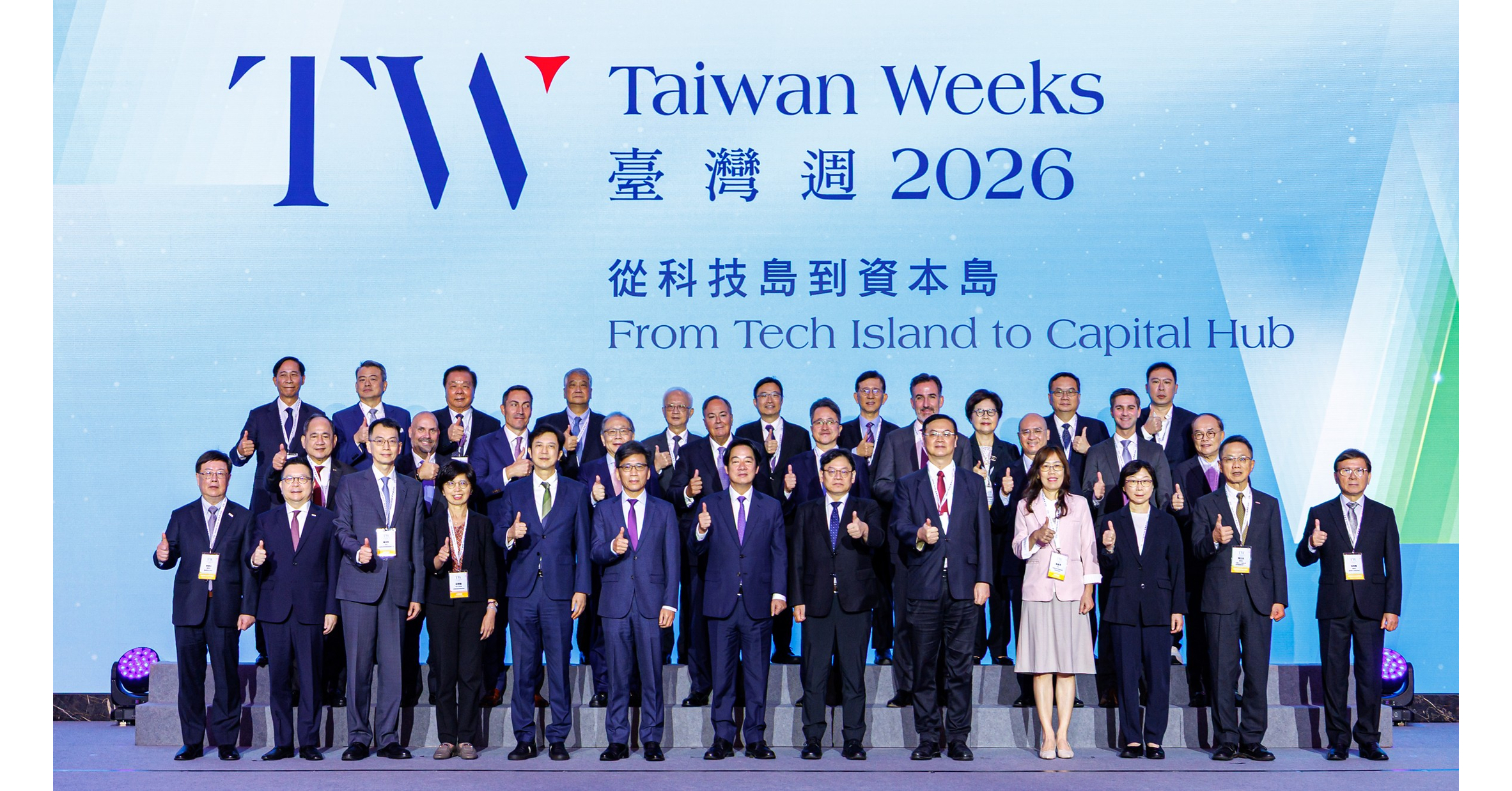
Taiwan launched Taiwan Weeks 2026, a 3–13 November program with more than 45 forums and events aimed at strengthening global capital-market links and advancing its Asian Asset Management Center initiative. FSC Chairman Peng Jin-lung said the TAIEX rose from 28,000 to 45,000 points over the past year; total market capitalization reached NT$158 trillion (US$5.03 trillion), while ETF assets reached NT$11.6 trillion (US$370 billion), ranking third in Asia-Pacific. The initiative focuses on market internationalization, regulatory and trading innovation, and stronger governance and sustainability disclosure.
Analysis
The investable signal is policy intent, not an earnings catalyst. Taiwan’s push to attract international asset managers could, over 6–18 months, broaden the marginal buyer base and support local exchange, custody and asset-management economics—but only if reforms translate into foreign participation, new fund listings and durable assets rather than event attendance and re-labeled domestic flows. Near term, the index’s AI/semiconductor concentration remains the dominant driver; market-infrastructure reform is unlikely to offset a reversal in chip expectations or the geopolitical risk premium.
The second-order risk is a feedback loop: strong AI-led returns lift ETF assets and visibility, encouraging further inflows, but also increase passive concentration in the same semiconductor complex. That makes headline market growth a weak proxy for diversification or resilience. Singapore and Hong Kong remain competing regional hubs; Taiwan’s governance and disclosure improvements would need to be credible and sustained to shift mandates. Better sustainability disclosure may initially raise compliance costs for issuers without an immediate valuation payoff.
Contrarian view: investors may over-credit the “capital hub” narrative because market gains are being attributed to institutional development when technology earnings are likely doing most of the work. No event-driven trade is warranted on this announcement alone. The thesis strengthens only with verifiable foreign net inflows, growth in internationally distributed Taiwan funds, and broader sector participation. It is falsified by weak flows despite market strength, stalled rule implementation, or a sharp deterioration in semiconductor guidance/geopolitical risk.
AllMind Terminal
AI-powered research, real-time alerts, and portfolio analytics for institutional investors.
Request TrialMarket Sentiment
Overall Sentiment
mildly positive
Sentiment Score
0.30
Key Decisions for Investors
- Do not trade the event headline. Keep Taiwan exposure tied to semiconductor earnings and risk limits, not the asset-center narrative; reassess over the next 1–3 months as flow data and policy implementation become observable.
- Set an alert for sustained foreign net buying, international Taiwan-fund launches/AUM, and market breadth beyond semiconductors. If these improve together, consider a measured Taiwan-over-broad-emerging-markets allocation; avoid initiating before confirming flows and relative valuation.
- Monitor Taiwan Stock Exchange and Taipei Exchange reform milestones, disclosure requirements, and issuer compliance costs over 6–18 months. Revisit the thesis if reforms stall, foreign participation fails to respond, or semiconductor guidance weakens materially.
More News
- Magnificent 7 loses $1 trillion. The most eye-popping stats from Thursday's tech stock plunge
- Tech stocks are suffering their biggest selloff since Covid, as investors see premature end to AI datacenter boom
- Wall Street’s best post-midterm rally in 44 years lasted just one day—then $3 trillion vanished as chip stocks plunged over AI fears
- How Wall Street's postelection rally got obliterated — and what's next
- Equity Volatility Jumps Most Since April 2025 Tariff Turmoil
- Elon Musk's Tesla and SpaceX lose over $420 billion in combined market cap after midterms