
Russian Oil Flows Dip as US Sanctions, Saudi Supplies Loom
Source: Bloomberg
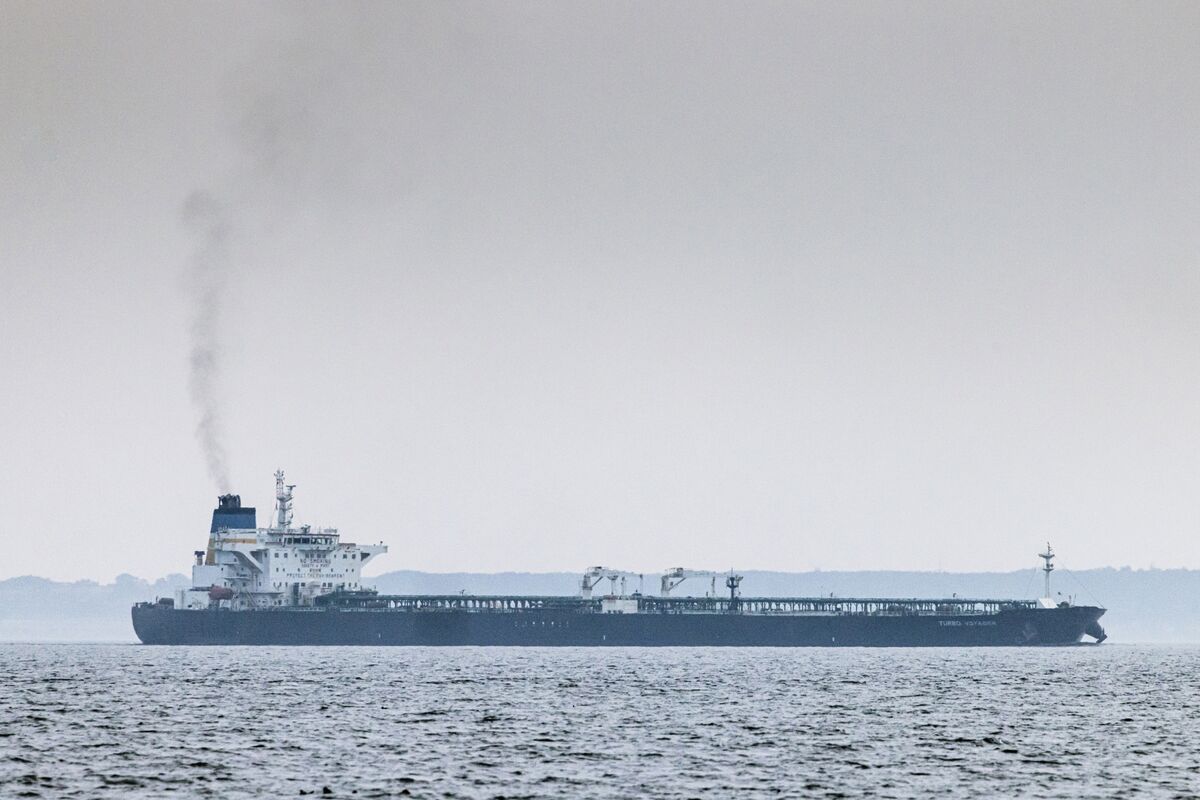
Russia's overseas crude shipments slipped to 3.53 million barrels per day in the four weeks through Sept. 20, with the latest weekly figure falling more sharply after cargo departures from Novorossiysk halted. New US sanctions, potential US tariffs and the gradual return of Saudi west-coast exports are increasing competitive pressure on Russian oil sales and could reduce revenue available to fund the Kremlin's war effort.
Analysis
The investable variable is not headline export volume but the Urals-to-Brent discount and enforcement-driven freight friction. If additional sanctioned cargoes require a larger discount to clear into India and China, Russia absorbs the economic loss while complex Asian refiners capture feedstock-margin upside; the immediate equity beneficiaries are more likely Indian refiners (RELIANCE.NS, IOC.NS, BPCL.NS) than global upstream producers. A sustained widening of the Urals discount beyond roughly $20/bbl would also pressure Russian fiscal receipts disproportionately because export duties and mineral-extraction taxes are linked to realized prices rather than benchmark Brent.
Do not treat this as automatically bullish crude or tanker rates. Restored Middle Eastern medium-sour supply is a bearish offset for the physical barrels Russia competes against, while shorter Arabian-to-Asia voyages can reduce ton-mile demand even if sanctioned Russian cargoes remain inefficiently routed. Over the next 1-3 months, the key catalyst is evidence that buyers are rejecting or demanding deeper discounts for Russian grades; over 6-18 months, a durable buyer shift toward Saudi grades would weaken Russia's pricing power but likely support Asian refining margins rather than create a broad energy-equity upside.
Consensus may overstate the effect of nominal sanctions if enforcement remains focused on designated vessels and intermediaries rather than end-buyers, banks, and insurers. The thesis is falsified if Russian realized-price discounts remain contained below ~$12/bbl and seaborne volumes normalize quickly, indicating that the trading fleet and payment channels have adapted. Conversely, a rapid Brent rally driven by broader Middle East disruption would overwhelm this relative-value setup and favor upstream beta despite weaker Russian clearing economics.
AllMind Terminal
AI-powered research, real-time alerts, and portfolio analytics for institutional investors.
Request TrialMarket Sentiment
Overall Sentiment
mildly negative
Sentiment Score
-0.32
Key Decisions for Investors
- Maintain no outright long crude position solely on this development; instead, set a 1-3 month alert for Urals-Brent discount widening above $20/bbl or sustained declines in Russian realized export prices. That is the threshold at which Russian fiscal stress and Asian refiner margin capture become materially tradeable.
- Conditional pair trade: long RELIANCE.NS or IOC.NS versus short XOP over 1-3 months if Urals discounts widen while Brent remains below $85/bbl. Discounted medium-sour feedstock can expand Asian refining margins while US E&P cash-flow expectations reset lower; exit if Brent breaks $90/bbl or Urals discount tightens below $12/bbl.
- Avoid initiating a directional long in product-tanker equities FRO or STNG without vessel-level evidence of sanctioned-fleet removals. The risk/reward is mixed: constrained Russian logistics are rate-positive, but incremental Saudi barrels delivered to Asia reduce ton-miles; require a sustained increase in dirty-tanker spot rates before entering.
- For portfolios with Russia-risk exposure, monitor Indian refinery procurement disclosures and Chinese independent-refiner buying as the highest-frequency confirmation signal. A visible substitution toward Saudi medium-sour grades would support the refiner-over-upstream relative trade and raise the probability of deeper Russian price concessions.
More News
- How Kevin Warsh’s rate hike exposed a 2-speed U.S. economy, with AI and housing at the poles
- Iran delegation to present narrative of resilience, diplomacy at UNGA
- Why are the Houthis fighting for Yemen’s Kahboub Mountains?
- Where is the US opening new military bases in Greenland?
- Alibaba says it built the ‘most powerful AI chip in China’ as the country races to catch up with the U.S.
- Trump-GCC Summit in New York: What does each side want?