
Hanwha Power recibe la aprobación preliminar de ABS para el diseño de un buque portacontenedores
Source: PR Newswire
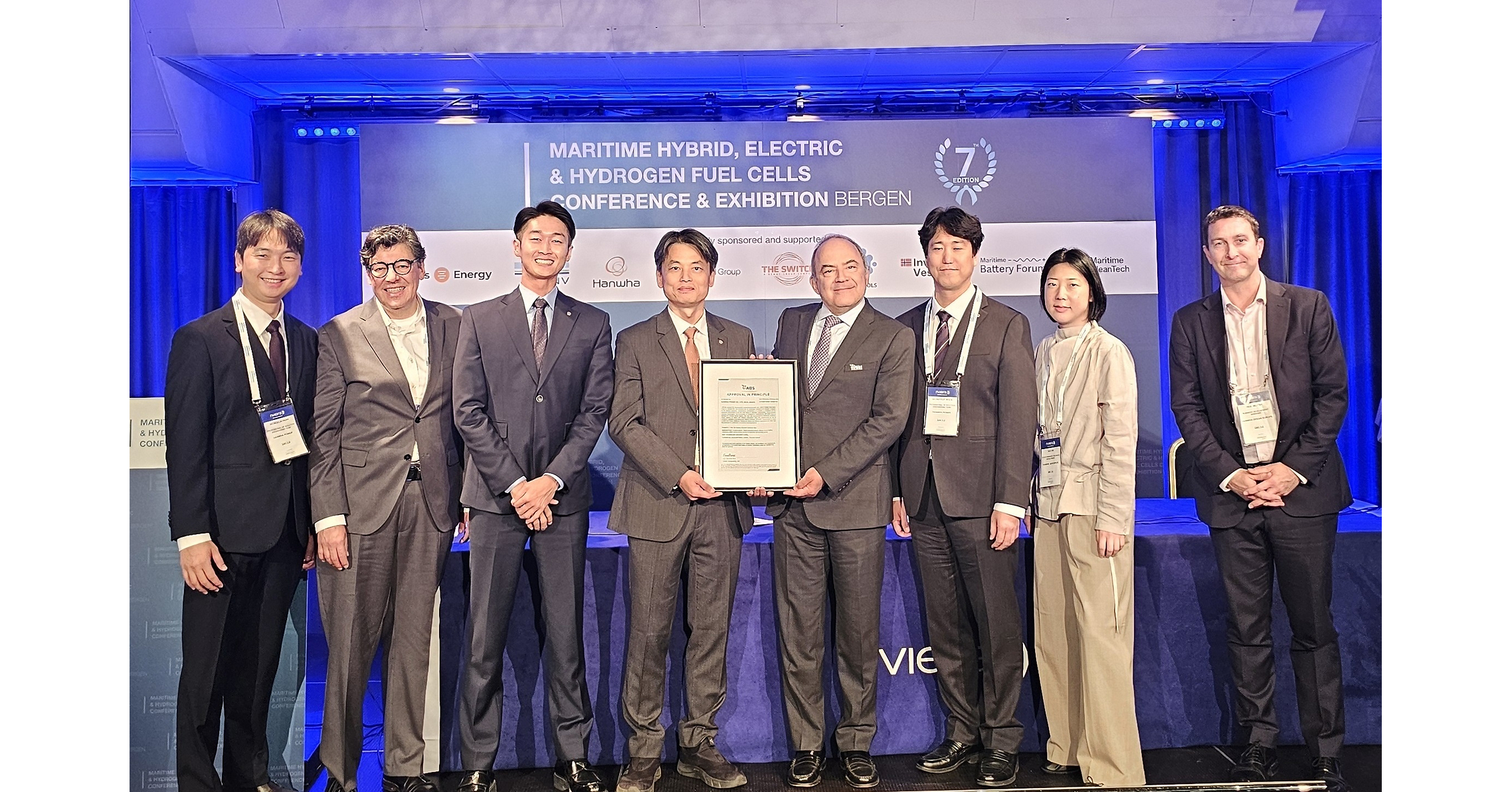
Hanwha Power received preliminary ABS approval for a fully electric 1,700-TEU container-ship design using a 151 MWh battery energy-storage system, enabling operation without direct carbon emissions when charged through port infrastructure. The approval expands its marine-propulsion portfolio; the company also completed the basic design of a separate 1,000-TEU battery-powered vessel. Hanwha said it plans to explore opportunities in the next-generation zero-carbon shipping market; the announcement does not report a commercial order.
Analysis
The investment signal is capability validation, not yet evidence of revenue: ABS preliminary approval reduces design-stage uncertainty but does not establish a customer order, final class approval, financing, or commercially viable route economics. The key bottleneck shifts from vessel design to system economics—port charging capacity, grid connection and power prices, battery degradation/replacement, and the payload or operating-time trade-off versus conventional fuel. Containerized batteries may ease handling, but only if ports, safety rules, and replacement logistics are interoperable; otherwise the approach risks creating a bespoke infrastructure network.
Near term (days), the announcement is unlikely to support a durable equity catalyst without an identified listed exposure or order. Over 1–3 months, watch for a named shipowner, route, shipyard, battery supplier, and funding plan; these would show whether the concept is moving beyond engineering. Over 6–18 months, repeat orders and operating data could benefit marine battery and port-electrification suppliers, while strengthening competitive pressure on alternative zero-carbon propulsion pathways. However, short-sea routes are a narrower addressable market than global shipping, and battery vessels compete with hybrids and fuels such as methanol or ammonia rather than displacing them universally.
Contrarian read: the headline’s large storage figure can overstate commercial readiness. The binding constraint may be charging economics and utilization, not battery capacity. Treat the company’s market-entry ambition as unverified until orders and route-level economics are disclosed. The thesis weakens if no customer or infrastructure commitments emerge, or if disclosed operating economics show material payload, range, or turnaround disadvantages.
AllMind Terminal
AI-powered research, real-time alerts, and portfolio analytics for institutional investors.
Request TrialMarket Sentiment
Overall Sentiment
mildly positive
Sentiment Score
0.30
Key Decisions for Investors
- No direct trade on this announcement alone: the supplied data provides no ticker mapping, and an AiP is not an order or proof of near-term earnings contribution.
- Set a 1–3 month watch item for a named shipowner, shipyard, battery supplier, route, and port-power commitment. Those disclosures—not another design milestone—would justify reassessing exposure to marine batteries and port electrification.
- If listed beneficiaries become identifiable, prefer a diversified or supplier-level exposure over a single-project bet until route economics, battery replacement costs, utilization, and charging requirements are independently verified.
- Falsifiers: no customer or infrastructure commitments over the next several months; evidence of uneconomic power or battery-replacement costs; or material payload, range, or vessel-turnaround penalties versus competing propulsion options.
More News
- AI Doubts Spread Cracks in Equities, Credit Markets: Evening Briefing Americas
- With earnings in rearview mirror, SpaceX-Tesla merger chatter takes center stage
- AI agents could disrupt bank deposits. Why Wall Street may be overreacting
- Apple’s $2,000 iPhone Duo Debuts With Limited Supply
- Are global oil reserves sufficient to withstand renewed US-Iran war?
- Boeing 777 freighter output halted for two months over supplier row