
Micron: 3 Simple Reasons Why I'm Still Bullish
Source: seekingalpha.com
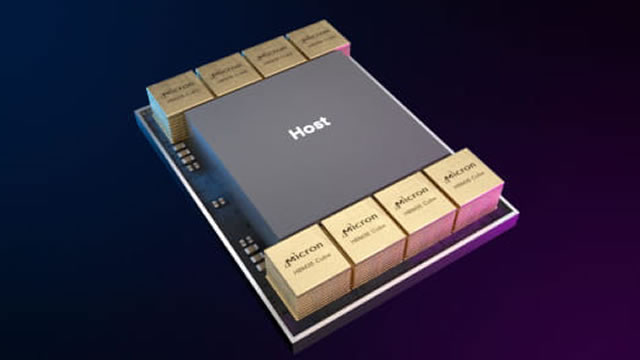
Micron customers are rationing DRAM, with some data-center buyers receiving only about 50% of requested memory volumes as demand continues to rise. Micron expects the supply-demand imbalance to tighten further in 2027 versus 2026, while high-bandwidth memory (HBM) consumes disproportionate wafer capacity and constrains conventional DRAM output. The prolonged shortage supports favorable memory pricing and earnings conditions for Micron, but raises component-cost and supply risks for data-center hardware buyers.
Analysis
The investable implication is not simply higher MU pricing: constrained conventional DRAM raises the value of inventory held by OEMs and shifts bargaining power toward the three scaled suppliers, SK Hynix and Samsung Electronics alongside Micron. Server OEMs and hyperscalers can absorb higher memory bills, but smaller enterprise hardware vendors and white-box assemblers face the greatest gross-margin pressure because memory is a larger, less hedgeable portion of bill of materials. This supports a relative long MU/Samsung Electronics versus shorts in lower-margin server and PC hardware exposure, rather than a broad semiconductor beta trade.
Over the next 1-3 months, the key earnings transmission is contract-price realization versus unit shipment deferral. MU can outperform if pricing increases flow through faster than customers reduce bit demand; the more important risk is that allocation limits delay system shipments, causing customers to cut near-term orders despite elevated quoted prices. Watch hyperscaler capex commentary, memory inventory days at Dell (DELL), Hewlett Packard Enterprise (HPE), and Super Micro Computer (SMCI), and any evidence that AI server lead times are shifting from accelerators to memory.
The 6-18 month setup is structurally favorable for memory suppliers but increasingly vulnerable to an eventual supply-response narrative. New capacity is slow and technically difficult to qualify, yet a material capex acceleration by Samsung or SK Hynix would compress the scarcity multiple well before physical supply arrives. Consensus may also underappreciate substitution: platform designers can redesign around lower memory configurations or prioritize higher-value workloads, limiting demand elasticity only after a lag; that makes this a cyclical pricing trade, not a permanently linear AI-demand story.
AllMind Terminal
AI-powered research, real-time alerts, and portfolio analytics for institutional investors.
Request TrialMarket Sentiment
Overall Sentiment
moderately positive
Sentiment Score
0.52
Ticker Sentiment
Key Decisions for Investors
- Maintain/add long MU on pullbacks rather than chase strength; target a 3-6 month holding period through the next two earnings updates. Thesis requires sequential gross-margin expansion and pricing-led guidance upside; exit or reduce if bit shipments weaken materially without offsetting ASP gains.
- Express the supply-chain margin transfer as long MU / short SMCI, sized beta-neutral, over 1-3 months. MU benefits from price realization while SMCI is exposed to fixed customer budgets and component-cost pass-through risk; cover the short if SMCI demonstrates sustained gross-margin expansion or backlog growth despite rising memory costs.
- Use a long MU / short SOXX overlay for investors seeking idiosyncratic exposure over 3-6 months. This isolates memory-pricing upside from broad AI semiconductor valuation risk; invalidate if Samsung or SK Hynix announce a meaningful near-term DRAM capacity expansion or MU guides to lower utilization.
- Set an event-driven alert around DELL, HPE, and SMCI results: evidence of memory-related shipment delays is bearish for hardware equities immediately, but is only bullish for MU if management confirms allocation is converting into higher contract pricing rather than lost demand.
- Do not add a direct long in memory-equipment names solely on this signal. The missing determinant is supplier capex guidance; prolonged tightness can increase equipment orders eventually, but disciplined supply behavior would delay that benefit and is currently more supportive of MU margins.
More News
- 3 AI Stocks That Can Beat the Nasdaq Composite in 2027
- The Nasdaq Just Had Its Worst Day in 4 Months. Here's the Level That Would Signal a Correction, and What History Says Investors Can Do About It.
- Here’s the ‘core economic flaw’ in the AI bull case as stock and bond trades unravel, according to a top economist
- How Pepsi fell behind in the cola wars—and then lost KFC
- 5 big analyst AI moves: ’Uniquely catalyst-rich’ months ahead for SpaceX
- Braskem creditors, shareholders near deal on $11bn debt restructuring