
ALK Q3 Earnings Beat on Strong Yields Despite Fuel Pressure
Source: zacks.com
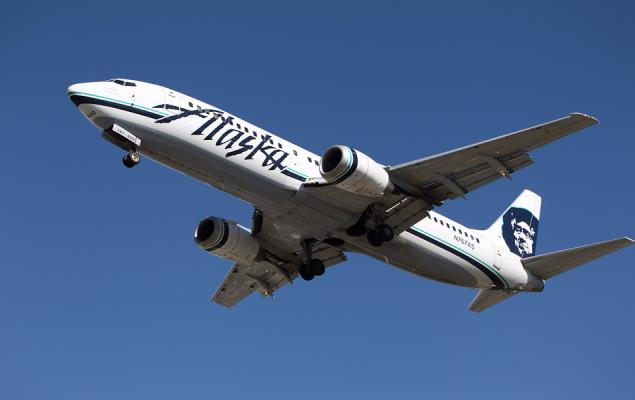
Alaska Air reported Q3 2026 adjusted EPS of $0.36, 2.9% above the $0.35 consensus, while revenue rose 14.4% to $4.30 billion but narrowly missed estimates. Fuel expense surged 59.5% to $1.21 billion, and adjusted net results shifted to a $35 million loss from $123 million in income a year earlier; leverage also increased, with adjusted net debt to EBITDAR at 5.5x versus 2.9x at year-end 2025. Management expects a Q4 adjusted loss of $2-$2.50 per share and a full-year 2026 adjusted loss of $5-$5.50 per share, citing fuel costs $1.8 billion above its initial plan.
Analysis
Fuel is now the marginal determinant of airline earnings, while reported yield strength is not yet proof of durable pricing power: traffic was flat as capacity grew, so continued fare increases risk trading volume for unit revenue. The key near-term test is whether low-double-digit unit-revenue growth can persist as fuel assumptions reset sharply higher; if not, operating leverage works against carriers quickly. ALK’s elevated leverage makes a fuel shock or weaker cash generation more consequential than for a less-levered peer, even with substantial stated liquidity. Its international growth also raises execution risk before those routes demonstrate sustained returns.
Over the next 1–3 months, monitor jet-fuel prices versus the company’s Q4 assumption, fare/yield trends, load factors, and any capacity discipline. A fuel retreat could produce relief, but only if pricing holds; falling fuel alongside fare discounting would not restore margins as cleanly. Over 6–18 months, the tension is whether premium and loyalty mix can support earnings through a fuel cycle, or whether leverage and growth investment constrain strategic flexibility. DAL and UAL’s similar fuel-driven earnings pressure suggests this is a sector exposure, not an ALK-only issue. Contrarian angle: strong premium and loyalty growth may be masking weaker underlying passenger volume; don’t extrapolate yield gains without evidence that load factors stabilize. No valuation or fuel-hedge data is provided, so relative-value sizing should await verification.
AllMind Terminal
AI-powered research, real-time alerts, and portfolio analytics for institutional investors.
Request TrialMarket Sentiment
Overall Sentiment
mildly negative
Sentiment Score
-0.35
Ticker Sentiment
Key Decisions for Investors
- Favor a cautious/underweight stance on ALK into the Q4 fuel reset; avoid treating the small Q3 estimate beat as evidence of an earnings inflection. Reassess if fuel costs ease and passenger volumes/load factor stabilize without yield deterioration.
- Consider a small relative-value short ALK / long DAL only after checking current valuation, fuel-hedging exposure, and forward unit-cost guidance. Thesis: ALK’s leverage and growth execution create greater downside sensitivity; falsify it if ALK sustains unit-revenue growth and narrows the margin gap.
- Set an alert on jet fuel versus ALK’s Q4 planning range and on monthly yield/load-factor disclosures. A sustained fuel decline with stable fares is the clearest near-term upside catalyst; fuel above plan or renewed load-factor erosion strengthens the downside case.
- Avoid using JBHT as a clean hedge for airline fuel exposure: its own reported cost pressures include fuel, driver-related costs, and insurance claims, so it is not a straightforward low-energy-cost transportation alternative.
More News
- Musk Weighs Massive SpaceX Tesla Merger
- United Airlines set to open its biggest airport lounge in $2.6 billion overhaul at Houston hub
- United Airlines forecasts record fourth-quarter revenue growth above 20%
- Stocks making the biggest moves midday: SpaceX, Meta Platforms, Super Micro Computer, Roivant Sciences & more
- How to save on hotels and flights ahead of the most expensive holiday travel season in 10 years
- Our top 10 things to watch in the stock market Wednesday