
College Is in Session, and Vending Machines are Filling Gaps in Student Healthcare Access
Source: PRWeb
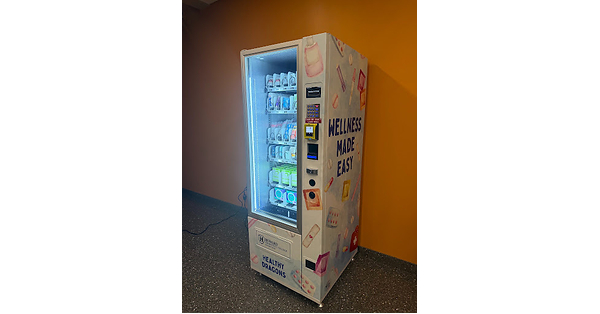
The American College Health Foundation and American Society for Emergency Contraception launched the Community College Vending Machine Grant Program, funding eight community colleges, one public health department, and three community organizations to install wellness vending machines. Campuses offering machines that include emergency contraception have increased more than tenfold since 2020, to 160+ from 16, though this remains limited relative to more than 4,000 U.S. colleges. The initiative improves access to over-the-counter health, hygiene, and contraception products but is unlikely to have material public-market impact.
Analysis
This is not investable demand evidence for any listed healthcare or consumer company: the initial deployment base is too small, funding is philanthropic rather than recurring procurement, and product mix is largely low-ticket OTC/private-label. The relevant mechanism is distribution convenience, not incremental category creation; purchases through machines are likely to substitute for pharmacy, campus bookstore, convenience-store, and e-commerce purchases.
The potentially scalable angle is unattended retail infrastructure. If institutions standardize on externally managed machines, operators and payment/telemetry vendors could gain recurring service revenue, but no public vendor, contract economics, machine count, or replenishment volume is identified. The early-2027 grant cycle is a weak catalyst unless it discloses materially larger funding, a national procurement partner, or unit-economics data.
Contrarian read: the addressable-campus statistic can invite an exaggerated growth narrative. Community-college budgets, campus approval processes, liability concerns, product-expiry management, and low transaction density can make machine utilization uneconomic without subsidies. Even broad adoption would be immaterial to mega-cap OTC suppliers such as Kenvue (KVUE), Haleon (HLN), Procter & Gamble (PG), or Church & Dwight (CHD); any revenue lift would be diluted by channel substitution and private-label competition.
Monitor for independently verifiable evidence over the next 6-18 months: awarded machine counts, product sell-through per location, recurring restocking contracts, and whether public colleges fund installations from operating budgets after grants expire. A disclosed national vending or distribution partnership would change this from a policy/access story into a small-cap services-screening opportunity; absent that, no directional equity implication is warranted.
AllMind Terminal
AI-powered research, real-time alerts, and portfolio analytics for institutional investors.
Request TrialMarket Sentiment
Overall Sentiment
mildly positive
Sentiment Score
0.30
Key Decisions for Investors
- No standalone equity or options trade; treat this as non-material press-release flow rather than a catalyst for KVUE, HLN, PG, or CHD.
- Create an alert for the early-2027 grant announcement: investigate only if deployments move from dozens to several hundred locations and a named public operator reports contracted recurring revenue or transaction-volume data.
- For consumer-health holdings, do not underwrite incremental OTC growth from this channel; require evidence that machine sales are additive rather than displaced pharmacy/convenience purchases before revising category assumptions.
More News
- Costco makes progress on a key membership metric. Here's our new price target on the stock
- Why we like Starbucks’ latest turnaround move — plus, two more wins for Eli Lilly
- Argentina’s poverty rises to 32 percent under Milei with more pain forecast
- New York sues Polymarket over allegations of illegal gambling operations
- OpenAI says agent hacked Australian government website without being told to do so
- New York sues Polymarket U.S., two months after filing lawsuit against Kalshi