
Mindray North America Advances Respiratory Care with the Launch of the SV70 Non-Invasive Ventilator
Source: PR Newswire
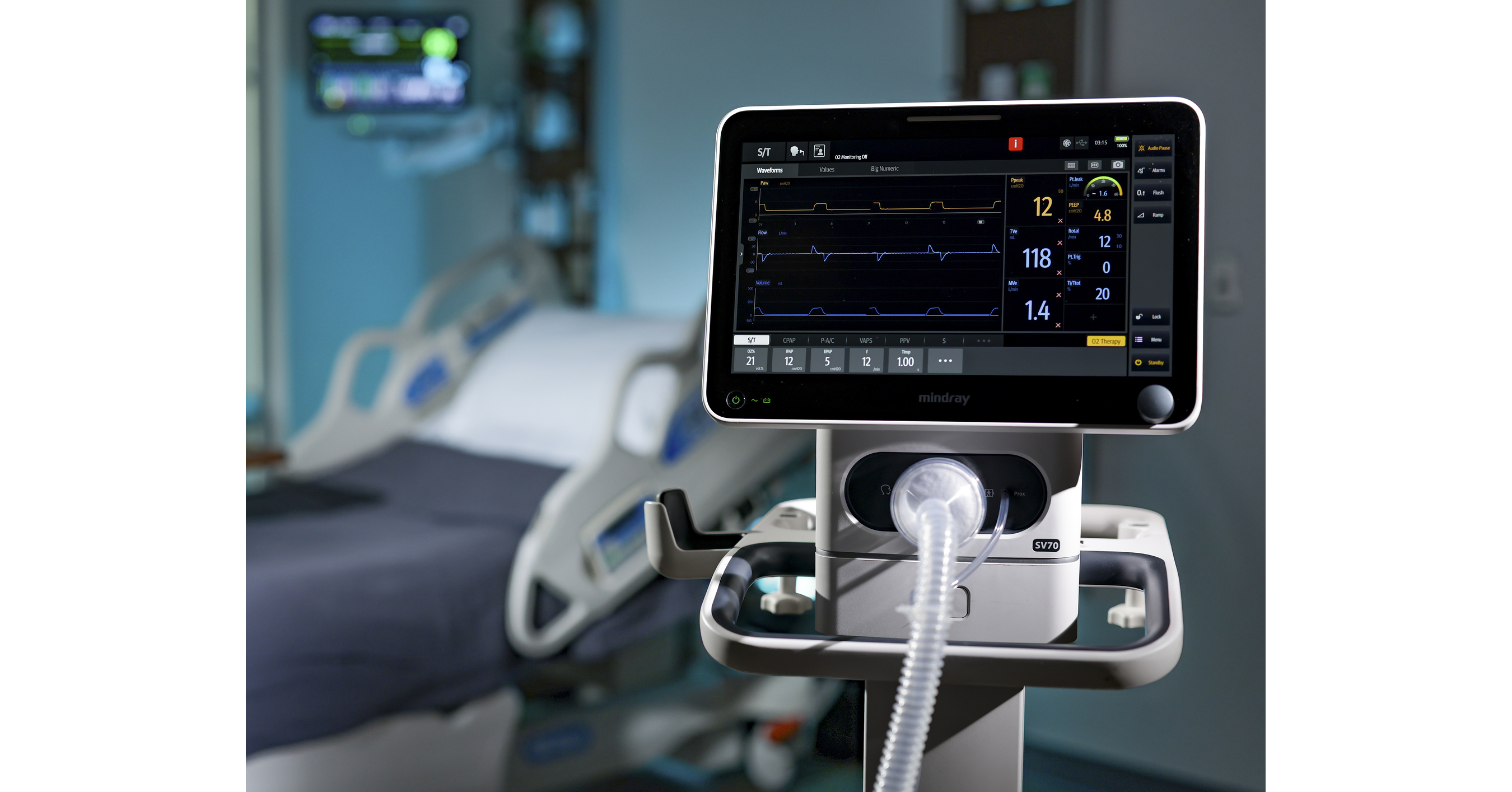
Mindray North America launched the SV70 non-invasive ventilator in the U.S., targeting hospital replacement demand created by the withdrawal of Philips' V60, the prior clinical standard. The turbine-driven platform combines non-invasive ventilation and high-flow oxygen therapy, retains compatibility with existing Philips V60 accessories, and uses the same interface as Mindray's SV900/SV700 systems to reduce training requirements. The product includes wireless connectivity and a three-year warranty, positioning Mindray to capture a portion of fleet-replacement spending in respiratory departments.
Analysis
The relevant read-through for PHG is not unit replacement revenue—V60 was unlikely a material standalone earnings contributor—but the loss of a clinical “land-and-expand” point in respiratory departments. A competitor that preserves existing accessory use while offering monitor integration lowers conversion friction, raising the risk that PHG loses adjacent patient-monitoring, service-contract, and future capital-equipment share at accounts replacing fleets. The financial effect is more likely to emerge through slower North American order growth and weaker installed-base retention over 2-6 quarters than through an immediate revenue dislocation.
Mindray’s interoperability claim is strategically more important than its standalone ventilator specification: a standardized respiratory/monitoring workflow can make procurement decisions increasingly platform-based. This creates a second-order risk for PHG in mid-market hospitals, where capital budgets favor fewer vendors and lower training costs; it also pressures private competitors such as Dräger, Hamilton Medical, and Vyaire, which lack Mindray’s broad monitoring bundle. Conversely, large IDNs may remain reluctant to expand a China-headquartered vendor in mission-critical infrastructure if cybersecurity, service coverage, or contracting requirements become binding.
Consensus may overstate the direct PHG downside because respiratory care is not the core driver of its valuation and replacement budgets can be redirected toward PHG imaging or monitoring products. The actionable issue is whether Mindray converts early trials into systemwide awards after the November AARC meeting. Falsification of the competitive-risk thesis would be PHG reporting stable or accelerating North American connected-care orders, no deterioration in customer-retention commentary, or evidence that hospital purchasing delays fleet replacements pending broader reimbursement or capital-budget visibility.
AllMind Terminal
AI-powered research, real-time alerts, and portfolio analytics for institutional investors.
Request TrialMarket Sentiment
Overall Sentiment
moderately positive
Sentiment Score
0.42
Ticker Sentiment
Key Decisions for Investors
- No outright PHG short on this launch alone: the stated impact is too small and PHG’s earnings sensitivity to acute respiratory equipment is not disclosed. Create a 1-3 month alert around AARC and subsequent hospital tender announcements; reassess only if Mindray publicly identifies multi-hospital fleet wins or PHG flags North American order pressure.
- For existing PHG longs, reduce exposure to a respiratory/monitoring-share-loss tail through 3-6 month downside hedges only if PHG’s next earnings call shows weaker Connected Care order intake or service revenue. Use a defined-risk put spread rather than a directional short, as a favorable imaging-cycle update could dominate the stock-level reaction.
- Watch Shenzhen-listed Mindray Medical (300760.SZ) for evidence of monetization rather than treating the US launch as investable proof: monitor US critical-care revenue growth, gross-margin progression, and disclosed distributor/service expansion over the next 2-4 quarters. A sustained acceleration alongside named IDN wins would support a medium-term long thesis; absent those data, the launch is promotional rather than earnings-relevant.
- Monitor private-market competitors Dräger, Hamilton Medical, and Vyaire through hospital procurement checks: a shift toward bundled monitoring-plus-ventilation awards would be more damaging to specialist respiratory vendors than to PHG. This is a competitive-intelligence signal, not presently a liquid public-equity trade.
More News
- China's AI leaders keep quiet despite U.S. 'publicity' on tech risks
- Karin Rådström is steering Daimler Truck in a new direction as the world’s biggest truckmaker faces a growing challenge from China
- AWS says it can't restore service to Bahrain, UAE facilities 6 months after Iran strikes
- Factbox-How AI leaders and world governments react to ’AI doom’ fears
- Chinese investors rush into US stocks as Beijing opens wider path overseas
- ‘The end of the keyboard is near’: Christian Klein predicts voice translation will be the next workplace advantage