
Boeing F/A-XX Win: A Surprise Blow For Northrop
Source: seekingalpha.com
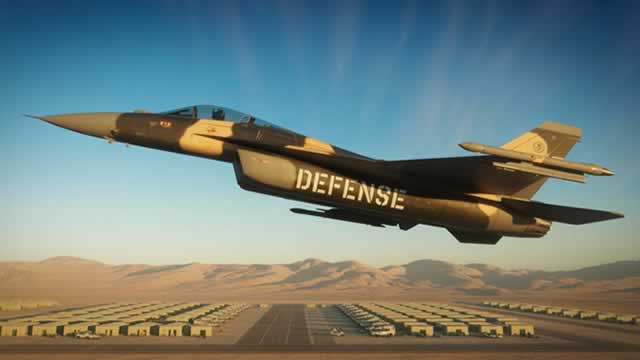
Boeing secured a $20B U.S. Navy sixth-generation fighter contract, adding to its prior Air Force F-47 win and consolidating both NGAD fighter programs under the company. The selection is expected to generate shared-technology and production-investment savings while leveraging Boeing's carrier-based aircraft and drone capabilities. However, Boeing's history of cost overruns and program delays creates meaningful execution, schedule, and industrial-base risks across both programs.
Analysis
The equity implication for BA is less about incremental backlog than a potential reset in its defense multiple: a credible path to two marquee next-generation platforms improves utilization of engineering, avionics integration and advanced-manufacturing overhead that would otherwise remain under-absorbed. The near-term market reaction should be positive, but program revenue will likely be immaterial to consolidated earnings for 12-24 months; the relevant re-rating catalyst is evidence that fixed-price development exposure is capped and that commercial-aircraft cash burn does not compete with defense investment needs.
The more material second-order risk is concentration. BA now carries an outsized share of U.S. tactical-aircraft modernization, making the Pentagon less able to shift work after a major schedule slip and increasing political pressure to preserve margins rather than enforce punitive contract remedies. That is supportive to BA's long-duration franchise, but it also raises the probability of low-return revenue if engineering change orders, supplier shortages, or software-integration problems recur. RTX and NOC may still capture substantial content through sensors, propulsion, mission systems and classified subsystems; the contract outcome is not necessarily negative for those suppliers, while LMT loses a prime-contractor growth narrative and may face incremental pressure on its tactical-air franchise valuation.
Consensus may overstate the immediate EPS benefit and understate the strategic value of a government-supported industrial-base consolidation. The attractive setup is to own BA only if program economics become transparent: absent disclosure on development funding, contract type, annual production cadence and required capex, this remains a multiple-expansion trade with asymmetric execution risk rather than a near-term earnings trade. Falsification would be a defense-margin guide below roughly 8%, a material increase in company-funded R&D/capex, or another commercial-production disruption that constrains balance-sheet capacity.
AllMind Terminal
AI-powered research, real-time alerts, and portfolio analytics for institutional investors.
Request TrialMarket Sentiment
Overall Sentiment
moderately positive
Sentiment Score
0.42
Ticker Sentiment
Key Decisions for Investors
- Do not chase BA on the initial headline move; accumulate only on a 8-12% pullback or after the next earnings release confirms defense-margin stability and no increase in cash-burn guidance. Target a 6-12 month multiple re-rating, with downside controlled by exiting on a defense-margin guide below 8% or a meaningful free-cash-flow deterioration.
- Initiate a 6-12 month pair trade long BA / short LMT in equal dollar beta-adjusted sizing. BA has the stronger strategic-optionality narrative, while LMT faces a reduced premium-fighter growth runway; reassess if LMT announces a major classified-program offset, material buyback acceleration, or BA discloses unfavorable contract economics.
- Maintain or add RTX on weakness rather than treating the prime selection as a read-through short. Advanced propulsion, radar and mission-system content can create a multi-year supplier revenue stream with less platform-level fixed-price risk; validate through defense backlog commentary and segment-margin guidance over the next 1-3 quarters.
- Set an alert for BA disclosures on contract structure, customer-funded versus company-funded R&D, and incremental capital requirements. If the program is predominantly fixed-price development or requires material company-funded investment before production, avoid adding exposure until the resulting cash-flow drag can be quantified.
More News
- FAA says Boeing 737 Max software glitch not a flight-safety issue
- Nvidia breaks through to new record highs. Plus, more good news for Boeing
- US looks to expand use of canoe-sized drones to deter migrant crossings
- RBC Capital downgrades Northrop Grumman stock rating on growth outlook
- For 25 years, locked cockpits have kept intruders out. The FlyDubai attack exposed the danger inside
- Jim Cramer's top 10 things to watch in the stock market Friday