
French Protests and the End of Checkbook Politics
Source: Bloomberg
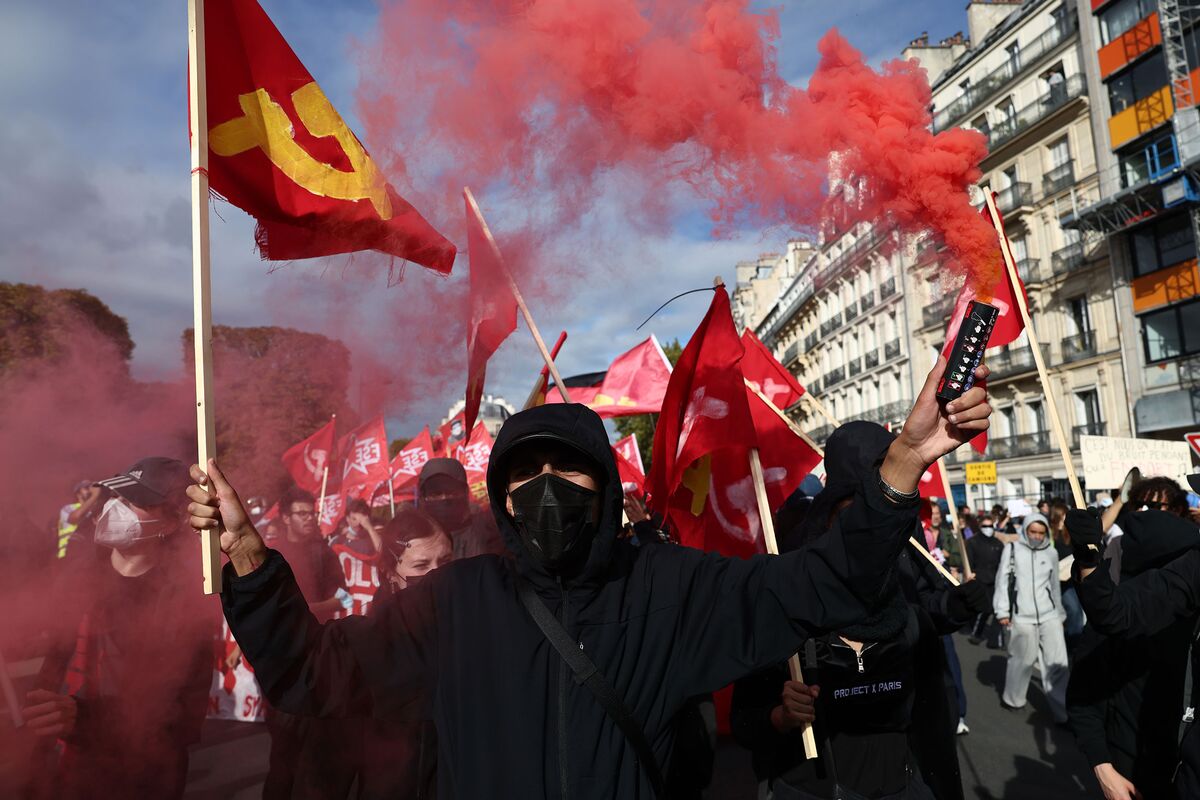
Student protests in France have blocked neighborhood high-school entrances, with demonstrators criticizing the state, the exam system and college-application platform Parcoursup. The article says an unprecedented number of minors have been taken into custody since protests began, while a majority of French people support the demonstrations; no market or economic effects are reported.
Analysis
The investable signal is political, not an education-sector earnings read-through: visible youth mobilization could raise the cost of implementing unpopular reforms and increase the chance of concessions. If that pressure reaches fiscal or labor-market policy, the second-order effect would be a higher France-specific risk premium—most directly in OATs versus Bunds, and potentially in French banks and domestic cyclicals through sovereign-spread and confidence channels. The excerpt does not identify the protest trigger or a concrete policy at risk, so that transmission remains conditional.
Near term, demonstrations and confrontations may create headline volatility, but the article alone does not establish sustained disruption or a government reversal. Over 1–3 months, watch whether mobilization broadens beyond students, affects transport or other services, or forces a policy retreat. Over 6–18 months, the relevant question is whether repeated concessions weaken fiscal or structural-reform credibility. The contrarian risk is treating visible demonstrations as evidence of a durable national veto: protest visibility need not translate into sustained economic disruption or a changed policy path. No company-specific earnings conclusion is supported here.
AllMind Terminal
AI-powered research, real-time alerts, and portfolio analytics for institutional investors.
Request TrialMarket Sentiment
Overall Sentiment
mixed
Sentiment Score
-0.10
Key Decisions for Investors
- No immediate directional trade on this excerpt alone: the underlying policy dispute, government response, and scale of disruption are unspecified.
- Watch the OAT-Bund spread as the cleanest market confirmation. Consider a relative short in French duration versus German duration only if protests broaden, policy concessions emerge, or the spread begins to widen persistently; define risk against spread stabilization or a credible government commitment to the existing policy path.
- Monitor transport and service disruptions, protest participation beyond students, and official policy statements over the next 1–3 months; these would distinguish a temporary headline event from a broader constraint on governance.
- Falsify the risk-premium thesis if mobilization fades without material disruption, the government maintains its policy course, and France-specific sovereign spreads remain stable.
More News
- 4 reasons why Bank of America is in 'risk-off' mode for the next month
- Trump waives many Russia-related sanctions, tariffs before they were to take effect under new law
- How Iran messaging highlights cost of war ahead of US midterm elections
- Iron Ore Prices Should be Higher, Vale CEO Says
- Meta employees say Lula’s accounts restricted in Brazil election: Report
- Blowback Against Data Centers Becomes Top 2026 Midterm Election Issue