
World Class Health Introduces The AI Specialty Clinic™
Source: PR Newswire
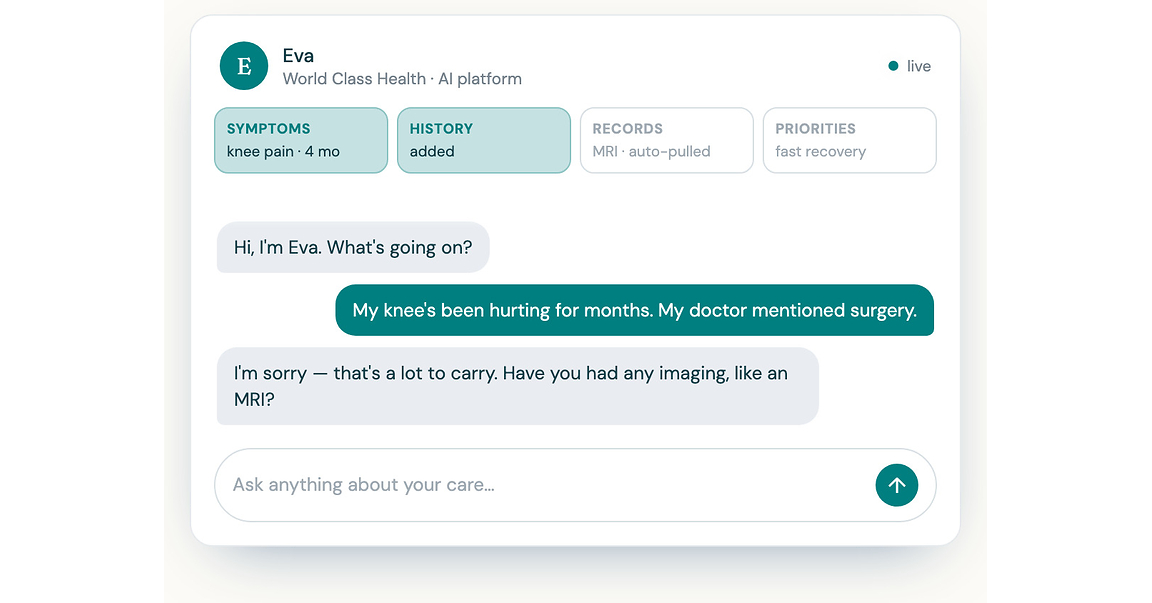
World Class Health launched The AI Specialty Clinic™, an AI-native specialty care platform for large self-insured employers, with implementations planned to go live in January 2027. The company claims clients reduce covered procedure spend by 40%-50% and see 90% fewer readmissions, backed by a hard-dollar savings guarantee, with nurse-led care and AI handling intake/scheduling and member engagement 60-90 days before a claim is filed. The platform emphasizes transparent, benchmark-audited pricing using federally mandated price transparency data, which supports the savings “verified” model rather than volume-based fees.
Analysis
This is more a utilization-shaping tool than a pure AI software story. If the workflow actually intercepts cases before scheduling, the first-order effect is not just lower unit price; it is fewer high-margin elective episodes flowing to hospital systems and a modest shift of volume toward lower-cost sites with better data discipline. That makes the real losers the providers whose economics depend on friction, opacity, and late-stage patient selection — especially large acute-care operators with meaningful orthopedics/spine mix, not the self-insured employer buyers.
The near-term market impact is limited because the adoption cycle is procurement-heavy and the savings are not fully knowable until cohorts mature through 2027 renewals. The key catalyst is whether employers can verify that the claimed savings persist after novelty effects and risk adjustment; if they do, this becomes a budget line item that renews, not a pilot that gets cut. The biggest second-order beneficiary may be managed care and benefits administration platforms that can embed this kind of triage into existing claims infrastructure.
Contrarian read: the consensus will overstate the AI angle and understate the operational moat. The defensibility here is not the model, it is access to claims/eligibility data, nurse capacity, and the ability to prove savings to CFOs under audit. If incumbents can replicate the workflow without the same data rights or if regulators tighten rules around predictive outreach and clinical steering, the thesis slows materially over 6-18 months.
AllMind Terminal
AI-powered research, real-time alerts, and portfolio analytics for institutional investors.
Request TrialMarket Sentiment
Overall Sentiment
mildly positive
Sentiment Score
0.25
Key Decisions for Investors
- No immediate standalone trade; keep as a watch item until 1-2 employer case studies show durable savings through renewal season.
- If healthcare cost-containment names rally on the announcement, use strength to favor UNH or ELV over HCA/THC in a 6-month relative-value pair; the spread thesis is slower elective-volume leakage versus payer capture of savings.
- Set an alert on HCA and THC for any 2-quarter deceleration in orthopedic/spine or outpatient surgery growth; that is the cleanest falsifier for the hospital-losers thesis.
- Conditional options idea: consider 3-6 month put spreads on HCA only if management commentary starts flagging price-transparency or steering pressure; until then, the signal is too indirect.
- Watch private-market comps in patient-navigation/benefits tech for M&A read-through, but do not expect meaningful public-equity alpha unless a large payer or employer services platform discloses an embedded partnership.
More News
- Palantir patient data tech rejected by many NHS trusts in England
- Why did CoreWeave stock get crushed this week? Look to this corner of the debt market for clues
- Diageo's Toxic Spill Hits Pristine River in Scottish Whisky Country
- AI stock sell-off ramps up over debt-fueled data center spending fears: ‘Full-blown crisis of confidence'
- Wall Street Anxiety Spreads as AI Rout Meets $110 Oil Shock
- Stock fixing scandal could see Turkish companies frozen out of global indexes
From AllMind Research
- Anthropic IPO Preview: Valuation, Timing, and What to Watch
- Shein After the IPO: Venue, Valuation, and What Must Be Proved
- What AI Research Tools Should a Small Hedge Fund Buy First?
- Weekly Update: Adding Live MBO Level 3 Data - Liquidity Heatmap, OFI Charts, and More
- Alternative Data Due Diligence for Institutional Investors