
MSA Safety lanza A1X: El anclaje de vacío WinGrip de última generación para el mantenimiento de aeronaves
Source: PR Newswire
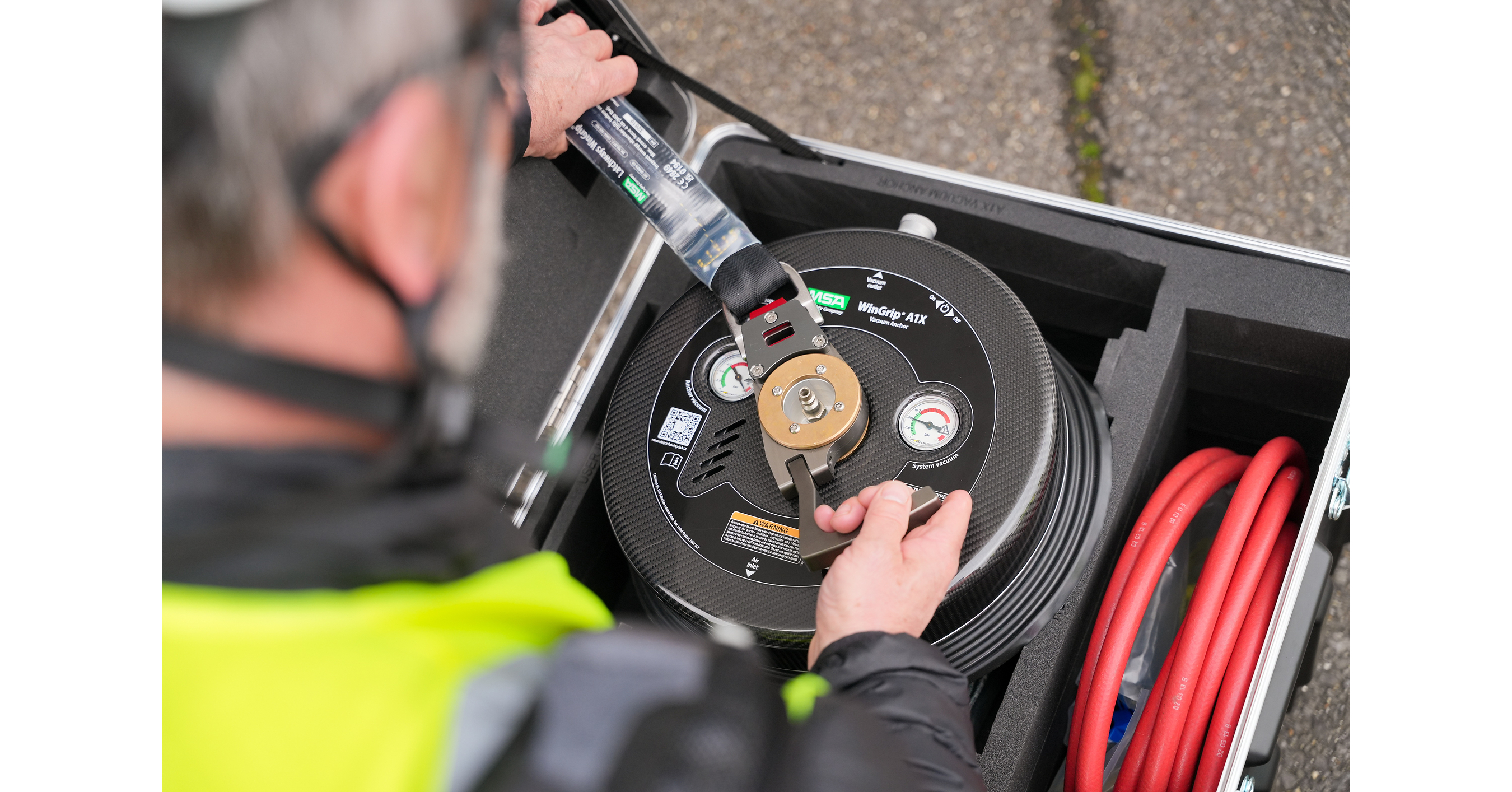
MSA Safety launched its WinGrip A1X vacuum anchor for aircraft maintenance, a 7 kg unit that is 35% lighter than its predecessor and has a 350 mm diameter versus 480 mm previously. The redesigned pneumatic system doubles anchor repositionings per cylinder, while the smaller pad expands compatibility to business, private and commercial aircraft and is approved by Airbus and Boeing. The product will be showcased at MRO Europe in October 2026, but the announcement includes no pricing, order, revenue, or guidance impact.
Analysis
The A1X is strategically useful for MSA because it lowers the practical adoption barrier in a niche where safety equipment utilization—not product specification—is the limiting variable. The smaller-aircraft addressable market expands the customer set from large airline MROs toward business-jet operators, independent repair stations and mobile maintenance providers, where portable equipment can substitute for fixed fall-protection infrastructure. That should improve accessory and replacement-PPE pull-through, but the initial revenue contribution is unlikely to be material against MSA’s broader base absent disclosed unit pricing, installed-base conversion, or fleet-service contracts.
Near term, MRO Europe is a pipeline-building catalyst rather than an earnings catalyst. Airbus/Boeing approval reduces qualification friction, but it does not establish purchase commitments; procurement cycles at airlines and MROs commonly run one to four quarters and may be deferred if utilization or maintenance spending softens. The more important 6-18 month signal is whether MSA can convert approvals into standardized procedures at major MRO networks, creating recurring consumables and a defensible installed base versus general industrial fall-protection vendors.
Competitive risk is less likely to come from BA or AIR directly than from incumbent fall-protection suppliers such as Honeywell (HON), 3M (MMM) and private aviation-service equipment vendors that can bundle equipment into existing MRO contracts. The contrarian view is that the product’s non-electronic design may command a premium in fuel-adjacent work but also constrains differentiation if customers prioritize lower-cost conventional harness/temporary-anchor solutions. This is positive product evidence for MSA’s aviation vertical, not yet a standalone valuation catalyst.
AllMind Terminal
AI-powered research, real-time alerts, and portfolio analytics for institutional investors.
Request TrialMarket Sentiment
Overall Sentiment
mildly positive
Sentiment Score
0.32
Ticker Sentiment
Key Decisions for Investors
- No immediate directional trade in MSA solely on the launch; treat MRO Europe in October as a diligence catalyst. Upgrade only if management discloses orders, named MRO standardization wins, pricing, or a measurable aviation growth contribution.
- Maintain or initiate a modest 6-12 month MSA overweight versus MMM as a quality pair only if MSA’s organic growth and operating-margin guidance remain intact; thesis is higher-value engineered safety mix, not A1X unit sales. Exit if MSA cuts full-year organic-growth guidance or aviation adoption remains limited to demonstrations.
- Set an alert for MSA’s next earnings call: confirmation of aviation backlog, channel inventory, and consumable attach rates would justify revisiting a long. Absence of quantified commercialization metrics should be read as evidence that the addressable-market expansion is immaterial near term.
- Do not use BA or AIR as read-through longs from this launch. Any benefit is operational and diffuse, while their equity drivers remain aircraft delivery rates, supply-chain execution and broader commercial-aerospace demand.
More News
- Why popular airplanes are getting scrapped years early
- Could France’s debt crisis spread across Europe?
- Saudi Arabia intercepts missiles and drones as fighting with Houthis rages
- Here’s the ‘core economic flaw’ in the AI bull case as stock and bond trades unravel, according to a top economist
- Israelis hold final rally against Netanyahu ahead of what may be the most consequential election in the country’s history
- 5 big analyst AI moves: ’Uniquely catalyst-rich’ months ahead for SpaceX