
Intensity Therapeutics, Inc. to Present INVINCIBLE-4 Neoadjuvant Triple-Negative Breast Cancer Study Data for the First Seven (7) Patients After INT230-6 Treatment (Cohort A) in an ePoster Presentation at the European Society of Medical Oncology (ESMO) Meeting
Source: PR Newswire
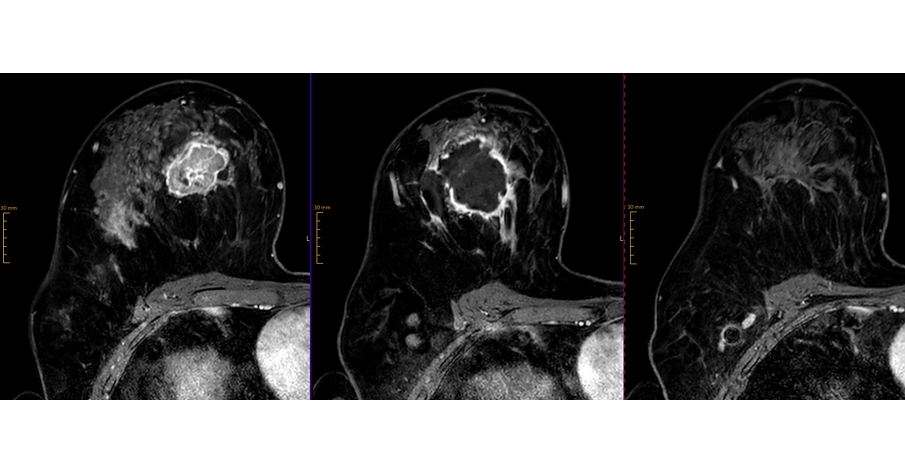
In the first seven patients in Cohort A of Intensity Therapeutics’ Phase 2 INVINCIBLE-4 study, 5 (71%; 95% CI 29–96%) achieved a pathological complete response in the breast and affected lymph nodes after INT230-6 plus standard neoadjuvant immunochemotherapy. All seven showed tumor necrosis; dose-limiting local skin reactions led to a protocol amendment for one injection at a lower drug-volume-to-tumor-volume ratio, while other Cohort A adverse events were low grade (<2). These preliminary data are scheduled for presentation at the ESMO 2026 Virtual Congress.
Analysis
The signal is clinically interesting but not yet decision-grade: seven treated patients cannot distinguish an INT230-6 contribution from the established neoadjuvant regimen, and pCR is not proof of improved event-free or overall survival. The wide uncertainty around the estimate makes headline-driven repricing vulnerable to reversal when the full cohort or control arm is reported. The key value inflection is a credible between-cohort pCR difference with comparable baseline risk, followed by durability data—not another single-arm response update.
For INTS, the local skin reactions and dose/volume amendment are material: they may constrain dosing, injection workflow, and the practical population that can be treated, even if systemic toxicity remains manageable. Intratumoral delivery also narrows commercial reach versus systemic regimens; this is more plausibly an add-on than a near-term replacement for pembrolizumab-based standard care. Any clinical upside must be weighed against the company’s stated need for additional funding before product revenue, making dilution and trial execution central equity risks. Near term, expect volatility around the poster and interpretation of the amended regimen; over 1–3 months, focus on enrollment, protocol execution, and comparative data; over 6–18 months, the question is whether randomized pCR and subsequent outcomes validate a scalable benefit. The thesis is falsified by no meaningful advantage over Cohort B, persistent dose-limiting local toxicity, or financing that materially dilutes shareholders before readouts.
AllMind Terminal
AI-powered research, real-time alerts, and portfolio analytics for institutional investors.
Request TrialMarket Sentiment
Overall Sentiment
mildly positive
Sentiment Score
0.25
Ticker Sentiment
Key Decisions for Investors
- Do not chase an immediate INTS move on this small-cohort update; treat it as a watch item pending the full poster, including patient-level baseline risk, dose exposure, and Cohort B comparison.
- For event-driven exposure, keep any INTS position speculative and small relative to portfolio risk; avoid treating the 71% result as a reliable estimate of treatment effect or as evidence of survival benefit.
- Track the amended lower-volume regimen for local skin toxicity and whether it preserves activity; deterioration in tolerability or pCR would weaken the platform thesis, while a clear controlled-cohort advantage would improve it.
- Before adding exposure, verify cash runway, financing terms, trial enrollment pace, and the timing of randomized results in SEC filings and trial updates; dilution risk can outweigh clinical progress in a small biotech.
More News
- With earnings in rearview mirror, SpaceX-Tesla merger chatter takes center stage
- Looters hit 3,000 French businesses. Within hours, the haul was trending on Vinted under the riot’s date
- Apple’s $2,000 iPhone Duo Debuts With Limited Supply
- Boeing 777 freighter output halted for two months over supplier row
- Exclusive-Boeing supplier dispute has halted 777 freighter production for two months, sources say
- OpenAI Trims Target Value & Volvo Cars Cuts 2,500 Jobs