
Were NVDA Earnings "Great Enough?" Guidance & Margins Take Center Stage
Source: youtube.com
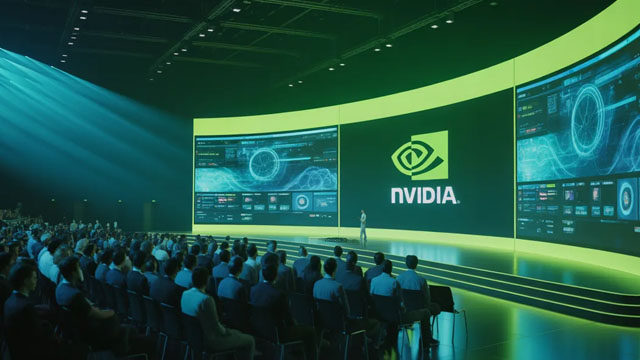
The article highlights Nvidia’s “beat and raise,” noting expectations were extremely high going into the report. It attributes continued strength to large-scale AI infrastructure spending—on the order of “hundreds of billions” of dollars—which is framed as extending the Mag 7’s AI demand runway and supporting upside beyond near-term results.
Analysis
The near-term takeaway is not that NVDA merely “beat”; it is that the market is still underpricing the duration of AI capex if hyperscalers keep converting training spend into multi-quarter purchase commitments. That matters because NVDA is increasingly behaving like a toll collector on the entire AI buildout: every incremental dollar of infrastructure spend can support revenue visibility, pricing power, and supplier leverage, but only as long as utilization keeps climbing. The stock’s main risk after a strong print is not fundamental collapse; it is multiple compression if investors conclude the growth rate is normalizing faster than the spend cycle.
Second-order beneficiaries remain the supply-chain bottlenecks: foundry, advanced packaging, networking, power, and memory names should continue to see tighter demand than the market is modeling. The more important loser may be the customer base itself: hyperscalers and large software/platform firms risk ROIC erosion if capex outruns monetization, which can eventually force either slower spending or a shift toward lower-cost/custom silicon. That creates a 6-18 month ceiling on NVDA’s margin of safety if TPU/Trainium/Maia adoption accelerates.
Contrarian view: consensus is focusing on “AI demand is infinite,” but the more durable edge is that supply remains constrained, not that end-demand is perfectly elastic. If the next two earnings seasons show capex discipline at the hyperscalers, the AI basket can re-rate lower even if NVDA stays fundamentally strong. The key falsifier is any sign of order digestion, guide-down in AI capex, or gross-margin pressure from mix/power supply issues over the next 1-3 months.
AllMind Terminal
AI-powered research, real-time alerts, and portfolio analytics for institutional investors.
Request TrialMarket Sentiment
Overall Sentiment
mildly positive
Sentiment Score
0.25
Ticker Sentiment
Key Decisions for Investors
- Maintain a tactical long NVDA bias on post-earnings weakness rather than chasing strength; best entry is on a 3-5% pullback, with a 1-3 month horizon tied to hyperscaler capex commentary.
- Pair trade: long NVDA / short IGV over the next 1-3 months to express the view that AI spending continues to favor infrastructure more than application-layer software spending; invalidate if software budgets re-accelerate with clear monetization data.
- Add a basket long in AI bottlenecks (e.g., TSM, AVGO, ANET) versus the broader semis ETF on any dip, because supply constraints and networking attach rates can keep earnings revisions positive even if NVDA’s multiple pauses.
- Use a tight risk alert on any hyperscaler guide for 2025 capex: if that number rolls over, reduce AI beta immediately as the 6-18 month structural thesis is then at risk.
- If positioning is already crowded, consider call spreads instead of outright longs in NVDA to preserve upside while limiting multiple-compression risk if expectations remain elevated.
More News
- Nvidia GPUs are everywhere. Here are the ways companies are accessing them
- As companies pour billions into Earth-based AI infrastructure, Google is taking the data center race off-planet
- Wall Street is pitching data centers as a major real estate bet. The risks are piling up
- AI predicts Palantir stock price for end of Q4 2026
- Nvidia-Backed Lumentum Says It Can't Keep Up With AI Demand. The Stock Is Surging
- From H-1B to CEO: How Satya Nadella traveled the path the U.S. just cut off for Microsoft workers
From AllMind Research
- Anthropic IPO Preview: Valuation, Timing, and What to Watch
- Shein After the IPO: Venue, Valuation, and What Must Be Proved
- What AI Research Tools Should a Small Hedge Fund Buy First?
- AlphaSense vs Hebbia vs AllMind: Choose by Workflow
- AllMind Discusses Ontario's AI Economy with Minister Stephen Crawford and Supply Ontario CEO James Wallace