
DUVA Introduces DUVA ONE at IFA 2026: Personalized Sleep Earbuds That Respond in Real Time
Source: PR Newswire
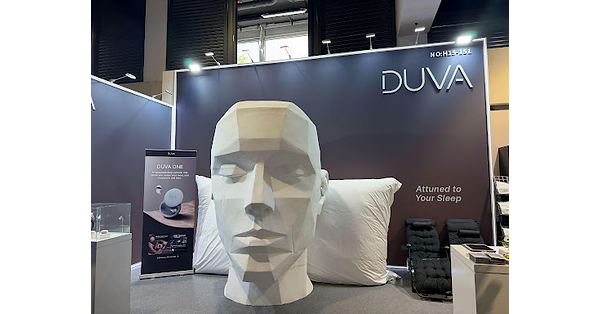
DUVA (created by Fitnexa) is launching DUVA ONE at IFA Berlin 2026, a personalized sleep-earbud system that uses in-ear sensors and an “AI Agent” to adapt audio/ANC in real time. The product targets up to 42 dB noise reduction, up to 16 hours battery life (including 9.5 hours with ANC on), and a planned October 2026 retail price of $349.99. DUVA highlights privacy-first sensing (no conversation recording or uploading raw environmental audio) and an offline private alarm feature.
Analysis
This is more category validation than near-term earnings impact. A premium, privacy-forward sleep device suggests consumers may pay for a dedicated nighttime use case, which is mildly constructive for large ecosystem players that can bolt similar features onto existing hardware at low marginal cost; the real economic winner is not the launch brand, but whichever incumbent can add sleep mode, offline AI, and comfort without raising return rates. The product is also a warning shot for standalone sleep apps and cloud-dependent wellness models: on-device inference weakens the data moat and makes subscription upsell less defensible.
The competitive read-through is mostly to premium audio/wearables, not retail. If this gains traction, it pressures AAPL- and SONY-type incumbents to treat sleep as a software layer inside earbuds rather than a separate gadget category, which can preserve ASPs but may compress differentiation over time. The biggest variable is execution quality: battery life, fit, and comfort determine whether this is a recurring accessory or a novelty, so review scores and return data matter more than the launch copy.
Time horizon matters: there is likely no immediate market reaction, a 1-3 month catalyst window around early reviews and channel checks, and a 6-18 month structural test of whether 'night-mode wearables' become a real subcategory. The contrarian view is that the privacy pitch may be more valuable than the sleep AI itself; in a market increasingly sensitive to ambient audio capture, on-device processing could become a baseline requirement rather than a differentiator. This is a watch item, not a conviction trade, until independent sell-through and retention are visible.
AllMind Terminal
AI-powered research, real-time alerts, and portfolio analytics for institutional investors.
Request TrialMarket Sentiment
Overall Sentiment
mildly positive
Sentiment Score
0.25
Key Decisions for Investors
- No trade in TGT on this announcement; treat it as non-catalytic and avoid forcing retail-channel read-throughs without evidence of shelf placement or sell-through.
- Set a 30-60 day watch on AAPL and SONY: if independent reviews and channel checks show strong adoption of sleep-specific audio features, use any post-launch weakness to add exposure to premium audio/ecosystem names versus the broader consumer discretionary basket.
- Do not short large-cap audio/wearables on the launch alone; wait for falsifiers such as poor comfort ratings, battery complaints, or return rates above 20% before considering a bearish position in the category.
- If early user feedback validates the use case, consider a small relative-value long AAPL / short XLY position into the next hardware cycle as a proxy for ecosystem stickiness and software-led differentiation.
- Monitor privacy/regulatory commentary in the US/EU over the next 3-6 months; if competitors start marketing on-device inference and offline storage more aggressively, it supports a structural long in incumbents that can implement these features without margin dilution.
More News
- Pine Tree acquires stake in $644M shopping center portfolio
- Elon Musk says SpaceX and Tesla exploring largest merger in history
- Asia stocks rebound as SpaceX, Super Micro results lift chipmakers
- Australian data center operator NextDC's shares plunge 40% after it slashes earnings forecast
- Neoclouds Lose Silver Lining as Elice, CoreWeave Dive: Evening Briefing Americas
- Anthropic May Spend $750 Billion on Computing Costs, WSJ Reports