
PPL Electric Proposes New Customer Protection Transmission Rider, Building on its Existing Customer Protection Framework
Source: PR Newswire
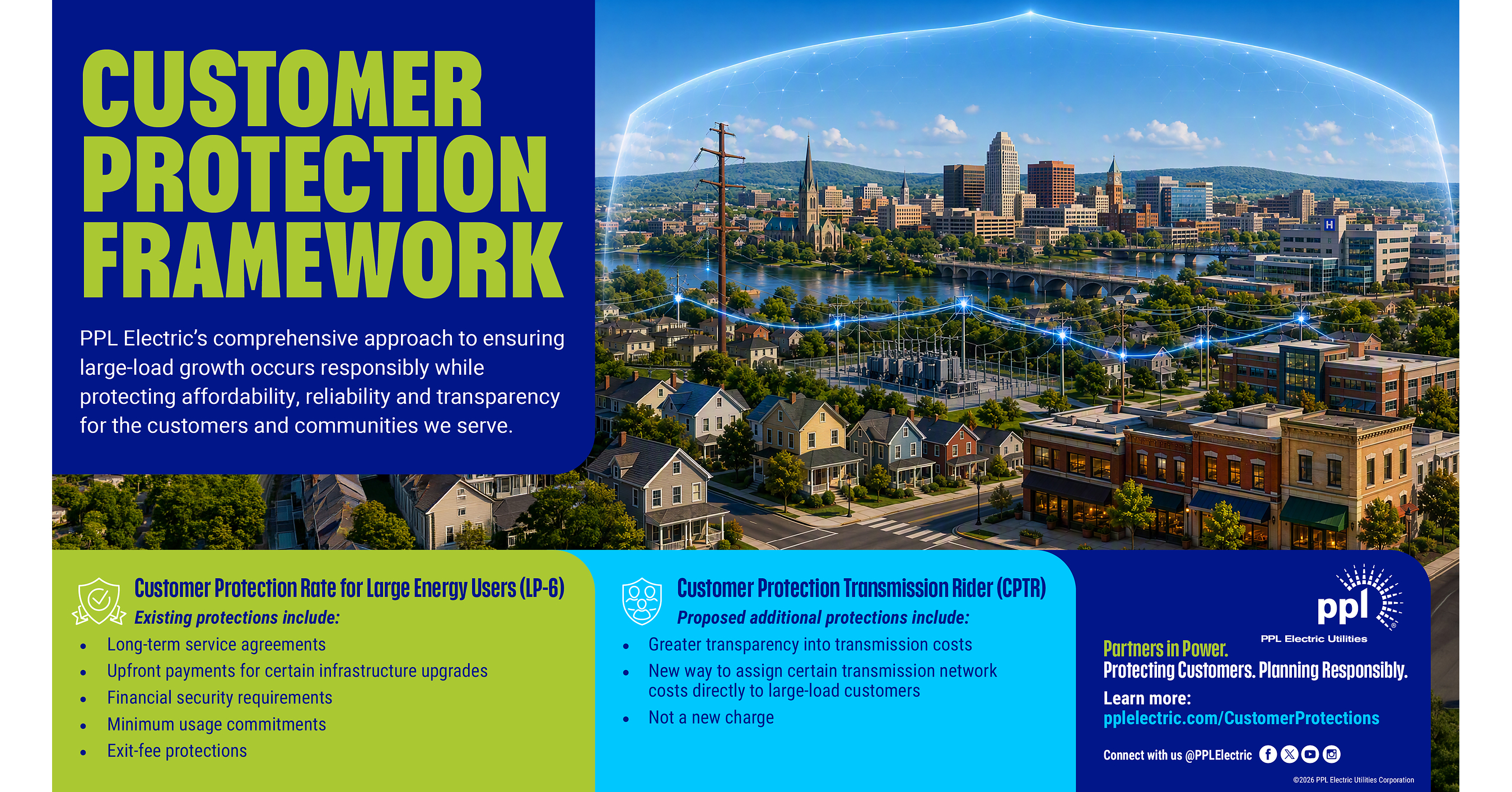
PPL Electric Utilities filed a proposal to replace its Transmission Service Charge with a Customer Protection Transmission Rider that would separately disclose transmission costs and directly allocate certain grid-upgrade costs tied to LP-6 large-load customers, including data centers. The proposal does not introduce a new charge and is intended to shift a larger share of incremental transmission costs to the customers driving investment, potentially reducing costs for other ratepayers. If approved by the Pennsylvania Public Utility Commission, the rider would take effect in Q1 2028.
Analysis
The economic value to PPL is not a new earnings stream; regulated transmission costs are largely pass-through. The investable benefit is lower stranded-asset and political-risk exposure if hyperscale-driven upgrades can be tied to contracted load rather than socialized across residential customers. That improves the probability that PPL can support incremental distribution and interconnection capex without a customer-affordability backlash, modestly de-risking its authorized-return and rate-base growth outlook over 2028-30.
The crucial uncertainty is jurisdictional. Network-upgrade charges governed by PJM/FERC allocation rules may not be fully ring-fenceable through a Pennsylvania retail rider, and large customers will likely challenge any charge exceeding their incremental cost causation. A PUC-approved mechanism that survives challenge would become a useful template for EXC's PECO territory and FirstEnergy's Pennsylvania utilities; rejection would signal that data-center load growth remains a ratepayer-politics liability across PJM.
Near term, this is unlikely to alter consensus EPS because implementation is distant and neither the magnitude of upgrade spending nor committed LP-6 load is disclosed. Over the next 1-3 months, the meaningful catalyst is intervenor posture from the Pennsylvania OCA, competitive suppliers, and prospective large-load customers—not the filing itself. Over 6-18 months, signed load contracts with minimum-demand payments and disclosed customer-funded capex would justify a valuation premium versus utilities pursuing data-center growth without equivalent protections.
Contrarianly, investor enthusiasm around utility AI load often double-counts demand: a large interconnection request is not contracted energy consumption, while direct network charges can cause marginal projects to relocate or self-supply. The proposal is therefore more valuable as downside insurance than as evidence of incremental PPL earnings growth.
AllMind Terminal
AI-powered research, real-time alerts, and portfolio analytics for institutional investors.
Request TrialMarket Sentiment
Overall Sentiment
mildly positive
Sentiment Score
0.25
Ticker Sentiment
Key Decisions for Investors
- No directional trade solely on the filing; maintain PPL at benchmark until the PUC docket establishes recoverable-cost scope, large-load commitments, and any earnings treatment. The headline should not move FY2026-27 EPS.
- Add PPL only on confirmation of binding large-load contracts with minimum-bill or security provisions and customer-funded upgrade disclosures; target a 6-18 month relative long versus EXC or FE, where similar load-growth economics remain more exposed to allocation disputes.
- Set a regulatory alert for an OCA recommendation or PUC order narrowing direct assignment. A material limitation on recoverable upgrade costs, or evidence that prospective load withdraws after pricing, falsifies the risk-reduction thesis and would argue against paying a data-center premium for PPL.
- For existing PPL exposure, monitor Pennsylvania rate-case affordability metrics and bad-debt trends through 2027. Any upward pressure on residential bills before large-load contributions commence would raise political risk and could compress the utility's valuation multiple despite stronger long-run load growth.
More News
- What investors need to know about Alphabet's stock-busting earnings report
- Our next steps for Alphabet stock after earnings disappoint at nearly every turn
- Budget 2026 speech
- Wendy's shares jump 15% as Nelson Peltz's Trian offers $1.4 billion to buy burger chain
- The UK cuts energy bills, taxes banks and boosts defense in high-stakes budget
- Microsoft's Big Bets on AI Start to Pay Off