
YFORE stellt Multi-Scenario UWB Radar Sensing für Next-Gen Vehicles für verschiedene Szenarien für Fahrzeuge der nächsten Generation vor
Source: PR Newswire
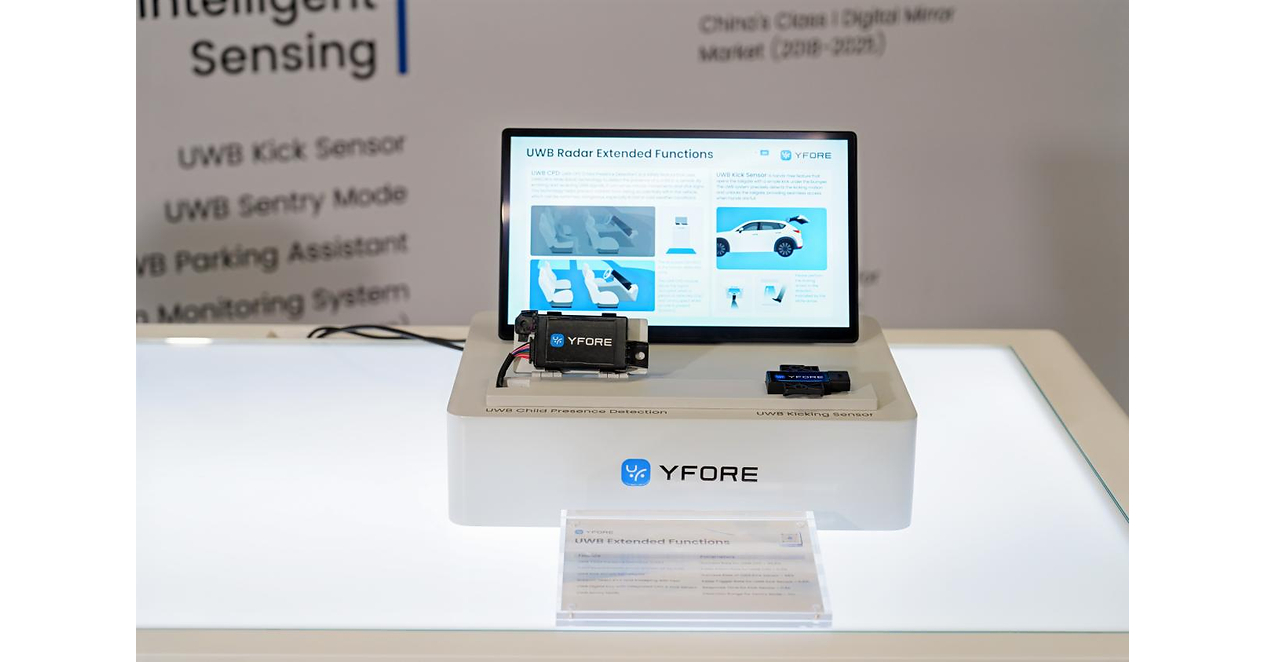
YFORE Technology stellte in Suwanee, Georgia, ein Multi-Scenario Multi-Function Ultra-Wideband-(UWB)-Radar-Portfolio für Next-Gen-Fahrzeuge vor. Highlights umfassen In-Cabin Child Presence Detection mit >99% Erkennungsrate und Euro-NCAP-kompatiblen Reaktionszeiten (<13 s), Außenfunktionen wie Kick-Sensing Access (Auslösequote >98%, Fehlauslösung <0,5% bei Regen/Waschen/Tierbewegung) sowie ODMS für bessere Erkennung hinter Sitzen. Zusätzlich senkt der Low-Power Sentry Mode den Kamerabetrieb und spart bis zu 2 kWh pro Nacht; insgesamt ist dies ein produktspezifischer Technologie-Update mit begrenztem unmittelbarem Marktimpakt.
Analysis
This is more of a capability demo than an earnings event, so the near-term market impact should be limited. The real economic lever is not the sensor itself but whether OEMs use multifunction UWB to collapse three separate content buckets — cabin monitoring, access, and parking — into one module; if that happens, it pressures point-solution suppliers and lowers bill-of-materials for cost-sensitive EV platforms. The first-order winners are automotive semiconductor vendors with automotive-grade UWB/radar content and software stacks, while the most exposed losers are legacy ultrasonic and narrowly scoped interior-monitoring vendors.
The harder second-order effect is on system architecture: multifunction sensing favors OEMs and Tier-1s that can validate safety cases quickly, which usually means a long qualification window rather than an immediate revenue step-up. Over the next 1-3 months, the catalyst is not product launch headlines but design-win disclosures, Euro NCAP inclusion, and any evidence that this architecture is being specified into high-volume platforms. If those do not appear, this stays a marketing story with little P&L translation.
Contrarian take: the market may underappreciate how much software and homologation friction there is in replacing mature camera/ultrasonic solutions. UWB looks elegant in a demo, but false positives, thermal drift, and integration complexity tend to show up only after fleet testing. The thesis is falsified if OEMs continue prioritizing camera-based cabin sensing or if RFQ conversion fails to show up in the next two quarters; conversely, confirmation would be a visible design-win pipeline from European EV and premium SUV programs.
AllMind Terminal
AI-powered research, real-time alerts, and portfolio analytics for institutional investors.
Request TrialMarket Sentiment
Overall Sentiment
mildly positive
Sentiment Score
0.18
Key Decisions for Investors
- Watchlist, not an immediate trade: wait for confirmed OEM design wins before buying automotive UWB content names like NXPI or ON; the stock reaction to a demo is likely overdone relative to 12-18 month revenue impact.
- If you want a tactical expression, buy NXPI on a pullback only after a public design-win update; the upside is multi-year auto content expansion, but the stop should be any evidence that OEMs keep cabin sensing camera-led.
- Use MBLY as a relative-value short only on strength if the market starts pricing this as broad parking/ADAS commoditization; thesis breaks if Mobileye discloses stronger parking/driver-monitoring attach rates.
- For Tier-1 exposure, prefer APTV over legacy sensor-centric suppliers only if OEMs start consolidating multiple sensing functions into fewer modules; otherwise do not force a trade.
- Set an alert on Euro NCAP / regulatory updates and next-quarter RFQ commentary; without those, the risk/reward is poor and the setup remains a research watch item rather than a position.
More News
- Christine Lagarde: IMFC Statement
- Palantir patient data tech rejected by many NHS trusts in England
- Why did CoreWeave stock get crushed this week? Look to this corner of the debt market for clues
- Diageo's Toxic Spill Hits Pristine River in Scottish Whisky Country
- AI stock sell-off ramps up over debt-fueled data center spending fears: ‘Full-blown crisis of confidence'
- Apple’s $1,999 iPhone Duo puts the company's status-symbol power to the test
From AllMind Research
- Anthropic IPO Preview: Valuation, Timing, and What to Watch
- Shein After the IPO: Venue, Valuation, and What Must Be Proved
- What AI Research Tools Should a Small Hedge Fund Buy First?
- AlphaSense vs Hebbia vs AllMind: Choose by Workflow
- AllMind Discusses Ontario's AI Economy with Minister Stephen Crawford and Supply Ontario CEO James Wallace