
Target's Stores Power Its Expanding Omnichannel Fulfillment Network
Source: zacks.com
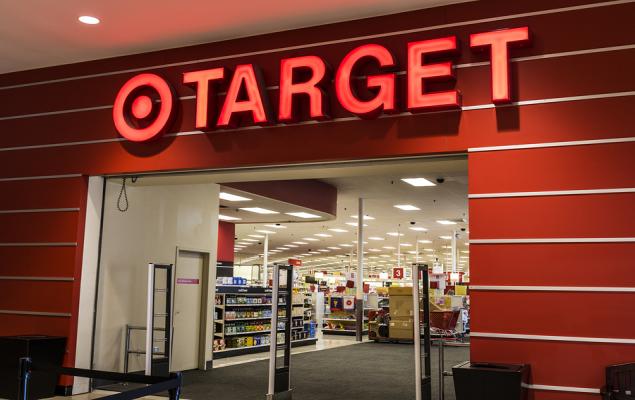
Target stores fulfilled 97.6% of merchandise sales in fiscal Q2 2026, supporting 8.7% comparable digital-sales growth and more than 25% growth in same-day delivery. The retailer opened 17 stores in Q2, reaching 24 first-half openings, while advancing more than 100 remodels to expand its store-based fulfillment network. Consensus EPS estimates rose $2.01 for the current fiscal year to $10.43 and $0.41 for next year to $9.36; Target shares have gained 17% over three months versus an 8.8% industry decline.
Analysis
The investable issue is whether Target's store-fulfillment mix generates incremental EBIT or merely shifts logistics expense from distribution centers to already pressured store labor. Digital growth is usually margin dilutive in mass retail; the thesis improves only if higher pickup/Drive Up density lowers per-order last-mile cost and raises basket attachment. Over the next 1-3 quarters, investors should focus on digital gross-margin rate, fulfillment labor hours per unit, shrink, and store payroll leverage—not fulfillment volume alone.
TGT's expanding local network could pressure pure delivery economics for Instacart (CART) and parcel-intensive fulfillment models, while making its convenience proposition more comparable with Walmart (WMT) than with DG. DG remains structurally exposed if shoppers trade toward one-stop, rapid-fulfillment baskets, but its rural footprint and lower fixed-cost format limit direct substitution. COST is comparatively insulated: its membership-led traffic and bulk-basket economics are not primarily competing on immediate fulfillment, though its premium multiple leaves it more vulnerable if investors rotate toward improving value-retail earnings.
The near-term rerating case is constrained after the recent share move and by a forward earnings profile that declines after the current fiscal year; the market needs evidence that fulfillment investments are converting into durable margin, not simply sales capture. A weaker discretionary consumer, wage inflation, or elevated shrink would expose the operating-deleverage risk quickly. The contrarian view is that a mature store base makes omnichannel capability table stakes rather than a differentiator; WMT's larger scale and broader grocery frequency may retain the superior fulfillment-cost advantage.
No standalone catalyst is apparent from the article. The next earnings release is the key verification event: upside requires digital growth to remain strong while merchandise margin and SG&A improve simultaneously; a miss on either would likely compress the modest premium to TGT's historical valuation range.
AllMind Terminal
AI-powered research, real-time alerts, and portfolio analytics for institutional investors.
Request TrialMarket Sentiment
Overall Sentiment
moderately positive
Sentiment Score
0.48
Ticker Sentiment
Key Decisions for Investors
- Maintain a 1-3 month watch, rather than chase TGT: initiate only if the next report shows fulfillment-driven SG&A leverage and stable/improving gross margin. Falsify on renewed fulfillment-labor pressure, rising shrink, or management guidance implying sales growth without EPS conversion.
- For a relative retail expression, consider long TGT / short DG over 3-6 months only after confirmation that Target's convenience-led traffic is translating to margin. The pair captures share migration from fragmented value retail; exit if DG's same-store sales and gross-margin recovery materially outpace TGT.
- Avoid using COST as the direct short leg against TGT. COST's membership income and customer loyalty create a different earnings engine; use XRT or a discretionary-retail basket hedge if broad consumer-demand risk is the concern.
- Set an earnings alert for the digital sales mix, digital profitability disclosure, and next-year EPS guidance. If management cannot quantify unit-cost or labor productivity gains from store fulfillment, treat the omnichannel narrative as non-monetizable and reduce exposure.
More News
- FTC and 20 states sue Dollar General, saying it overcharged its poorest customers by millions
- FTC demands Walmart, Uber, Delta and others hand over data on personalized pricing: Reuters
- Is Costco the next healthcare disrupter?
- The FTC asks companies from Uber to Walmart about how they personalize the prices you pay
- What investors need to know about Alphabet's stock-busting earnings report
- Our next steps for Alphabet stock after earnings disappoint at nearly every turn