
Anatool Launches to Improve Recognition and Treatment of Anaphylaxis
Source: PR Newswire
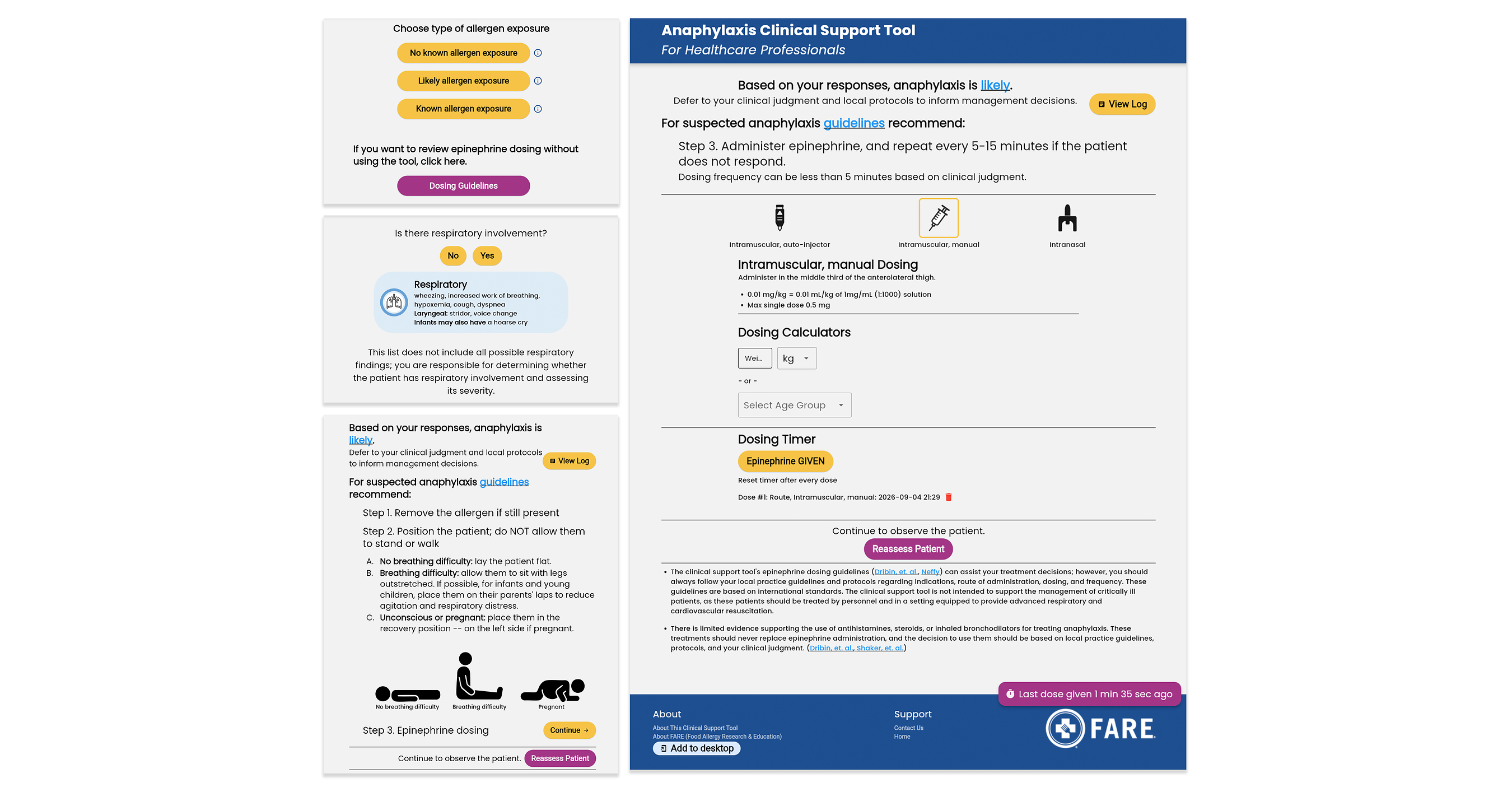
FARE and Cincinnati Children's launched Anatool, a clinician-facing digital decision-support tool translating international anaphylaxis consensus guidance into point-of-care treatment recommendations. The tool incorporates updated diagnostic criteria, guidance on intramuscular and FDA-approved needle-free intranasal epinephrine (neffy), and infant-specific assessment criteria. The launch addresses persistent underuse of epinephrine and could support faster treatment and shorter, safe pediatric observation periods, but has limited direct public-market relevance.
Analysis
The commercial read-through is modest but directionally favorable for ARS Pharmaceuticals (SPRY): embedding needle-free epinephrine in a clinician-facing decision pathway may reduce friction at the point where treatment choice is made, particularly in pediatric and needle-averse populations. The larger mechanism is not incremental emergency-department dispensing alone; broader clinician confidence can support outpatient prescribing, formulary discussions and refill persistence. Viatris (VTRS) and Teva (TEVA), through injectable epinephrine exposure, face a limited substitution risk, although acute-care protocols and payer step edits make any share shift gradual rather than immediate.
The key caveat is distribution. A standalone educational resource without EHR order-set integration, hospital-system adoption, or payer coverage expansion is unlikely to alter prescribing behavior materially over the next quarter. Over 6-18 months, standardized diagnostic criteria could increase treated-event rates and reduce unnecessary observation utilization, creating a potential health-system economic case for protocol adoption—but that value may accrue to providers and payers rather than drug manufacturers. Consensus may over-credit the launch as a near-term revenue catalyst; the investable inflection requires evidence of institutional adoption and net-price durability, not clinical endorsement alone.
AllMind Terminal
AI-powered research, real-time alerts, and portfolio analytics for institutional investors.
Request TrialMarket Sentiment
Overall Sentiment
mildly positive
Sentiment Score
0.35
Key Decisions for Investors
- Place SPRY on a 1-3 month catalyst watch rather than initiate solely on this release; upgrade only if management identifies named health-system/EHR integrations, improved commercial coverage, or prescription-growth acceleration. The thesis is falsified by flat new-to-brand prescriptions despite clinician-resource adoption.
- For investors already long SPRY, maintain a small tactical position through the next earnings update, with risk defined by guidance on gross-to-net pricing and refill persistence; the upside case is multiple expansion if needle-free epinephrine demonstrates durable adoption beyond allergy specialists.
- Do not short VTRS or TEVA on this development alone. Any injectable-epinephrine erosion should emerge over several quarters and is too small relative to diversified earnings; revisit only if payer formularies preferentially position neffy or reported injectable epinephrine volumes deteriorate.
- Monitor HCA and Tenet Healthcare (THC) only as second-order beneficiaries if standardized discharge protocols demonstrably shorten low-risk observation stays; absent published system-level implementation or throughput metrics, there is no actionable hospital-services trade.
More News
- Here’s the ‘core economic flaw’ in the AI bull case as stock and bond trades unravel, according to a top economist
- 5 big analyst AI moves: ’Uniquely catalyst-rich’ months ahead for SpaceX
- The experience economy keeps defying expectations. Maybe we’ve been looking at it all wrong
- Xencor reports phase 1 data for cancer drug XmAb819
- The U.S. military and NASA have power problems. Nuclear microreactors might solve both
- Biotech stocks are surging. How investors can play the new drug innovation boom
From AllMind Research
- Anthropic IPO Preview: Valuation, Timing, and What to Watch
- Shein After the IPO: Venue, Valuation, and What Must Be Proved
- What AI Research Tools Should a Small Hedge Fund Buy First?
- Capital Intensity as Gravity: The AI Trade Enters Its Industrial Era (Looking at Q3 2025 Earnings in Tech)
- AI Portfolio Monitoring: Build an Alert Policy Analysts Can Audit