
Lockheed Martin Targets Drone Defense, Missile Output Surge With AI-Powered Strategy
Source: marketbeat.com
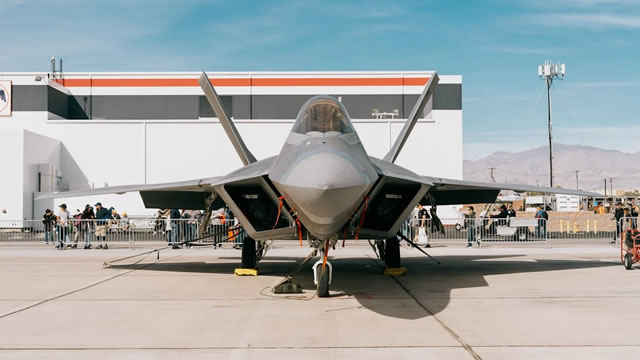
Lockheed Martin CEO Jim Taiclet outlined a strategy to pair high-end weapons platforms with lower-cost autonomous and counter-drone systems. The company aims to position itself as a defense “mission integrator,” expanding its role beyond supplying individual products and potentially improving its relevance across evolving military procurement priorities.
Analysis
LMT’s strategic upside is less about incremental hardware sales than defending prime-contractor economics as the Pentagon shifts portions of procurement toward expendable, software-defined systems. If LMT controls command-and-control, sensors, battle management and platform interoperability, it can retain a higher-value share of programs even where air vehicles or interceptors are sourced from lower-cost specialists. This pressures pure-play autonomy vendors such as KTOS and AVAV: their unit growth can remain strong while their ability to capture full-system margins is constrained by prime-led integration awards.
The near-term market effect should be limited until a program award, contract vehicle, or funded budget line validates the architecture. Over 1-3 months, watch whether LMT converts this positioning into classified-program bookings, missile-defense/counter-UAS awards, or a higher mix of software and sustainment revenue; those would support margin resilience and a modest multiple re-rating versus a legacy-platform narrative. Over 6-18 months, the critical risk is that DoD procurement favors open architectures and direct awards to nontraditional vendors, turning LMT into a low-margin integrator rather than the owner of proprietary mission systems.
Consensus may overvalue the statement as proof that LMT has solved the low-cost drone problem. Autonomous systems typically carry rapid technology obsolescence, uncertain production learning curves, and lower barriers to entry than LMT’s traditional franchises. The investable signal is therefore not drone exposure alone, but evidence that LMT can attach its software, sensors, electronic warfare, and sustainment content to third-party attritable systems without sacrificing segment margins. Falsification would be autonomous/counter-UAS bookings growing while Aeronautics or RMS margins deteriorate, or major DoD awards bypassing primes for open-system providers.
AllMind Terminal
AI-powered research, real-time alerts, and portfolio analytics for institutional investors.
Request TrialMarket Sentiment
Overall Sentiment
mildly positive
Sentiment Score
0.20
Ticker Sentiment
Key Decisions for Investors
- Maintain or initiate a modest long LMT only on confirmation of funded counter-UAS/autonomy awards or a book-to-bill inflection over the next 1-2 quarters; target a 5-10% relative return versus XAR from multiple support and backlog visibility, with thesis invalidated by two consecutive quarters of declining segment margin or reduced free-cash-flow guidance.
- Use a 6-12 month pair trade: long LMT / short KTOS in equal dollar beta-adjusted sizing if LMT wins an integration-led award. The trade expresses that prime control of mission architecture captures disproportionate economics; exit if KTOS receives a direct production-scale DoD award that excludes a major prime or materially raises its funded backlog.
- Do not chase AVAV or other autonomy pure plays solely on the defense-autonomy theme. Set an alert for evidence of direct procurement, recurring software revenue, or production contracts rather than prototypes; absent those data, unit-volume enthusiasm may outrun sustainable gross-margin and competitive-moat assumptions.
- Ahead of LMT earnings, focus on classified backlog conversion, RMS margin, and free-cash-flow conversion rather than management’s strategic language. A positive revision to these metrics is the catalyst for adding exposure; rhetoric without disclosed contract value or funded program status is not a standalone trade signal.
More News
- US to Sell F-35s to Saudi Arabia in $24.3 Billion Deal
- U.S. approves possible $24.3 billion F-35 sale to Saudi Arabia
- US approves $24.3 billion F-35 fighter jet sale to Saudi Arabia
- Lockheed Martin reveals new secret missile, fast tracks production
- Lockheed Martin reveals new air-to-air missile details
- Italy to deploy warships to protect shipping through Bab al-Mandeb