
CookieYes Launches MCP Server to Manage Cookie Consent Inside Claude and ChatGPT
Source: PR Newswire
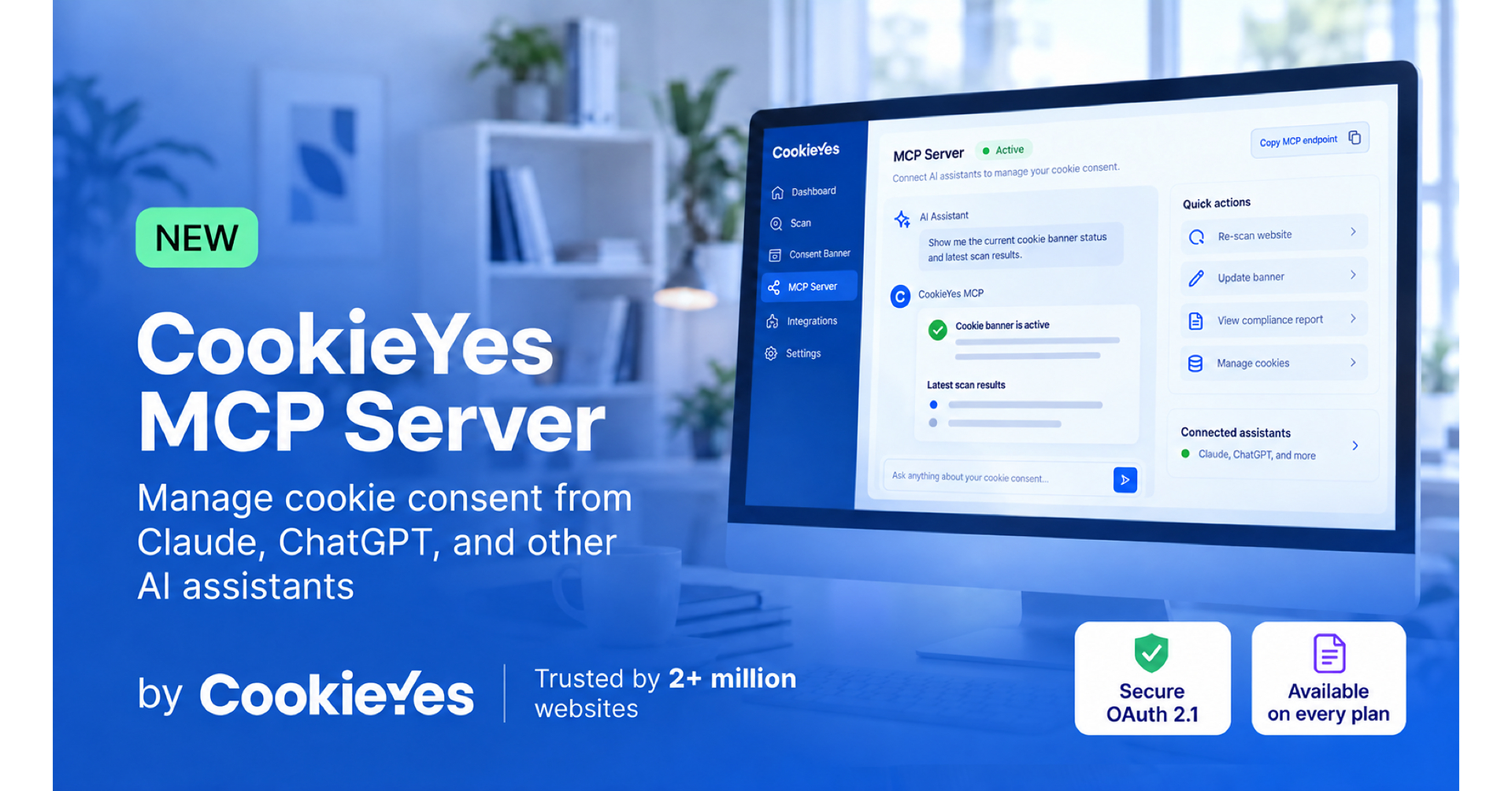
CookieYes launched a Model Context Protocol server enabling customers to manage cookie-consent banners, review scans, and make approved configuration changes through AI assistants including Claude and ChatGPT. The product offers 10 tools, with three action-triggering functions requiring user approval, and uses OAuth 2.1 with PKCE while restricting AI access to configuration and scan metadata rather than personal data or consent records. The MCP server is available across all plans, including free, extending CookieYes's consent-management offering to its base of more than 2 million websites.
Analysis
This is not a DPZ earnings or valuation catalyst: the relevant exposure is operational rather than financial, and any benefit is too diffuse to underwrite a position. For consumer brands with large web estates, lower-friction consent administration could modestly reduce marketing-launch delays and agency compliance overhead, but the dollar impact is immaterial relative to DPZ's delivery, franchisee-margin, and same-store-sales drivers. The more investable implication sits with the consent-management software category, where AI-native workflows could raise switching costs if they become embedded in agency processes.
The second-order risk is that AI-connected administrative tools broaden the attack surface and elevate liability from erroneous configuration changes, even where approval gates exist. A widely reported misconfiguration, regulator inquiry, or enterprise security-team pushback would likely favor larger privacy platforms with deeper governance capabilities rather than smaller point solutions. Over the next 1-3 months, monitor enterprise adoption evidence, paid-plan conversion, and whether competitors such as OneTrust or Didomi launch comparable integrations; absent disclosed monetization or customer-retention data, this remains product noise rather than a public-markets catalyst.
Contrarian view: distributing the capability to free users may be defensive rather than growth-accretive. If AI assistants commoditize basic banner configuration, consent-management vendors could face pressure on entry-tier pricing, with value migrating to auditability, global policy orchestration, and enterprise indemnification. That potential margin bifurcation matters for private software comparables, but there is no clean listed single-name expression in the supplied universe.
AllMind Terminal
AI-powered research, real-time alerts, and portfolio analytics for institutional investors.
Request TrialMarket Sentiment
Overall Sentiment
mildly positive
Sentiment Score
0.35
Key Decisions for Investors
- No DPZ trade: maintain existing thesis discipline; do not attribute material revenue, margin, or multiple impact to this announcement. Reassess only if DPZ discloses a measurable reduction in digital compliance costs or a marketing-conversion benefit, which is unlikely to be material within 12 months.
- Create a 1-3 month watch alert for privacy-software incumbents and cybersecurity governance vendors: evidence that AI-based consent workflows are included free by competitors would be a negative read-through for low-end consent-management pricing, while enterprise-only paid adoption would support platformization.
- For any future public privacy-software exposure, require verification of net revenue retention, enterprise attach rate, and security-review cycle times before initiating a long; a product launch alone does not establish monetization or durable competitive advantage.
More News
- Australia’s central bank chief warns inflation risks materialising
- This AI-picked stock jumps 18% on Amazon’s $8 billion power deal
- Asian stocks rise as oil retreat eases inflation fears, BOJ in focus
- California AG Bonta on Paramount-Warner Bros., Meta and AI
- A breakout in the 10-year Treasury yield could hold back stocks if it reaches this level
- Fed rate decision and Warsh comments roiled markets. Where to find opportunities