
Ascentiz präsentiert H + K auf der IFA 2026 und stellt die weltweit erste modulare Exoskelett-Plattform vor
Source: PR Newswire
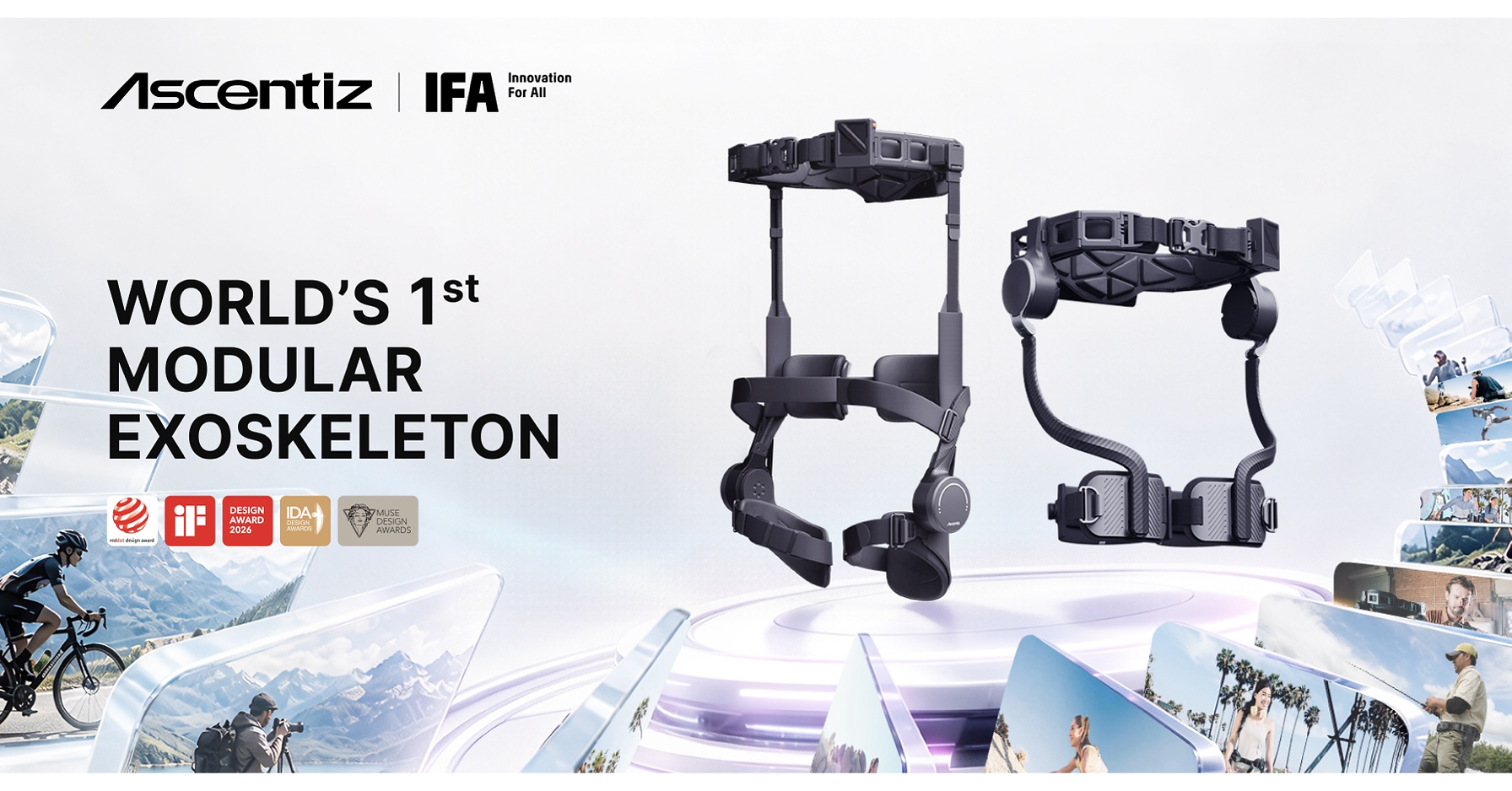
Ascentiz launched its modular exoskeleton platform on IFA 2026, introducing the H (hip) and K (adaptive knee) modules built around a shared exo-belt with real-time Adaptive Motion Intelligence. Pricing starts at €1,599 for H Pro and rises to €3,999 for the H+K Ultra Combo, with K and combined configurations’ availability expected shortly. The key investor takeaway is a platform/software approach (BodyOS, open-source) that could reduce redevelopment needs across future module releases, though the news is product-focused with limited near-term market-wide financial impact.
Analysis
The investable takeaway is not the launch itself but the architectural choice: modularity shifts exoskeletons from one-time hardware purchases toward a platform model with higher lifetime value if, and only if, users actually buy additional modules. That creates upside for any company that can monetize attachment rates, software updates, and accessories; it is a headwind for fixed-form-factor competitors whose next-gen roadmap depends on full device replacement. In the near term, though, this is mostly a proof-of-concept story — the market should discount retail demand until there is evidence of repeat usage, low return rates, and a credible service/channel footprint.
Second-order, the open software angle is double-edged. It can accelerate developer adoption and third-party use cases, but it also lowers switching costs and makes the moat less about IP ownership and more about distribution, ergonomics, and certification. The real constraint is not technical novelty; it is whether the product can clear the comfort, safety, battery-life, and warranty hurdles that typically kill consumer robotics before they reach scale.
Contrarian view: consensus may overvalue the word "first" and undervalue unit economics. In wearables, the winners are usually those with the lowest friction, the least maintenance, and the broadest retail/service reach — not necessarily the most modular system. If early reviews show the platform is cumbersome or the upgrade path is too expensive, the category could remain niche for 6-18 months despite strong demo appeal.
AllMind Terminal
AI-powered research, real-time alerts, and portfolio analytics for institutional investors.
Request TrialMarket Sentiment
Overall Sentiment
mildly positive
Sentiment Score
0.15
Key Decisions for Investors
- No immediate public-equity trade: the signal is too early and the company is private; wait for third-party reviews, preorder data, and return-rate disclosure before expressing a view.
- Set a 1-3 month alert on any listed exoskeleton/robotics proxy (e.g., EKSO or a robotics ETF basket) only if channel checks show real sell-through; otherwise treat this as non-investable noise.
- If later evidence confirms repeat module attach rates and a functioning ecosystem, consider a small tactical long in a robotics ETF (BOTZ/ROBO) versus short a high-multiple consumer-hardware basket to express platform adoption while hedging general beta.
- Falsifier to watch: delayed availability of the knee module, poor reviewer ergonomics, or high return rates; any of those would invalidate the modular-platform thesis within the next 1-2 quarters.
More News
- Putin reportedly suggests summit with Trump and Xi to decide fate of Ukraine
- China's CXMT sees shares drop over 6% as investors look past chipmaker's profit turnaround
- Zoom and big financial firms add ‘Proof of Human’ badges from Sam Altman’s World to stop fraud and deep fakes
- The next AI race will be won at the credit desk
- Linux KVM guest-host escape rated critical, may represent a new way to attack penguin-powered networking
- Russia’s war on Ukraine ‘must be brought to an end’, Zelenskyy says