
FirstService Residential Releases 2026 BENCHMARK Master-Planned and Lifestyle Communities Report
Source: PR Newswire
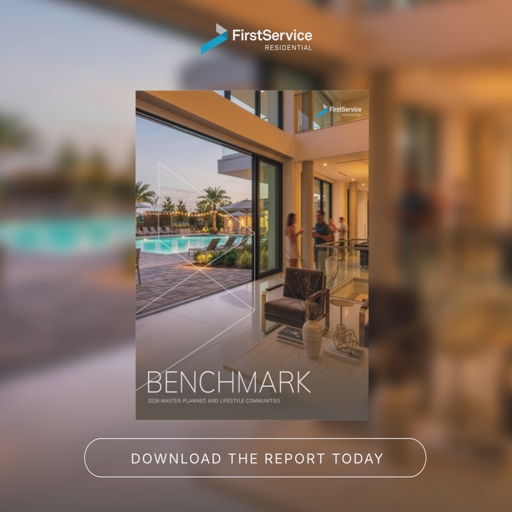
FirstService Residential released its 2026 BENCHMARK report covering operating costs and budget allocations for U.S. master-planned and lifestyle communities, including insurance, utilities, reserves, operations and administrative expenses. The report highlights cost pressures, wage inflation, regulatory obligations, capital improvements, technology and resident-demand trends such as wellness programming, multigenerational living and aging in place. The announcement provides industry benchmarking information but contains no material financial results, outlook revision or new quantitative disclosures for FirstService Corporation.
Analysis
This is low-information marketing content rather than a measurable earnings catalyst, so no near-term estimate change is warranted for FSV. The useful read-through is that association budgets are likely becoming more complex—not merely larger—which favors scaled managers that can bundle insurance procurement, energy management, financing and compliance services. That can support retention, cross-sell and modestly higher revenue per managed unit over 6-18 months, but the release provides no pricing, client-win, margin, or organic-growth data to quantify the effect.
The more investable second-order issue is affordability. Rising HOA assessments and reserve funding can pressure transaction velocity and delinquency in amenity-heavy Sun Belt communities, potentially increasing board scrutiny of management fees even as operating complexity rises. FSV's scale should make it a relative share gainer versus fragmented local managers, but labor-intensive onsite service means wage inflation and insurance pass-through disputes could limit incremental margins. Watch FSV's Residential organic growth, client retention, and adjusted EBITDA margin in the next two earnings reports; absent acceleration in these metrics, the thematic narrative should not command a multiple premium.
Contrarian view: investors may over-credit amenity demand as a discretionary-growth vector. Aging-in-place adaptations and wellness programming are generally association-funded pass-through expenditures, not necessarily high-margin FSV revenue. The structural upside is strongest only if FSV converts its data advantage into attach-rate growth in Financial, Energy, and technology offerings rather than simply administering larger community budgets.
AllMind Terminal
AI-powered research, real-time alerts, and portfolio analytics for institutional investors.
Request TrialMarket Sentiment
Overall Sentiment
neutral
Sentiment Score
0.05
Ticker Sentiment
Key Decisions for Investors
- No standalone trade on this release; keep FSV on watch through the next 1-2 quarters for Residential organic-growth acceleration and evidence of higher-margin ancillary-service attach rates.
- If FSV reports organic residential growth above guidance while adjusted EBITDA margin is stable-to-up despite wage pressure, initiate or add a 6-12 month long FSV position; the thesis is scale-driven share gains and cross-sell, not amenity-budget inflation alone.
- Use a relative-value framework: long FSV versus a basket of smaller/private residential-management exposure where feasible, or versus IYR only if FSV's retention and ancillary growth improve. Falsify if management cites fee compression, elevated client churn, or margin deterioration across two consecutive quarters.
- Monitor HOA delinquency and assessment-pressure indicators in Florida, Texas, Arizona and California. A material rise would raise the risk that boards defer capital projects and intensify fee negotiations, undermining the expected operating-leverage path.
More News
- Wall Street’s Nasdaq hits all-time high as AI frenzy gathers pace
- Data-Center Bet Makes ESDS One of India’s Best New Listings
- Asia stocks ride tech wave higher, oil stays subdued
- Trump Says US Team Met With Iranians at UNGA
- U.S. regulators rush to write crypto rulebook after Clarity Act stalls in Senate
- How Kevin Warsh’s rate hike exposed a 2-speed U.S. economy, with AI and housing at the poles
From AllMind Research
- Anthropic IPO Preview: Valuation, Timing, and What to Watch
- Shein After the IPO: Venue, Valuation, and What Must Be Proved
- What AI Research Tools Should a Small Hedge Fund Buy First?
- How to Evaluate Consensus Estimates Platforms With AI
- Weekly Update: Adding Live MBO Level 3 Data - Liquidity Heatmap, OFI Charts, and More