
Screen Printing Expert Chris Murray Explains How to Avoid Common Custom Printed Apparel Mistakes in HelloNation
Source: PR Newswire
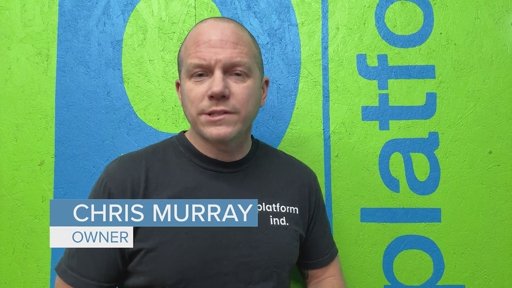
The article provides operational guidance for ordering custom-printed apparel, warning that common issues—like submitting low-resolution (e.g., ~72 DPI) artwork instead of print-ready 300 DPI+ files, skipping proof checks, and assuming one-size-fits-all sizing—can cause blurry prints, color inaccuracies, fit problems, and costly reprints. It also advises matching the print method (screen printing vs. direct-to-film) to design complexity and intended use to avoid durability/appearance mismatches. Overall, it’s practical consumer/business process advice with no direct financial metrics or market-wide implications.
Analysis
This is not a CRMT signal; it is a process-oriented consumer-services note with essentially zero direct linkage to Car-Mart’s lending, inventory, or unit-volume drivers. If anything, the only economic read-through is that small businesses and schools are still spending on event/branding materials, but that is too noisy and too localized to matter for a public-market position.
The more relevant takeaway is competitive, not macro: businesses that reduce reprint risk, shorten proof cycles, and manage artwork/sizing digitally can win share on service quality rather than price. That favors vertically integrated workflows and software-enabled print shops over commodity operators, but the impact is diffuse and likely shows up only in customer retention metrics over months, not in any near-term equity catalyst.
For CRMT, the contrarian view is that investors should not over-interpret any consumer-facing PR as evidence of improving discretionary demand. There is no credible path from this article to credit performance, reserve builds, or used-car ASPs. Falsification for any broader retail-spend thesis would be actual order-volume data from print/merch platforms or SMB capex indicators; absent that, this is a non-event.
AllMind Terminal
AI-powered research, real-time alerts, and portfolio analytics for institutional investors.
Request TrialMarket Sentiment
Overall Sentiment
neutral
Sentiment Score
0.03
Key Decisions for Investors
- No trade in CRMT; keep the name on neutral watch and wait for hard evidence in unit sales, credit quality, or guidance before assigning any consumer-demand read-through.
- Do not front-run a 'small business demand' thesis off this article; if looking for confirmation, require 1-2 quarters of order-growth data from apparel/print-service peers before taking any sector position.
- If forced to express the operational-efficiency theme, prefer a watchlist on vertically integrated fulfillment/software names rather than commodity print services; the edge would come from lower reprint rates and faster turnaround, but the signal is too weak for immediate action.
- Set a thesis-falsifier alert: if upcoming retail/SMB spending data or peer print-order volumes weaken, assume even the modest positive read-through is overstated and avoid any long exposure tied to local promotional spend.
More News
- Why is T-Mobile stock tumbling today?
- Why is Verizon stock sliding today?
- SpaceX wants to become a 'major mobile carrier' with low-band spectrum acquisition
- OpenAI projected to bring in $20bn less in revenue than expected
- Soitec climbs 7% as BofA turns bullish on silicon photonics demand
- Schott Pharma drops after Deutsche Bank downgrades on demanding valuation
From AllMind Research
- Anthropic IPO Preview: Valuation, Timing, and What to Watch
- Shein After the IPO: Venue, Valuation, and What Must Be Proved
- What AI Research Tools Should a Small Hedge Fund Buy First?
- What Is an AI Research Agent?
- Bitcoin's 52% Crash Proves It's a Tech Stock: Here's What That Means for Portfolio Construction