
Labour Chancellor Healey Put on Spot by Billionaire Rokos Quitting UK
Source: Bloomberg
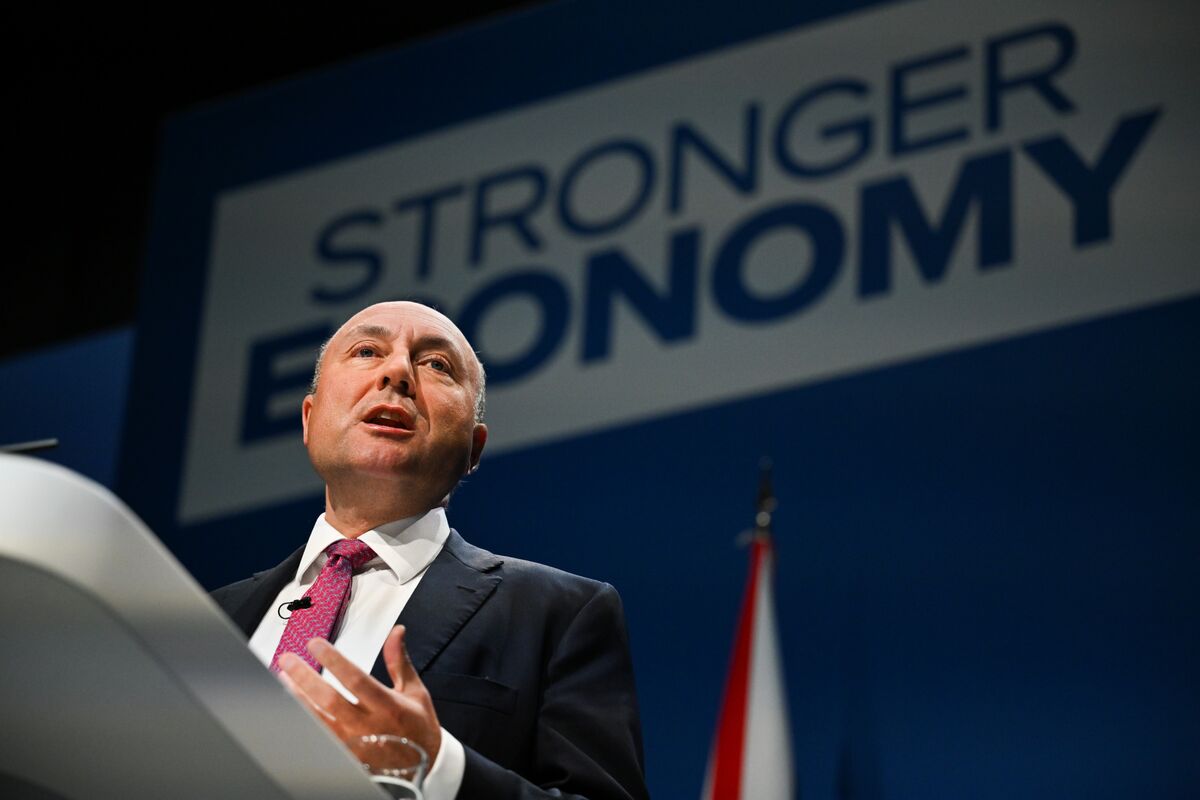
UK borrowing costs have reached a fresh high as political attention focuses on billionaire hedge-fund founder Chris Rokos reportedly planning to relocate to Greece. The case raises concerns that Labour's pursuit of additional tax revenue could be constrained by the potential departure of wealthy taxpayers, increasing fiscal-policy and investor-confidence risks.
Analysis
The investable issue is not one manager’s relocation; it is whether highly mobile financial-services principals begin pricing a persistent UK tax-and-regulatory premium into location decisions. A visible sequence of departures would weaken London’s talent flywheel, reducing high-margin fee, legal, prime-brokerage and professional-services activity before it meaningfully affects headline tax receipts. The immediate market transmission is therefore through sterling risk premia and gilt term premium rather than a discrete corporate earnings shock.
Over the next 1-3 months, watch whether fiscal rhetoric broadens from narrowly targeted measures into retrospective or open-ended taxation of carried interest, non-domiciled wealth, private capital, or fund-management economics. That would be negative for UK domestic-risk assets—especially banks, housebuilders and REITs—because an already elevated sovereign funding burden leaves limited room to offset weaker private investment with fiscal support. Conversely, a credible medium-term fiscal framework that protects investment incentives could produce a sharp relief rally in GBP and long gilts, where positioning appears vulnerable to any reduction in policy uncertainty.
The contrarian view is that the direct revenue loss from a small number of high-profile relocations is economically immaterial, while the political value of demonstrating tax enforcement may outweigh it. The more material downside requires second-order evidence: fund redemptions, office/talent migration, declining UK-domiciled launches, or widening UK-vs-core-Europe financing spreads. Without those indicators, this is an alert on policy credibility rather than a standalone short-UK trade.
AllMind Terminal
AI-powered research, real-time alerts, and portfolio analytics for institutional investors.
Request TrialMarket Sentiment
Overall Sentiment
mildly negative
Sentiment Score
-0.30
Key Decisions for Investors
- Maintain a tactical long GBP put or short GBP/USD position into fiscal-policy headlines over the next 1-3 months; use a break above the prior post-budget GBP high as a stop, since it would indicate markets view policy as investment-friendly rather than punitive.
- Favor internationally diversified UK large caps over domestic cyclicals: pair long FTSE 100 exposure (ISF) versus short UK housebuilder exposure (e.g., TW.) only if gilt yields resume rising and fiscal uncertainty intensifies. The mechanism is mortgage-rate sensitivity and a higher UK discount rate, not direct tax exposure.
- Watch the UK 10-year gilt/Bund spread and GBP for confirmation. A sustained widening in the spread alongside GBP weakness would justify adding to UK-duration hedges; a narrowing spread after a credible fiscal statement falsifies the sovereign-risk leg.
- Do not position directly around alternative-asset managers absent evidence of assets, teams, or management companies relocating. Monitor LSE disclosures, UK fund-launch data, and prime-broker commentary for a 6-18 month erosion signal in London financial-services activity.
More News
- What next for France as riots rattle markets? Three questions facing investors ahead of more protests
- Next week brings major risks for the stock market, just as the AI trade keeps faltering
- AI Doubts Spread Cracks in Equities, Credit Markets: Evening Briefing Americas
- Stocks Fall as Oil Rally Keeps a Lid on Treasuries
- CrowdStrike CEO's alarming prediction — plus, the sell-off spreads beyond tech
- Brazil’s Lula and Bolsonaro debate policy proposals before run-off
From AllMind Research
- Anthropic IPO Preview: Valuation, Timing, and What to Watch
- Shein After the IPO: Venue, Valuation, and What Must Be Proved
- What AI Research Tools Should a Small Hedge Fund Buy First?
- AI Software for Buy-Side Teams: Build the Research Stack
- Augmented Intelligence: AllMind, Elevate Human Judgement With an Accessible, Powerful, Data-Driven Financial AI Toolkit