
ioki expands into the US: first customer won, own US subsidiary established
Source: PR Newswire
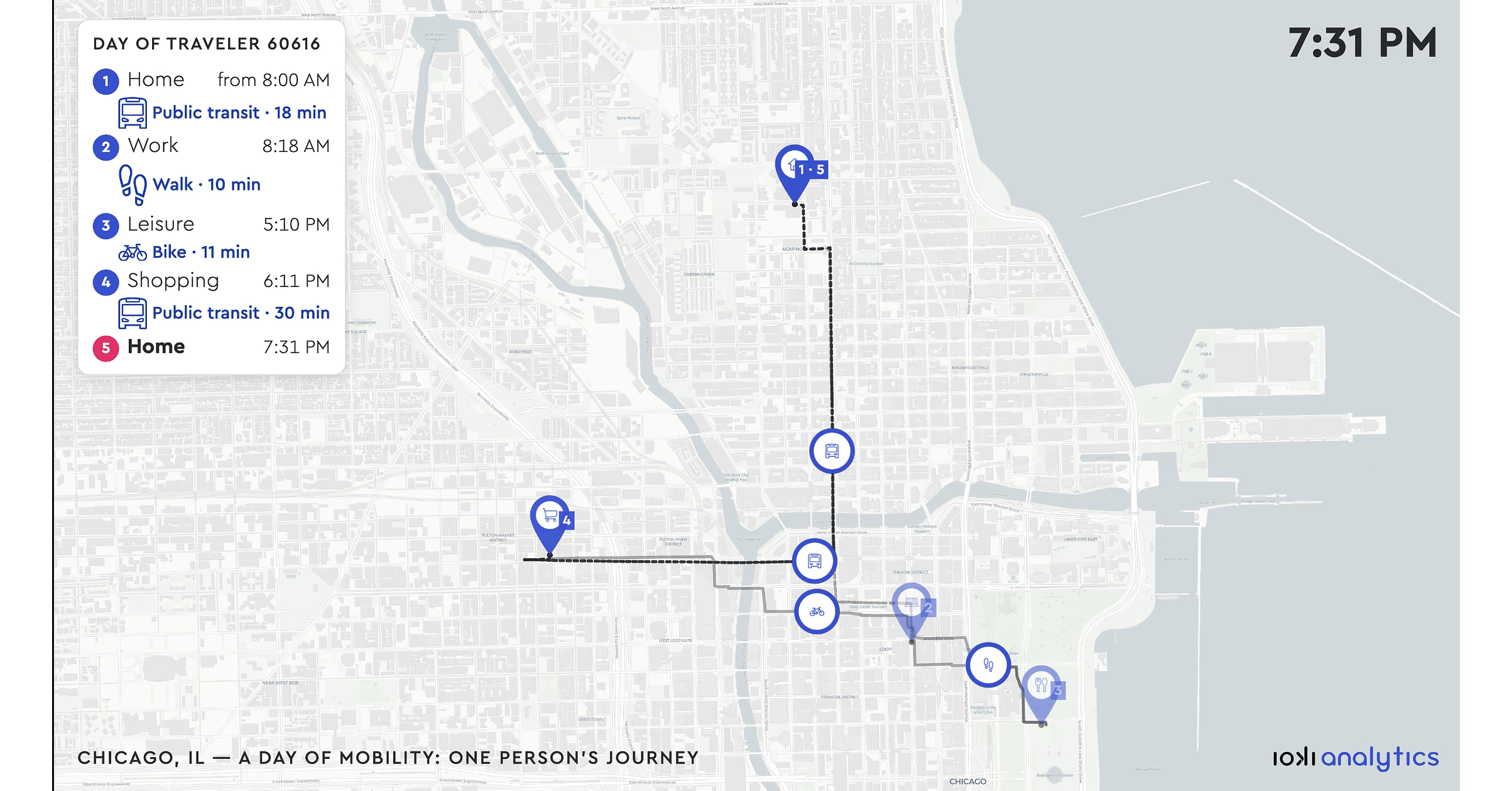
ioki entered the US market by establishing a local subsidiary and securing Georgetown University in Washington, D.C. as its first customer for an on-demand shuttle service beginning in October 2026. The expansion is the first concrete step in ioki's international growth strategy following BENTELER's acquisition earlier this year, with management targeting US transit authorities seeking cost-efficient digital and autonomous-mobility solutions. ioki cites experience from more than 230 planning projects and expects additional US platform and analytics deployments.
Analysis
This is strategically relevant to the North American demand-responsive transit software market, but not yet investable as a standalone catalyst: a single university deployment has immaterial revenue implications and does not validate municipal procurement conversion. The more important signal is that European optimization vendors are targeting a fragmented US agency market as federal support rolls off, increasing pricing pressure on incumbent dispatch, scheduling and fare-platform providers. Publicly traded indirect exposures are limited; Constellation Software (CSU.TO), through its public-sector software footprint, is the closest broad software proxy, while Uber (UBER) and Lyft (LYFT) face only marginal competitive overlap in subsidized paratransit and campus mobility.
Over the next 1-3 months, the key observable catalyst is whether the entrant converts trade-show pipeline into named US transit-authority contracts with multi-year recurring software fees, rather than low-value pilots. Over 6-18 months, agency budget stress should favor vendors that can document lower cost-per-passenger and vehicle-utilization gains, but procurement cycles, union constraints, ADA compliance, and local integration requirements materially slow adoption. The contrarian view is that software-led on-demand transit often expands service coverage rather than reduces total subsidy, so claimed efficiency benefits may fail to translate into agency budget savings; that would constrain pricing power and make the category less disruptive to ride-hail incumbents than the narrative suggests.
No direct listed-company trade is warranted from this release. Monitor US transit contract disclosures, renewal economics, and evidence that agencies are replacing rather than merely layering on existing scheduling systems; displacement of incumbent platforms is the threshold that would create a meaningful read-through for public software and mobility names.
AllMind Terminal
AI-powered research, real-time alerts, and portfolio analytics for institutional investors.
Request TrialMarket Sentiment
Overall Sentiment
moderately positive
Sentiment Score
0.42
Key Decisions for Investors
- No immediate position: treat this as a private-company market-entry datapoint, not a catalyst for UBER, LYFT, or CSU.TO.
- Create a 90-day watchlist for US demand-responsive transit awards following APTA: require at least two municipal or regional contracts, disclosed contract value or fleet scale, and evidence of incumbent-system replacement before positioning around competitive disruption.
- For existing UBER or LYFT longs, do not adjust exposure on this news; reassess only if agency-funded shared-ride programs show sustained volume displacement or if either company flags pricing pressure in transit/paratransit partnerships during earnings.
- Potential medium-term relative-value screen: if public-sector software multiples expand on transit digitization enthusiasm without corresponding recurring-revenue bookings, favor CSU.TO only where organic-growth guidance confirms contribution; falsify on decelerating organic growth or increased acquisition-dependent revenue.
More News
- SoftBank completes final phase of $30 billion investment in OpenAI
- Amazon seeks to offload $8 billion of Nvidia chips to investors, FT reports
- Amazon seeks to offload $8 bln of Nvidia chips to investors- FT
- Iran urges Iraq to lift flight ban amid US sanctions
- Nvidia Faces Questions Over China AI Chip Smuggling Cases
- Europe’s winter energy crunch may already be underway. Two U.S. stocks that may benefit