
Jim Cramer warns that buying stocks now means 'fighting the Federal Reserve'
Source: CNBC
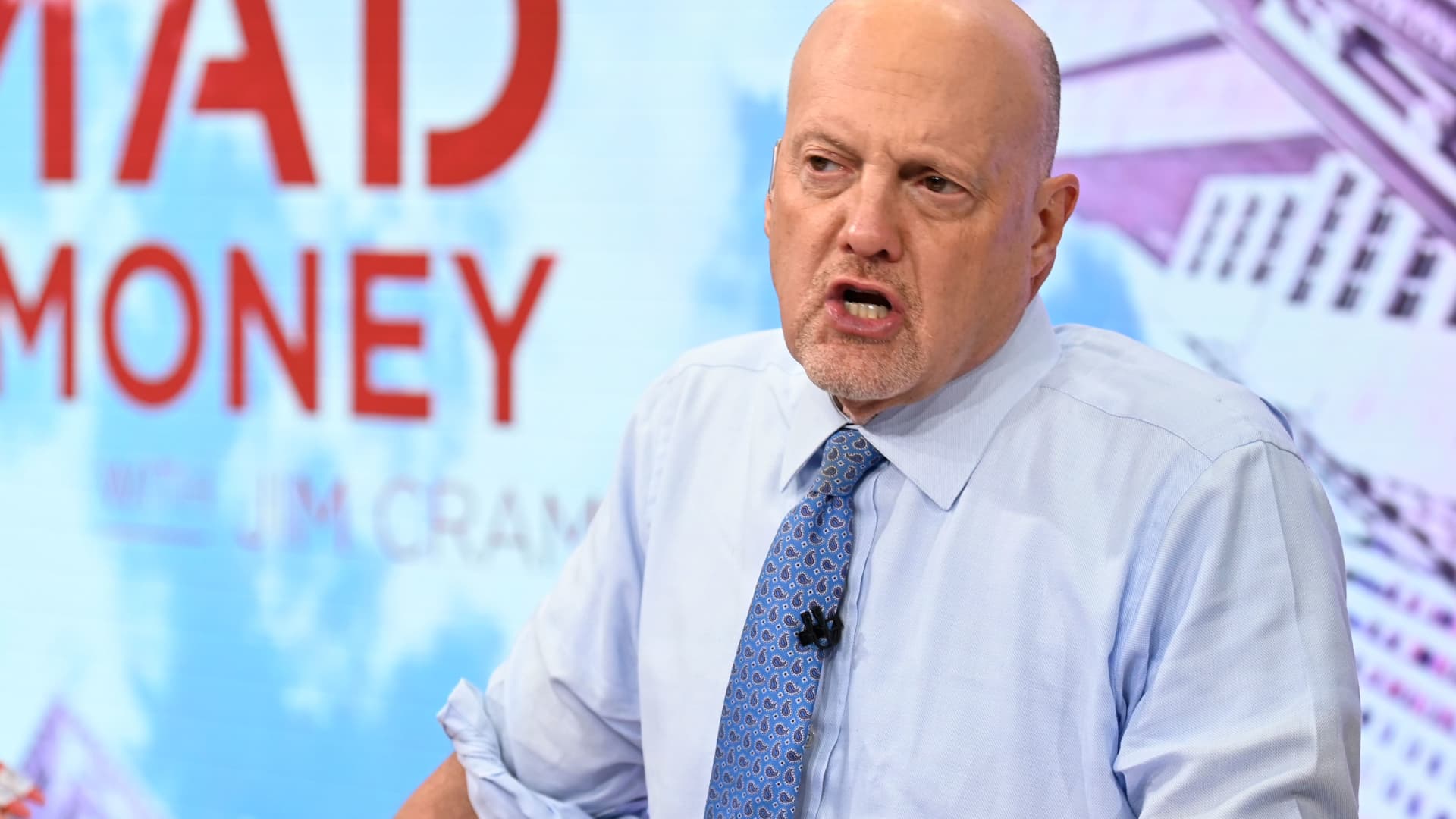
The Federal Reserve raised its benchmark funds rate by 25bps to 3.75%-4.00%, its first increase in three years, while Chairman Kevin Warsh emphasized that inflation remains too high and policy must support a return to the 2% target. Stocks reversed earlier gains, with the Dow falling 631 points, or 1.2%, while the S&P 500 declined 0.5% and the Nasdaq was nearly flat. Cramer warned that further tightening, alongside a 10-year Treasury yield above 5%, reduces the investable equity universe and favors defensive sectors such as pharmaceuticals.
Analysis
The actionable signal is not the initial equity selloff but a prospective regime shift toward higher-for-longer real rates. That regime compresses long-duration equity multiples, raises refinancing risk for small-cap and unprofitable growth issuers, and shifts index flows toward cash-generative defensives. A 50-100bp further rise in the long end would matter more for equity valuation than another 25bp policy move; the vulnerable basket is ARKK/IGV and highly levered consumer cyclicals rather than the broad market alone.
For NDAQ, the impact is mixed rather than directionally negative. Equity-market volatility can lift trading and data demand, while lower IPO issuance, weaker secondary issuance and declining listed-company market capitalization pressure listing, index and solutions growth. The cleaner beneficiary of persistent policy uncertainty is CME, where short-rate and Treasury futures activity directly monetizes rate repricing; CBOE also offers more direct upside through VIX-related volume. NDAQ is relatively insulated by recurring revenue, but lacks the same pure rate-volatility torque.
Near term, systematic de-risking and higher bond yields can keep the growth/value dispersion trade active for days to weeks. Over the next 1-3 months, the key catalyst is whether inflation and payroll data force upward revisions to terminal-rate expectations; that would widen credit spreads and make the equity drawdown self-reinforcing through lower issuance and buyback capacity. The contrarian case is that a restrictive-rate narrative is already embedded in positioning: a soft inflation surprise or declining term premium would produce the sharpest rebound in duration-sensitive software and semiconductors, not defensives.
The article's policy characterization should not itself be treated as a verified trading catalyst; confirm the policy path, yield-curve move and futures-implied terminal rate against official central-bank communications before adding directional risk. The thesis is falsified if the 10-year yield retraces materially while credit spreads remain contained and earnings guidance does not deteriorate—conditions that would favor a growth multiple rebound over further defensive rotation.
AllMind Terminal
AI-powered research, real-time alerts, and portfolio analytics for institutional investors.
Request TrialMarket Sentiment
Overall Sentiment
moderately negative
Sentiment Score
-0.48
Key Decisions for Investors
- Prefer a 1-3 month long CME / short NDAQ pair in equal dollar beta: CME has more direct earnings sensitivity to sustained rates volatility, while NDAQ carries greater exposure to depressed equity issuance. Reassess if implied terminal-rate pricing falls by 50bp or if equity issuance activity materially improves.
- Maintain an underweight in ARKK or use a long XLP / short IGV hedge for the next 4-8 weeks while the long-end yield remains elevated. Target 5-8% relative performance; stop if the 10-year yield declines 40bp from entry and IGV reclaims leadership on improving breadth.
- For volatility exposure, favor selectively buying CBOE on market weakness rather than broad index puts: recurring volatility and options-volume sensitivity offer a more durable 6-12 month expression of a structurally higher rate-volatility regime. Risk is a rapid disinflation-driven volatility collapse.
- Do not initiate a standalone NDAQ position from this signal. Monitor quarterly net new listings, IPO/secondary issuance fees and index/analytics organic growth; a deterioration in issuance with stable recurring revenue would support only a modest relative underweight, not a structural short.
More News
- Shares tick higher as Fed hikes rates, dollar jumps with short-term yields
- Markets steady after Fed raises rates, points to another hike this year
- S&P500: Fed Decision Tests 5% Yield as Stocks Fight to Hold the Early Bid
- Stock futures are little changed after Fed's rate hike spurs a market sell-off: Live updates
- ECB’s Pereira: Inflation not yet broadening as in the past
- Wall St opens higher ahead of much-anticipated Fed decision