
Musk praises China's leadership and pushes for AI regulation ahead of state dinner
Source: marketwatch.com
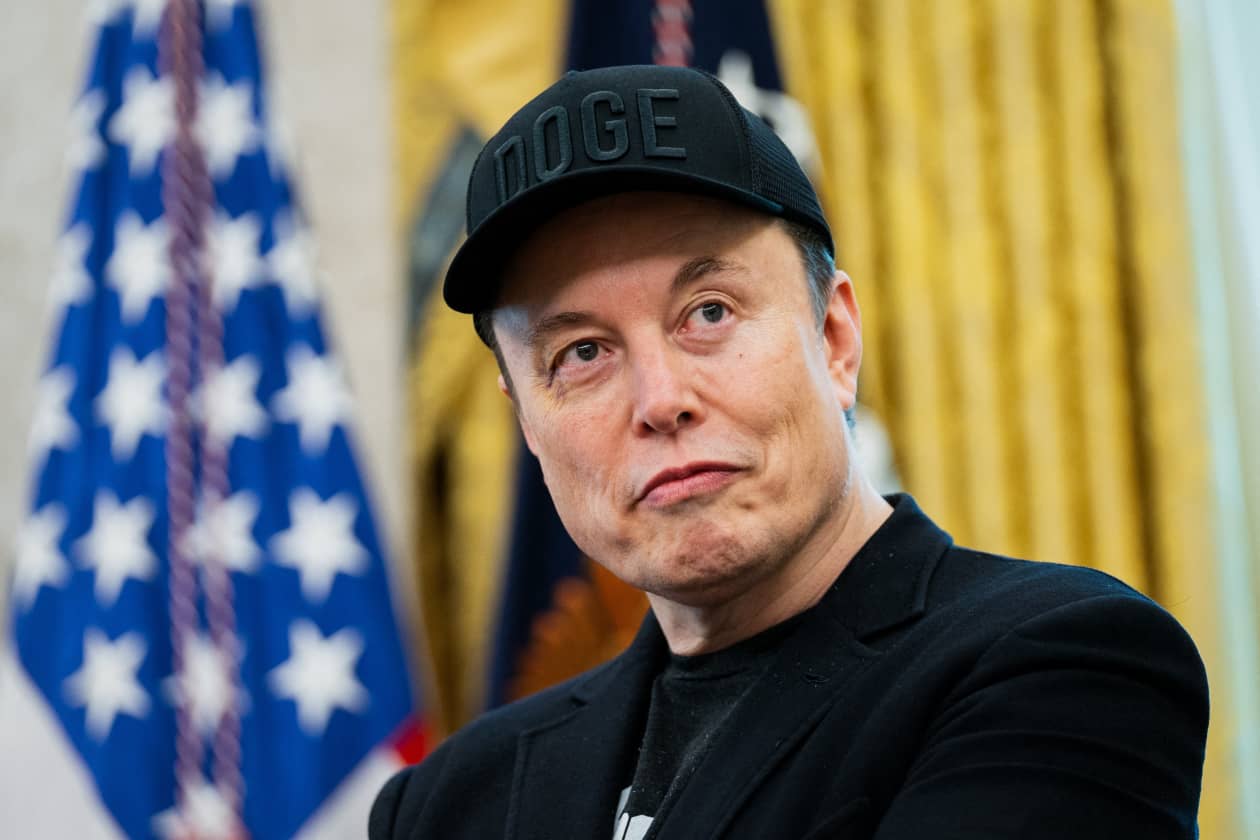
Elon Musk called for lower U.S.-China tariffs and trade restrictions ahead of a planned meeting between the countries' leaders, highlighting Tesla's strategic exposure to China. He also urged the U.S. and China to establish a joint AI-regulation platform, while reiterating concerns shared by other technology leaders about slowing AI development. The comments signal support for reduced geopolitical and trade friction but do not represent a policy change.
Analysis
The investable signal is not the commentary itself but Tesla's asymmetric China-policy beta. A marginal easing in bilateral trade friction would reduce the probability of renewed tariff escalation against China-sourced batteries, components and vehicles, supporting TSLA's gross-margin floor before it meaningfully changes demand. Conversely, Tesla's China exposure is increasingly a bargaining-chip risk: Beijing can favor domestic OEMs, procurement channels or data-compliance enforcement without formally targeting Tesla, creating downside that is not captured by broad U.S.-China tariff headlines.
In the next 1-3 months, a leaders' meeting that produces only rhetorical de-escalation is unlikely to move earnings estimates; TSLA needs evidence in China registrations, Shanghai export volumes, price discipline, or component-cost relief. The more material second-order beneficiary of trade normalization is not necessarily TSLA but Chinese EV supply-chain access: lower friction strengthens CATL-linked battery economics and price competition, which can ultimately pressure Tesla's global ASPs. That makes a near-term TSLA rally on diplomatic optics potentially sellable absent a simultaneous improvement in automotive gross margin ex-credits.
AI-regulatory cooperation is strategically ambiguous for TSLA. Harmonized safety and data standards could lower compliance duplication over 6-18 months, but a joint framework may entrench localization, audit and compute-governance requirements that favor Chinese incumbents in China and raise Tesla's data/robotaxi execution costs. SpaceX exposure is largely indirect; any détente lowers geopolitical-risk premia, but does not create a visible earnings catalyst for the private-company proxy.
Contrarian view: consensus treats lower tariffs as unambiguously positive for Tesla. In a less restricted trade regime, BYD and other China-based OEMs gain greater ability to export low-cost EVs and batteries, increasing the competitive threat to TSLA in Europe and potentially North America. The thesis is falsified positively by two consecutive months of China share gains without additional price cuts and an upward revision to automotive gross-margin guidance; it is falsified negatively by renewed China price reductions, data-security restrictions, or a tariff announcement targeting Chinese EV inputs.
AllMind Terminal
AI-powered research, real-time alerts, and portfolio analytics for institutional investors.
Request TrialMarket Sentiment
Overall Sentiment
mixed
Sentiment Score
0.10
Ticker Sentiment
Key Decisions for Investors
- Do not add directional TSLA exposure solely on diplomatic headlines. Use any 5-8% policy-driven rally over days to reduce tactical longs or initiate a small short only if China weekly registration data and Tesla China pricing remain weak; cover on a verified margin-guidance increase or sustained China share recovery.
- For a 1-3 month expression of the competitive dynamic, prefer a relative-value short TSLA / long BYDDF or BYDDY basket where mandate permits. The trade benefits if trade normalization broadens Chinese EV cost advantage; size modestly because U.S. import restrictions and ADR liquidity remain material risks.
- Set an earnings watch item rather than a trade: monitor TSLA automotive gross margin ex-credits, Shanghai export mix, and China ASPs. A 100bp-plus sequential margin improvement without further discounting would justify reversing the bearish relative-value view.
- Avoid treating SPCX as a liquid public-market catalyst. If geopolitical détente compresses defense/space risk premia, use listed peers or sector exposure only after confirming the intended security rather than extrapolating from Musk-related commentary.
More News
- How Meta took the lead in the race for the post-smartphone world
- As Trump and Xi meet, Chinese automakers could be a Pandora's box for U.S. auto industry
- Oil's losing streak, Trump at the UN, Royal Caribbean's Sandals stake and more in Morning Squawk
- Meta is having a ChatGPT moment with Muse. What is it and what makes it so special
- Tesla Roadster reveal is creating a unique options opportunity, says Mike Khouw
- Morgan Stanley’s Jonas: Physical AI Could Multiply Global GDP