
Royal Caribbean charts new course with Sandals partnership
Source: proactiveinvestors.com
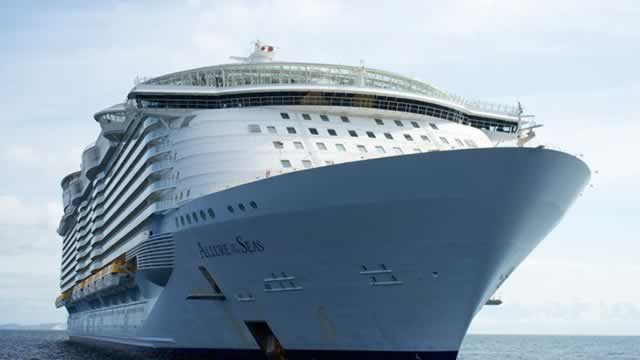
Royal Caribbean Cruises agreed to acquire a 50% stake in Sandals and Beaches Resorts for approximately $3 billion, entering the all-inclusive resort market. The partnership combines Sandals' resort operations with Royal Caribbean's cruise brands and private-destination platform, broadening its vacation offerings and creating a significant travel-sector transaction.
Analysis
The strategic value is not the resort equity itself but ownership of the pre-cruise/post-cruise customer funnel: RCL can lower customer-acquisition cost, bundle land-and-sea itineraries, and use loyalty data to improve yield management across a high-value repeat traveler base. If cross-selling works, the incremental EBITDA can command a higher multiple than standalone resort EBITDA because it increases booking frequency and reduces reliance on episodic cruise demand. The near-term market will instead focus on whether the investment is funded with debt, equity, or asset-backed structures; a $3B outlay is material enough that a higher leverage trajectory could cap multiple expansion despite operational upside.
The likely competitive response is from asset-light hotel operators with Caribbean all-inclusive exposure—particularly H, MAR and HLT—which have distribution advantages but less ability to combine resort stays with captive destination experiences. RCL's strongest structural opportunity is converting private-destination demand into resort occupancy during seasons when cruise capacity or port itineraries are constrained; the risk is that the transaction creates only modest cross-sell while exposing RCL to hurricane, labor, insurance, and Caribbean real-estate cost inflation that its cruise model previously outsourced. Over the next 1-3 months, funding terms and any disclosed EBITDA/ownership-governance details matter more than synergy targets; over 6-18 months, package attach rate, resort RevPAR, and net leverage determine whether this is multiple-accretive diversification or a costly conglomerate discount.
Consensus may overstate the immediate earnings benefit. A 50% stake limits consolidation economics, while integration benefits require unified loyalty, inventory, and revenue-management systems that can take multiple booking cycles to show up. The thesis is falsified if management raises leverage targets materially, guides to dilution beyond the first year without a credible path to recovery, or fails to disclose measurable cross-sell KPIs by the next two earnings cycles.
AllMind Terminal
AI-powered research, real-time alerts, and portfolio analytics for institutional investors.
Request TrialMarket Sentiment
Overall Sentiment
strongly positive
Sentiment Score
0.58
Ticker Sentiment
Key Decisions for Investors
- Maintain a tactical neutral-to-overweight bias in RCL only after financing is disclosed; add on a post-announcement selloff if the drawdown reflects leverage optics rather than a material reduction in FCF guidance. Require a 12-18 month path to leverage stabilization and quantified synergy/attach-rate targets before underwriting full valuation upside.
- Use a 3-6 month pair trade: long RCL versus short H (or an equal-weight basket of H/MAR) if RCL establishes bundled vacation pricing and loyalty interoperability. The intended payoff is RCL taking incremental Caribbean all-inclusive share through a differentiated land-and-sea product; exit if hotel peers show equivalent package partnerships or RCL does not provide launch timing.
- Do not buy near-dated RCL calls solely on the announcement: the principal catalyst is likely deferred until financing, closing conditions, and first guidance incorporation. Consider upside exposure only after those details via 6-12 month call spreads, with risk capped because acquisition-related leverage can compress RCL's multiple even if operating results hold.
- Set an earnings-monitor alert for net leverage, interest expense, resort EBITDA contribution, and cruise-plus-resort booking attach rate. A guidance cut, material equity issuance, or absent KPI disclosure by the second post-close report should trigger thesis reassessment and reduce exposure.
More News
- Oil's losing streak, Trump at the UN, Royal Caribbean's Sandals stake and more in Morning Squawk
- Bernstein reiterates Royal Caribbean stock rating amid Sandals deal
- Royal Caribbean nears $3 billion deal to take 50% equity stake in Sandals
- Royal Caribbean to buy 50% stake in Sandals Resorts for $3bn
- Royal Caribbean to buy 50% stake in Sandals Resorts for $3 bln
- UBS reiterates Buy on Royal Caribbean stock on TUI cruise data