
Micron: The Memory Cycle Won't Last Forever
Source: seekingalpha.com
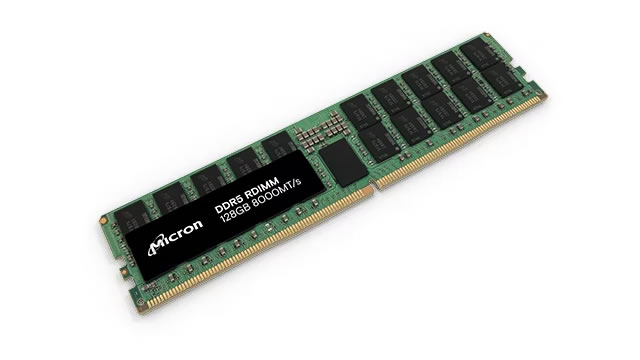
Micron delivered 379% year-over-year revenue growth and beat expectations, but the article argues that the gains were driven predominantly by an exceptional memory-price upswing rather than durable volume growth. The analyst maintains a sell rating, citing elevated volatility and expectations that memory pricing will peak before declining sharply into 2027, pressuring Micron's forward revenue growth and margins.
Analysis
The relevant debate is not whether Micron can print another strong quarter, but whether the market is still underwriting peak-cycle DRAM/NAND economics as a durable AI infrastructure outcome. MU is unusually exposed to the spot/contract-price delta: once customers complete inventory normalization and cloud buyers move from urgent HBM allocation to qualified multi-sourcing, incremental revenue can decelerate materially before reported pricing turns negative. That creates downside convexity because operating leverage that expanded gross margin on the way up reverses quickly when utilization or bit shipments soften.
The second-order risk is that elevated memory profitability funds supply additions across Samsung Electronics, SK Hynix and Chinese domestic producers. HBM remains capacity-constrained near term, but conventional DRAM capacity is fungible enough that a shift in wafer allocation can loosen supply over a 6-18 month horizon; NAND is even more vulnerable to renewed price competition. Consensus estimates should be treated as the catalyst rather than the current quarter: the first meaningful risk is lower forward-quarter price commentary or a reduced gross-margin bridge, which can compress MU's multiple before earnings decline.
Contrarianly, a blanket short is premature if HBM qualification delays persist or AI server memory content rises faster than unit demand slows. The cleaner expression is to fade peak-cycle expectations, not AI memory demand itself: MU can remain fundamentally strong while its earnings trajectory and valuation de-rate. A sustained upward revision to FY2027 EPS, driven by bit-volume growth rather than pricing, would falsify the bearish setup.
AllMind Terminal
AI-powered research, real-time alerts, and portfolio analytics for institutional investors.
Request TrialMarket Sentiment
Overall Sentiment
moderately negative
Sentiment Score
-0.48
Ticker Sentiment
Key Decisions for Investors
- Maintain an underweight/short bias in MU only after a failed rally into earnings or following evidence of sequential DRAM/NAND price moderation; target a 10-20% relative underperformance versus SOXX over the next 3-6 months, with a stop if FY2027 consensus EPS rises more than 10% on volume-led guidance.
- Prefer a defined-risk bearish options structure: buy 6-9 month MU put spreads, financed selectively with upside calls only if implied volatility is below its post-results range. The trade isolates multiple/estimate-reset risk while limiting losses if HBM shortages extend.
- Use a pair rather than outright semiconductor beta: short MU versus long SK Hynix (000660 KS) where accessible, or versus SOXX as a liquid proxy. The thesis is that MU has greater sensitivity to broad memory-price normalization, while Hynix retains relatively higher HBM mix; unwind if HBM supply qualification broadens faster than expected.
- Set alerts for quarterly contract-price commentary, inventory days, wafer-start/capex plans at Samsung and SK Hynix, and MU's gross-margin guide. A pricing-led guide reduction is the 1-3 month downside catalyst; announced industry supply restraint or further HBM allocation tightness would negate the near-term short.
More News
- Stocks remain under the thrall of higher yields and higher oil. Here's what's ahead
- Nvidia is a 'best in breed' stock on sale. Here's why I'm buying
- Micron sees the memory shortage tightening into 2028 after a record quarter
- CLSA raises Micron stock price target on strong memory pricing outlook
- Wall Street sets Micron (MU) stock price for 12 months
- Why is Infineon Technologies stock surging 6% today?