
Starlight Investments anuncia el cierre exitoso del fondo UK BTR Fund II
Source: PR Newswire
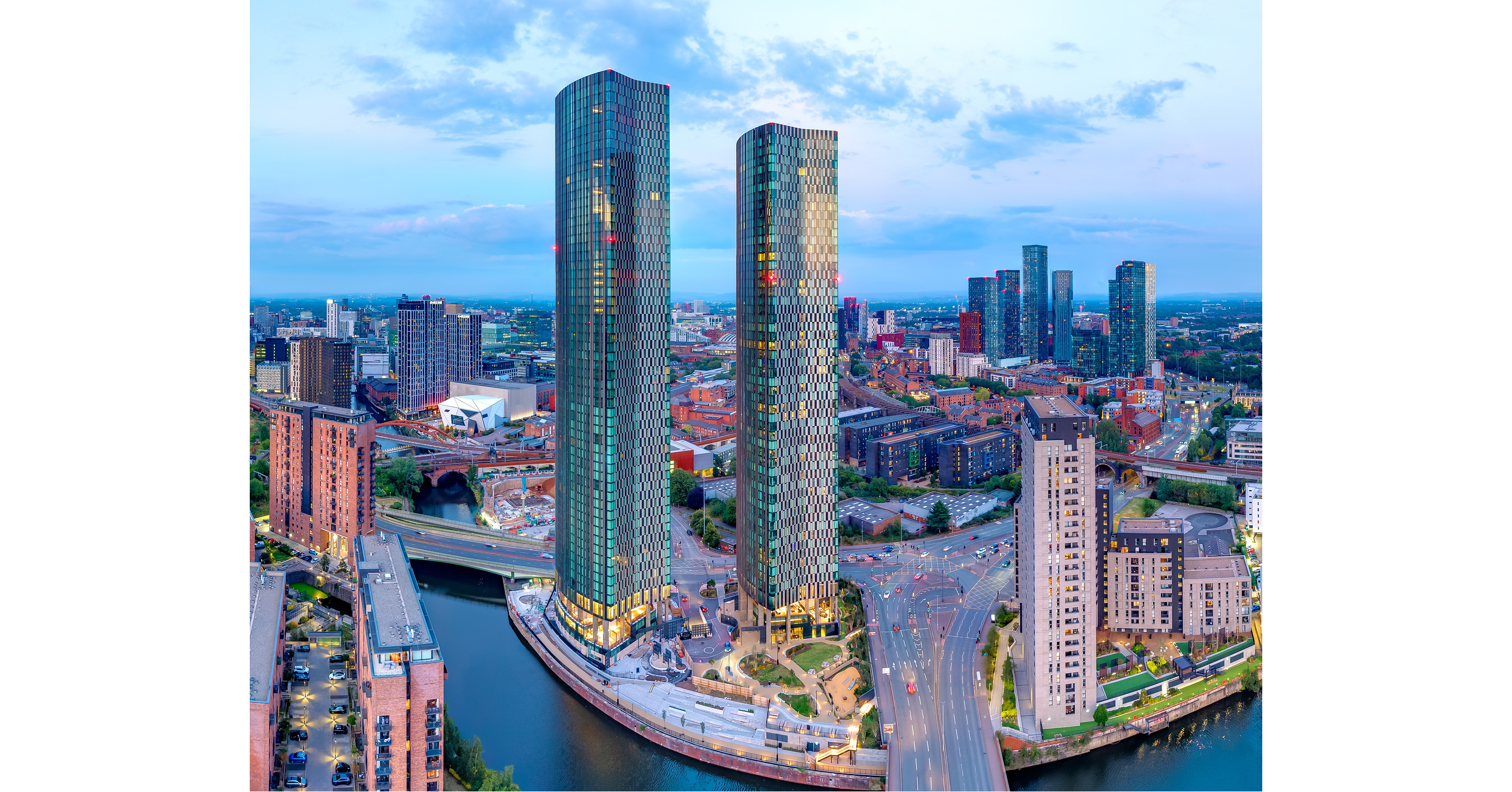
Starlight Investments closed its UK BTR Fund II with £680 million of total capital commitments across the fund and related investment vehicles, supporting the acquisition and delivery of more than 6,000 UK build-to-rent homes. The partly invested fund includes three developments under construction—two in Manchester and one in Basildon—and drew institutional investors from Europe, Asia-Pacific and Canada, including a significant Homes England National Housing Bank commitment. Starlight's broader UK platform now spans 12 BTR projects and targets a position among the UK's four largest BTR operators amid chronic rental-housing supply shortages.
Analysis
This is primarily a private-capital availability signal rather than a public-equity catalyst. Fresh institutional equity for regional UK rental development lowers the probability of distressed asset sales among well-capitalized BTR sponsors, supporting construction starts and land values in Manchester and outer-London commuter markets over the next 6-18 months. The more immediate beneficiary is the development supply chain: contractors, building-material distributors, and modular/offsite providers with UK residential exposure gain incremental tender volume, although fixed-price contracts mean margin upside will depend on labor and materials inflation remaining contained.
For listed UK residential landlords, the effect is mixed. Purpose-built, professionally managed stock is a competitive substitute for older private-rental inventory, potentially capping rent growth and raising amenity/capex requirements for exposed landlords in localized submarkets; this is more relevant to asset-level valuation than sector-wide earnings in the next 1-3 months. Conversely, visible institutional demand for stabilized rental assets could tighten exit yields and improve NAV confidence for diversified residential vehicles, provided gilt yields do not reprice higher.
The press-release framing should not be read as proof of returns: committed capital is not deployed capital, and development execution converts the headline into NOI only over multiple years. The key falsifiers are UK 10-year gilt yields, construction-cost escalation, lease-up velocity, and planning delays. A sustained rise in financing rates or a weakening regional employment backdrop would reduce residual land values and could turn the apparent supply response into delayed or cancelled delivery.
AllMind Terminal
AI-powered research, real-time alerts, and portfolio analytics for institutional investors.
Request TrialMarket Sentiment
Overall Sentiment
moderately positive
Sentiment Score
0.58
Key Decisions for Investors
- No immediate directional trade from the announcement; treat it as a 6-18 month confirmation of institutional BTR capital formation, not an earnings catalyst for liquid public equities.
- Monitor long exposure to UK residential REIT proxy Grainger (GRI.L) versus a short in UK commercial-property proxy British Land (BLND.L) only if UK 10-year gilt yields stabilize or fall for 4-6 weeks. The relative thesis is residential income resilience and improved private-market valuation support; exit if gilt yields rise 50bp from entry or Grainger reports slowing occupancy/rent reversion.
- Build a watchlist for UK construction/materials beneficiaries, including Travis Perkins (TPK.L), Marshalls (MSLH.L), and Vistry (VTY.L), but require evidence of awarded BTR contracts and improving order books before initiating. Funding commitments alone do not establish revenue timing or contractor economics.
- For UK listed residential landlords with concentrated Manchester or Greater London rental exposure, monitor local new-delivery pipelines and concessions. A material rise in incentives or lease-up periods is a signal to reduce exposure, as BTR competition is likely to appear first through occupancy pressure rather than headline rent cuts.
More News
- Here’s the ‘core economic flaw’ in the AI bull case as stock and bond trades unravel, according to a top economist
- Braskem creditors, shareholders near deal on $11bn debt restructuring
- Instacart reportedly discussed selling itself with DoorDash and Uber
- Nvidia's role as AI financier faces first big test as neoclouds take market hit
- Trump set to announce plan by Audi to build a U.S. factory in Georgia, source says
- Why popular airplanes are getting scrapped years early
From AllMind Research
- Anthropic IPO Preview: Valuation, Timing, and What to Watch
- Shein After the IPO: Venue, Valuation, and What Must Be Proved
- What AI Research Tools Should a Small Hedge Fund Buy First?
- Stop Treating AI Like a Chatbot: What Are Agents, SubAgents, MCP, and Skills, and How Do They Actually Work?
- Earnings-Triggered Research Automations: A Control Guide