
BAM Capital Expands into the Southeast with Acquisition of The Marling at Town Creek
Source: PR Newswire
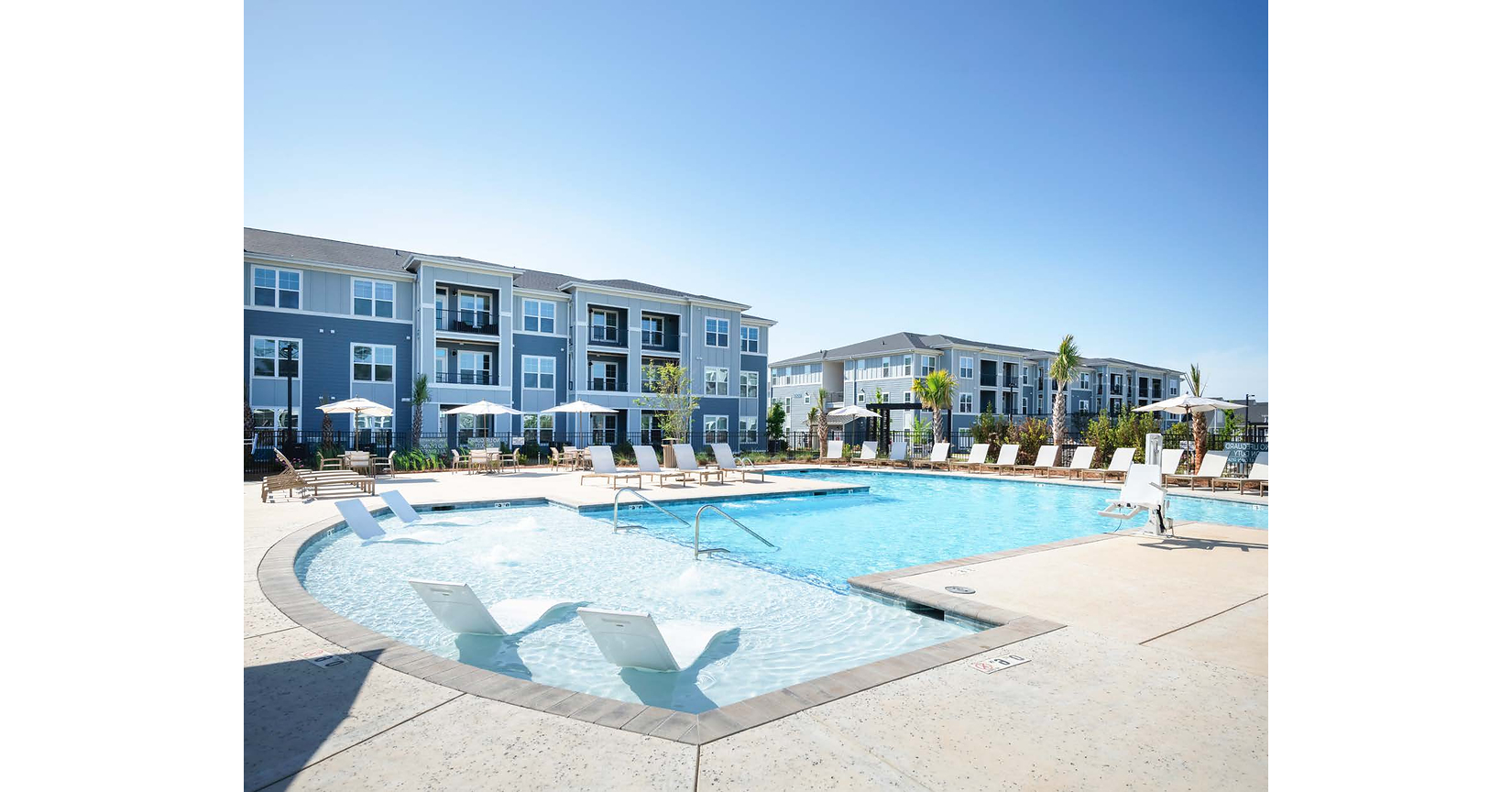
BAM Capital acquired The Marling at Town Creek, a 334-unit multifamily property completed in 2024 near Wilmington, North Carolina, marking its entry into the Southeast through BAM Multifamily Growth Fund V. The asset was purchased at an estimated 17.4% discount to replacement cost in a Wilmington market that has grown 32% since 2010 and is projected to expand another 10% through 2030. Fund V targets a 15%-20% net IRR and 2.0x-2.5x net equity multiple, subject to underwriting and economic risks.
Analysis
This is not an AMZN earnings or real-estate-cost signal: a single apartment transaction near one employment node is immaterial to AMZN's consolidated labor, logistics, or capital-spending profile. The more relevant read-through is private-market price discovery: if the buyer's stated basis proves reproducible in regional Class A assets, it would support the view that transaction markets are clearing below replacement cost rather than that apartment fundamentals have fully recovered. That dynamic favors well-capitalized public REITs with lower cost of capital and acquisition capacity, but only after sellers broadly accept comparable valuations.
The key second-order risk is that a below-replacement-cost purchase can be both an opportunity and a warning: it may reflect financing stress, elevated concessions, or rent-growth assumptions that have not yet reset. Over the next 1-3 months, transaction volume and debt-market spreads matter more than promotional underwriting targets; a sustained decline in agency and bank lending spreads would be the cleaner catalyst for multifamily NAV rerating. Over 6-18 months, coastal Carolinas could outperform if in-migration converts into household formation, but localized deliveries and insurance/property-tax escalation can absorb much of the apparent revenue upside.
Consensus may overinterpret isolated private deals as a sector bottom. Public apartment REITs already provide liquid exposure to diversified markets and will not rerate materially from one non-public acquisition; the investable confirmation requires sequential improvement in same-store revenue, concessions, and external-growth accretion. Falsify the constructive sector watch by rising effective rents concessions, renewed long-term Treasury-rate pressure, or widening commercial-real-estate credit spreads.
AllMind Terminal
AI-powered research, real-time alerts, and portfolio analytics for institutional investors.
Request TrialMarket Sentiment
Overall Sentiment
moderately positive
Sentiment Score
0.45
Key Decisions for Investors
- No AMZN position change: treat this as non-material unless management identifies Southeastern fulfillment expansion or labor-market pressure in guidance; there is no direct earnings catalyst from the transaction.
- Place MAA and CPT on a 1-3 month watchlist for multifamily transaction-market normalization, rather than buying on this release. Initiate only if quarterly same-store revenue and occupancy stabilize while acquisition cap rates remain meaningfully above each REIT's marginal cost of capital; this would create credible external-growth upside.
- For liquid sector exposure, prefer a small long MAA / short UDR pair only after evidence of improving Sun Belt effective rents. The thesis is regional population growth versus UDR's greater coastal-market exposure; exit if MAA's occupancy or blended lease-rate spreads underperform UDR for two consecutive monthly/quarterly disclosures.
- Monitor 10-year Treasury yields and CRE lending spreads as the gating risk. If long rates rise materially or multifamily debt spreads widen, avoid adding REIT beta because cap-rate expansion can outweigh any operating improvement.
More News
- Exclusive-Anthropic’s IPO pitch embraces AI’s promise and peril
- Investors thought they were buying pre-IPO OpenAI and SpaceX shares. Their cash went to strip clubs, Bloomingdale’s, and shopping on Amazon, SEC alleges
- How AI is becoming Hollywood’s newest star, changing work on and off camera
- Why Synopsys Stock Soared Nearly 5% Higher Today
- AI market needs to make $6 trillion a year by 2031 to fund its infrastructure habit
- Synopsys, Amazon Web Services sign chip design licensing deal worth more than $1 billion
From AllMind Research
- Anthropic IPO Preview: Valuation, Timing, and What to Watch
- Shein After the IPO: Venue, Valuation, and What Must Be Proved
- What AI Research Tools Should a Small Hedge Fund Buy First?
- Palantir (PLTR) Q4 2025 Earnings: 70% Revenue Growth, Then an 11% Single-Day Crash
- AlphaSense Pricing: What Public Contract Data Shows in 2026