
Micron Suffers Extreme AI Pessimism: Structural Demand Through 2031 (Rating Upgrade)
Source: seekingalpha.com
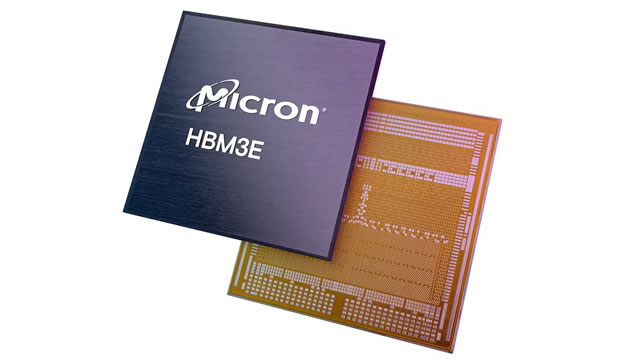
The article argues Micron is attractive amid AI pessimism, citing 26 SCAs that lock in $150B of RPOs through 2031 and $32B in cash commitments. It says these commitments improve multi-year revenue visibility and that memory/storage oversupply risks are overstated, pointing to power-grid interconnection delays and physical AI demand over the next decade.
Analysis
The bullish case hinges less on headline contract totals than on their enforceability and economics. RPO does not by itself establish take-or-pay protection, realized pricing, product mix, or customer credit quality; verify cancellation clauses, delivery schedules, and whether the stated cash commitments are deposits or otherwise conditional before underwriting reduced cyclicality. If binding commitments cover advanced memory capacity, they could improve utilization visibility and bargaining power—but also incentivize capacity additions that later pressure prices.
Power-grid delays cut both ways: they may defer near-term customer deployments and shipments, while extending the period in which constrained capacity supports pricing. They do not eliminate the risk that supply arrives ahead of powered data-center demand. Physical-AI demand is a multi-year option, not a sound basis for near-term earnings estimates.
Over days, sentiment and AI-beta flows may dominate. Over 1–3 months, disclosures on contract terms, HBM mix, inventory, pricing, and guidance are the key validation points. Over 6–18 months, the central issue is whether capacity growth stays aligned with actual deployments; robotics upside is longer dated. The contrarian risk is treating forward visibility as proof of attractive returns on incremental capex. No valuation or current price data were supplied, so avoid a price target or an unconditional “maximum pessimism” entry.
AllMind Terminal
AI-powered research, real-time alerts, and portfolio analytics for institutional investors.
Request TrialMarket Sentiment
Overall Sentiment
strongly positive
Sentiment Score
0.55
Ticker Sentiment
Key Decisions for Investors
- Watch, rather than buy solely on the article’s framing: confirm the SCA terms, customer concentration, delivery timing, and the nature of the stated cash commitments in company disclosures or earnings commentary.
- If those checks support durable, economically attractive demand, consider a staged long MU position; a relative-value expression is long MU / short a semiconductor ETF such as SOXX to reduce broad sector exposure. Size modestly because this does not hedge memory-cycle risk, and no entry price can be responsibly specified from the supplied data.
- Use the next 1–3 months of results and guidance as the catalyst window. Reassess if inventory rises alongside weakening HBM pricing or shipments, guidance is cut, or disclosed commitments prove cancellable or fail to convert into deliveries.
- Treat grid constraints as a two-sided risk: monitor data-center power availability and deployment timing, not just announced AI capex. Persistent deployment delays would undermine near-term demand even if long-run capacity scarcity remains plausible.
More News
- Trading expert sets date when Micron (MU) stock will crash to $400
- What's the difference between RAM and ROM memory?
- This Forgotten AI Stock Is Up 689% and Nobody's Talking About It
- Warren Buffett Is Sending Shockwaves Through Wall Street With This Warning. Here’s What History Says May Happen Next.
- VOO Doesn't Hold SpaceX, Taiwan Semiconductor, Samsung Electronics, SK Hynix, or ASML. Meet the Vanguard ETF That Does.
- Musk says Terrafab chip factory could outperform rivals despite challenges