
South Sudan UN Attack Pushes Aid Worker Deaths Past 2025 Total
Source: Bloomberg
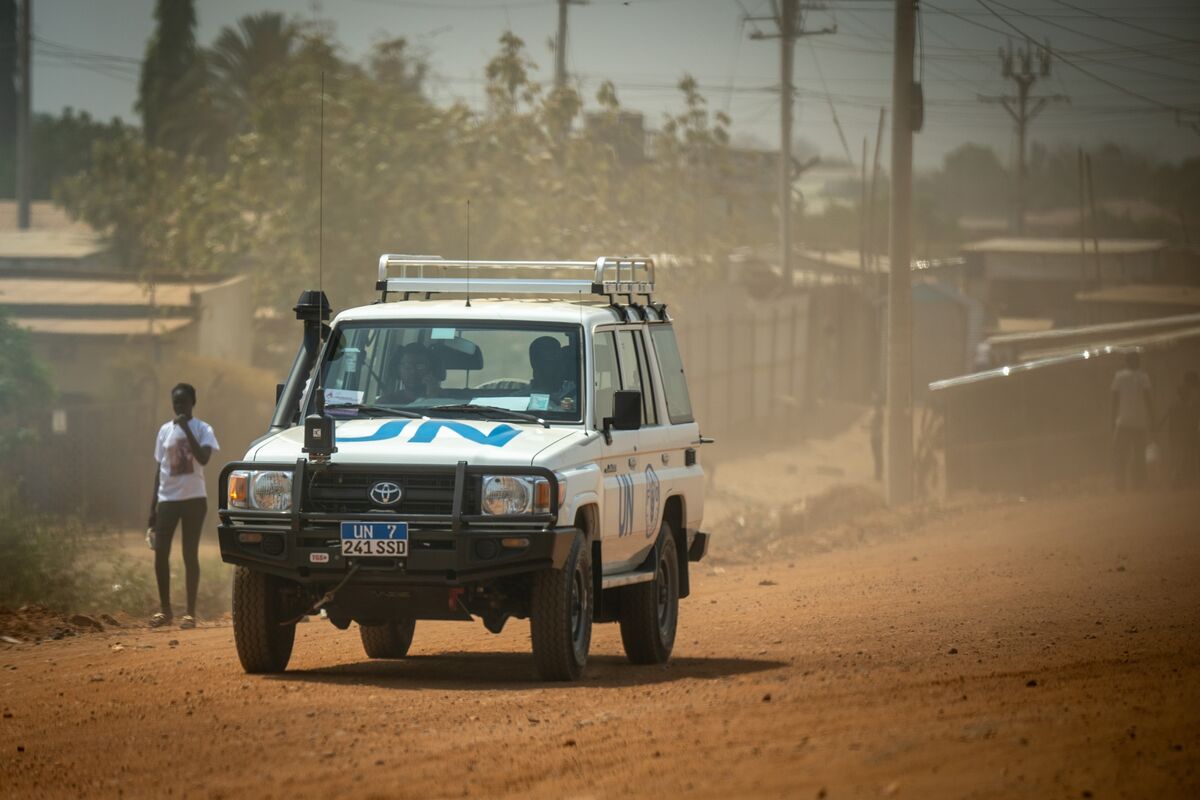
Humanitarian worker deaths in South Sudan have already surpassed last year’s total: 36 killed since January vs 31 in all of 2025, per the European Union. A Monday attack on a UN mission patrol killed two peacekeepers, and the EU delegation reports the death toll continues rising. While not a direct market driver, the escalation adds geopolitical risk to regional operating conditions and aid logistics.
Analysis
This is not a tradable event by itself, but it is a useful signal that the security envelope for frontier African operations is deteriorating faster than headlines suggest. The second-order effect is higher operating friction for NGOs, contractors, and any commercial logistics exposed to remote convoy movement: more security spend, fewer field visits, longer project timelines, and a greater chance that donors reallocate from development to pure relief, which tends to be margin-negative for local implementers and neutral-to-slightly positive for larger procurement platforms.
The bigger market mechanism is contagion risk. When aid access becomes unreliable, food insecurity and displacement usually worsen with a lag of weeks to months, which can intensify local instability and raise sovereign-risk premia across the region even if no single country-specific asset is directly in the news. If the violence migrates toward transport corridors or oil infrastructure, the impact broadens from humanitarian names to regional energy logistics, but that is a conditional—not base-case—thesis.
Consensus may underweight how quickly these incidents change donor behavior. The immediate shock is reputational; the 1-3 month impact is budget and routing changes; the 6-18 month effect is a lower probability of successful stabilization and a structurally higher cost of doing business in the country. What would falsify the risk-off read is evidence of rapid de-escalation, restored patrol security, and donor statements that field access remains unchanged.
Given the lack of direct listed exposure, the cleanest posture is to treat this as an alert rather than a standalone trade. Any positioning should only be sized as a broader EM/geopolitical hedge, not as a South Sudan-specific alpha source.
AllMind Terminal
AI-powered research, real-time alerts, and portfolio analytics for institutional investors.
Request TrialMarket Sentiment
Overall Sentiment
moderately negative
Sentiment Score
-0.55
Key Decisions for Investors
- No standalone equity trade on this headline; keep it as a frontier-risk alert and watch for spillover into regional EM credit and FX over the next 2-6 weeks.
- If violence spreads toward transport or oil corridors, use EEM put spreads or a small tactical short in EEM as a hedge, with a 1-2 month horizon and tight risk limit; thesis fails if the incident remains isolated and broader EM risk assets hold up.
- Monitor regional sovereign CDS/FX proxies for follow-through rather than chasing the event; the first tradable signal would be widening in East African risk premia over the next 1-3 months.
- For commodity-linked hedging, only consider a small bullish energy hedge if reports emerge of disruption near oil export routes; absent that, there is no justification for an energy trade.
- Watch UN/donor budget language in coming weeks; if field access is curtailed, expect larger relief spend but weaker execution for on-the-ground contractors, which is an indirect negative for any local service exposure.
More News
- Trump says US will not strike Iran before midterm elections
- Proxy Wars Threaten to Engulf Ethiopia
- Oil Falls as Trump Says US Will Not Attack Iran Before Midterms
- Treasury yields steady as Trump strikes diplomatic tone on Iran ahead of midterms
- US Won't Attack Iran Before Midterms, Trump Says
- OpenAI Sees $70B Revenue; Airtel Money Seeks Biggest UK IPO Since 2021
From AllMind Research
- Anthropic IPO Preview: Valuation, Timing, and What to Watch
- Shein After the IPO: Venue, Valuation, and What Must Be Proved
- What AI Research Tools Should a Small Hedge Fund Buy First?
- Alternative Data Due Diligence for Institutional Investors
- Introducing AllMind: A New Data & AI Workspace for Institutional Investors