
Claros Technologies et Daikin America annoncent la conclusion d'un accord commercial en vue du déploiement à grande échelle d'une technologie de destruction définitive des PFAS (substances per- et polyfluoroalkylées)
Source: PR Newswire
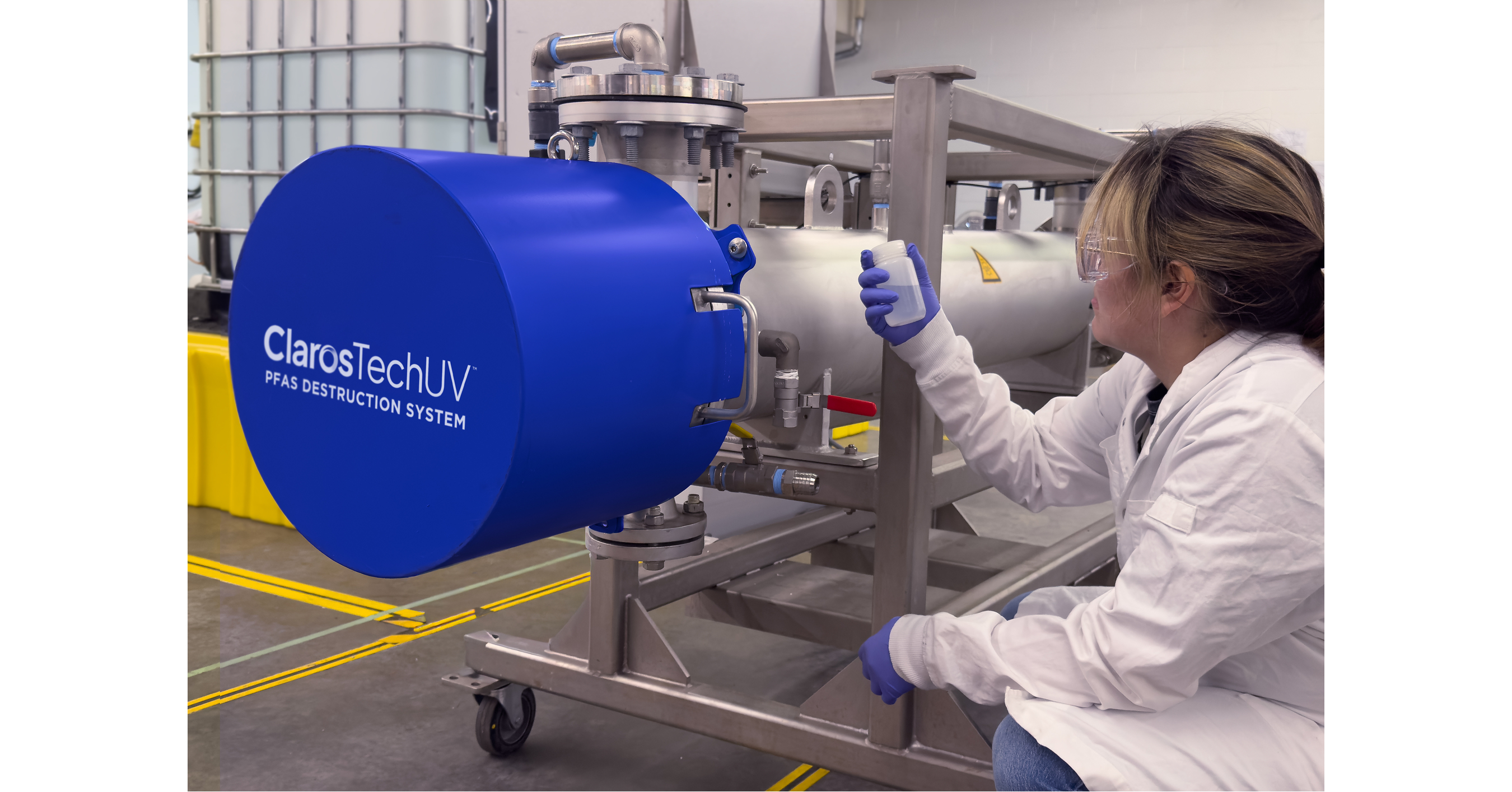
Claros Technologies and Daikin America signed a long-term commercial agreement to deploy ClarosTechUV™ at Daikin's Decatur, Alabama manufacturing site, moving the PFAS-destruction technology from a successful pilot to continuous industrial-scale operation. Claros says the UV system can permanently destroy 99.99% of targeted long-, short- and ultrashort-chain PFAS compounds, including trifluoroacetic acid, with ongoing testing and performance verification through ClarosLabs™. The deal is a significant commercial validation for Claros and could support broader adoption as PFAS regulations tighten globally.
Analysis
This is strategically more relevant to PFAS producers than to the remediation equipment universe: a credible on-site destruction pathway lowers the probability that regulators force abrupt product substitution or offshore production, potentially extending the useful life of fluoropolymer assets. Daikin Industries (6367 JP) is the clearest public beneficiary through lower contingent environmental-liability discounting, while Chemours (CC) and 3M (MMM) could see sentiment spillover if investors infer that destruction is scalable across high-consequence applications. The offset is that verified destruction raises the regulatory bar: competitors relying on filtration, incineration, or waste transfer could face higher compliance capex and liability exposure if regulators begin distinguishing destruction from containment.
The near-term earnings impact is likely immaterial because neither contract economics, throughput, operating cost, nor required plant-wide retrofit spend is disclosed. Over 1-3 months, the key catalyst is independent validation of destruction efficiency across real waste streams, energy intensity, and cost per kilogram treated; without these, this remains a vendor-controlled proof point rather than a sector re-rating event. Over 6-18 months, U.S. and EU permit decisions that explicitly recognize on-site destruction could create an equipment-and-services market, benefiting water-treatment integrators such as Ecolab (ECL) and Veolia (VIE FP) more than chemical manufacturers.
Consensus may overstate the implication for PFAS demand: remediation technology does not eliminate litigation over historical releases, and it may make continued use politically harder by demonstrating that safer waste handling is technically feasible. For CC and MMM, the relevant valuation variable remains reserve adequacy and settlement cash flows, not a single industrial deployment. A meaningful read-through requires evidence that capital and operating costs are sufficiently low to displace disposal economics at multiple independent sites.
AllMind Terminal
AI-powered research, real-time alerts, and portfolio analytics for institutional investors.
Request TrialMarket Sentiment
Overall Sentiment
moderately positive
Sentiment Score
0.62
Key Decisions for Investors
- No immediate directional trade in 6367 JP, CC, or MMM: treat this as a regulatory-technology watch item until third-party performance data and contract economics are disclosed. Reassess after the next earnings cycle or permitting update; a disclosed low-cost, multi-site rollout would be a positive catalyst for 6367 JP.
- Establish a monitoring basket of 6367 JP, CC, MMM, ECL, and VIE FP for PFAS regulatory announcements over the next 6-18 months. Favor ECL/VIE FP only if regulators begin requiring destruction rather than filtration or off-site disposal, creating recurring treatment-service demand rather than one-time equipment sales.
- Maintain skepticism on a long CC thesis: any benefit from a more viable remediation pathway is secondary to litigation reserves, free-cash-flow conversion, and fluoroproduct pricing. Thesis is falsified by higher-than-expected legal accruals, adverse settlement developments, or guidance implying material PFAS compliance capex.
- For MMM, do not interpret the deployment as a liability hedge absent evidence it lowers remediation costs at legacy sites. A reduction in estimated environmental cash outflows or an independently validated remediation-cost framework—not industry publicity—would be the actionable trigger.
More News
- U.S. market regulator seeks to make it easier for funds, advisers to hold crypto
- Trump launches midterms campaign blitz amid record low approval ratings
- Nvidia Faces Questions Over China AI Chip Smuggling Cases
- Broadcom to lend Anthropic up to $42 billion to lease its chips, filing says
- Nike Warns Sales Slump Will Worsen This Fiscal Year
- $8.2B acquisition validates AI-picked chip stock: +20% since June
From AllMind Research
- Anthropic IPO Preview: Valuation, Timing, and What to Watch
- Shein After the IPO: Venue, Valuation, and What Must Be Proved
- What AI Research Tools Should a Small Hedge Fund Buy First?
- Weekly Update: Unstructured Data Search, Ask AI, and Advanced Futures Data
- Best AI Stock Research Tools for Professional Investors