
Barclays to cut 5,000 jobs as bank's bosses hail AI productivity advances
Source: theguardian.com
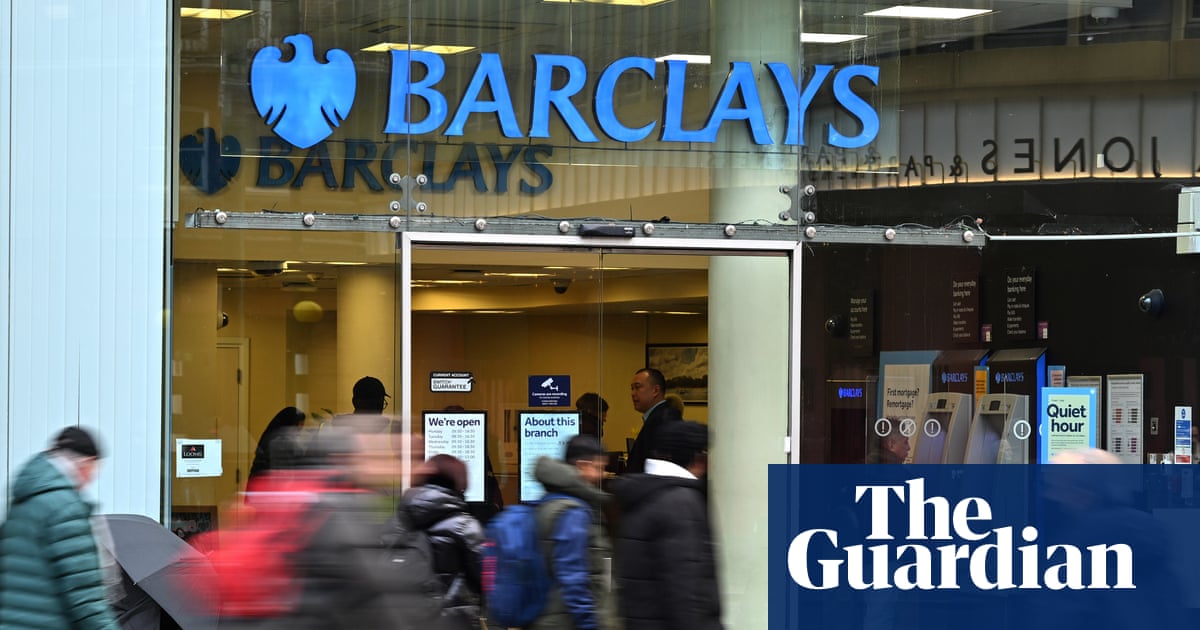
Barclays plans to cut about 5,000 jobs—roughly 5% of its 93,000 staff—as part of efforts to save more than £1.1bn in 2027; executives cited technology and process efficiencies, with AI expected to contribute. The bank reported July–September pre-tax profit of £2.3bn, up 12% year on year, and announced a further £500m share buyback, bringing shareholder returns since January to £2.8bn. A potential bank-tax increase is due to be announced in the 28 October budget, amid calls for lenders to pay more.
Analysis
The market may over-credit the AI label: management describes technology modernization and process simplification as the main efficiency drivers, so the key test is realized cost/income improvement—not headcount reduction alone. Lower staffing can lift operating leverage, but transition costs, control failures, and reinvestment in systems may defer or dilute savings. Barclays’ buyback is a near-term valuation and capital-return support; it does not insulate earnings from a UK bank-tax change.
The immediate catalyst is the budget: an announced levy could pressure UK-bank multiples before its actual earnings impact is known. For the next 1–3 months, watch the tax’s scope, effective date, and treatment of retail net interest income. A broad levy would also weigh on Standard Chartered and other UK-listed banks, while a narrow or staged measure could leave the initial sector selloff looking excessive. Over 6–18 months, the differentiator will be whether restructuring produces durable cost efficiency without weakening service, controls, or technology delivery.
Contrarian angle: the NII strength is not automatically a persistent windfall. If inflation-driven rate expectations unwind, asset yields and deposit costs may reprice unevenly; lower rates could compress revenue even as political pressure on bank profits eases. Conversely, a tax framed around current profits could hit before that normalization. No clean directional trade is justified ahead of the tax details; favor event-risk discipline over treating the AI narrative as a standalone earnings upgrade.
AllMind Terminal
AI-powered research, real-time alerts, and portfolio analytics for institutional investors.
Request TrialMarket Sentiment
Overall Sentiment
mixed
Sentiment Score
-0.10
Ticker Sentiment
Key Decisions for Investors
- Keep BCS exposure sized for the budget headline risk; avoid adding solely on the buyback or AI-cost narrative before the tax design is public.
- Set a post-budget alert for the levy’s base, rate, start date, and any carve-outs. Reassess UK-bank exposure if the measure directly taxes retail banking income or applies retrospectively.
- Over the next 1–3 months, track BCS cost/income performance, restructuring charges, and management’s quantified attribution of savings to technology versus other actions. If savings fail to show up in operating costs, downgrade the efficiency thesis.
- Use STAN as a sector read-through, not a direct proxy for BCS: compare restructuring execution and cost guidance, while recognizing their plans and business mixes differ. A broad sector tax shock would weaken both regardless of company-specific efficiency progress.
- Falsifiers: a materially less punitive budget outcome would reduce the near-term tax overhang; evidence of persistent cost slippage or operational/control issues would undermine the productivity case; a reversal in rates or weaker net interest income would challenge the earnings support.
More News
- Barclays to slash 5,000 jobs in AI efficiency push
- Barclays to cut 5,000 jobs this year as AI makes the bank more efficient
- CNBC Daily Open: Ukraine's Starlink whodunit
- BOE Interest Rates Beyond November Clouded by Energy Uncertainty
- Barclays profit rises 12% as bank launches £500 million buyback
- First American earnings up next: Can commercial offset residential?
From AllMind Research
- Anthropic IPO Preview: Valuation, Timing, and What to Watch
- Shein After the IPO: Venue, Valuation, and What Must Be Proved
- What AI Research Tools Should a Small Hedge Fund Buy First?
- Weekly Update: Unstructured Data Search, Ask AI, and Advanced Futures Data
- Best AI Stock Research Tools for Professional Investors