
As some mold-affected schools reopen, environmental expert Barton Robertson asks: What does 'safe to return' really mean?
Source: PRWeb
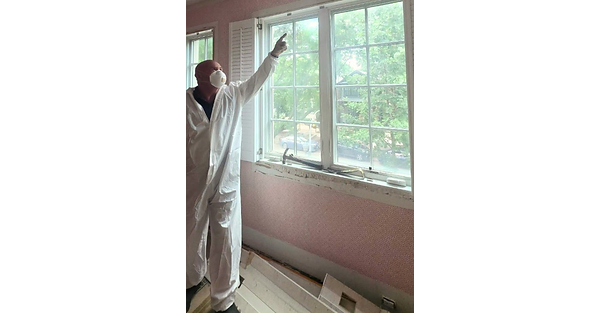
No market-moving financial figures were reported. The article describes multiple U.S. schools delaying or relocating students due to suspected mold and emphasizes that safe reopening requires correcting underlying moisture/HVAC/building conditions—not just removing visible mold—e.g., ~600 students at John H. Kinzie Elementary (Chicago) scheduled to return after inspections and repairs.
Analysis
This is not a clean equity catalyst so much as a localized facilities-management signal. The investable read-through is that school systems are being forced from reactive cleanup to preventative maintenance, which could incrementally support HVAC, indoor air quality, roofing, and remediation spend over 6-18 months; however, the spend is fragmented, budget-constrained, and usually funded as emergency maintenance rather than durable growth capex. That means the first beneficiaries are likely diversified building-systems vendors, not a pure-play mold niche.
The near-term market impact is close to zero unless the issue broadens into a pattern of repeated re-closures, litigation, or state-level inspection mandates. If that happens, the second-order effect is a pull-forward in school facility audits and deferred maintenance programs, which would favor names like JCI, TT, CARR, and HON through higher retrofit/backlog demand. The counterweight is that public-sector procurement is slow, so even a mandate can take quarters to convert into revenue; that reduces the odds of a sharp earnings re-rate.
The contrarian view is that investors may overestimate the size of the opportunity because mold headlines sound like a recurring crisis, but most remediation work is low-margin, one-off, and local. The better tradeable signal would be evidence of a broader municipal infrastructure cycle or explicit guidance from building-systems companies that education/public-sector bookings are accelerating. Absent that, this is more of a watch item than a position.
AllMind Terminal
AI-powered research, real-time alerts, and portfolio analytics for institutional investors.
Request TrialMarket Sentiment
Overall Sentiment
mildly negative
Sentiment Score
-0.20
Key Decisions for Investors
- No direct trade in TSTS; the event has de minimis fundamental impact and is not worth capital at current information quality.
- Set a 1-3 month watchlist on JCI, TT, CARR, and HON for any commentary on school/public-sector retrofit demand, backlog, or indoor air-quality upgrades; only get constructive if bookings accelerate, not just headlines.
- If a state-level inspection or remediation mandate emerges, consider a small long basket in JCI/TT versus the market as a 6-12 month lagged capex beneficiary; risk/reward is modest unless the mandate becomes widespread.
- Avoid shorting school-facility beneficiaries preemptively; the downside case is that this remains a series of isolated incidents with no measurable revenue translation.
More News
- CoreWeave credit default swaps hit distress levels as investors sour on AI debt
- Penske Automotive agrees to be taken private by Penske, Mitsui
- Faraday Copper completes acquisition of BHP’s San Manuel project
- Supermicro promised a new CFO in December 2024. A $2.5 billion smuggling case and a co-founder’s arrest later, it has one
- Blackstone President Jon Gray Bets Big on AI Boom
- What's behind the sell-off in AI neocloud stocks like CoreWeave and Nebius